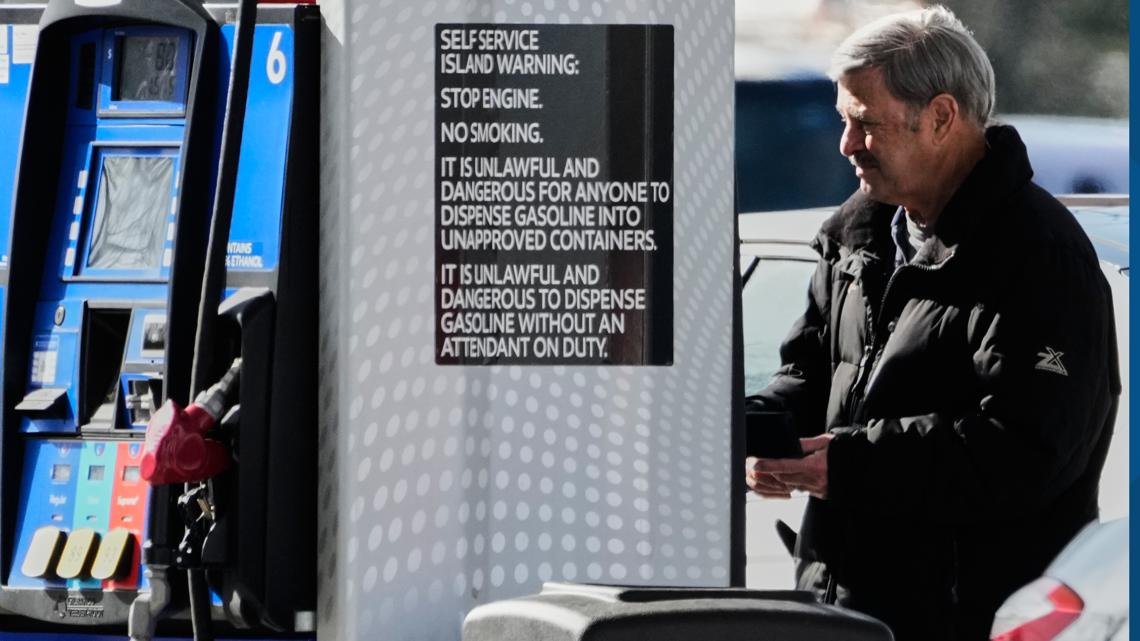
The national average for regular gasoline rose to $4.164/gal (from $4.140 one day prior) while diesel reached $5.669/gal Tuesday (up from $5.646 Monday and $5.490 last week); California averaged $5.934/gal. Crude oil repeatedly topped $100/bbl amid tensions after the Feb. 28 U.S.-Israeli strike on Iran and shipping disruptions in the Strait of Hormuz (roughly 20% of global oil flows), though a two-week ceasefire led to the strait's reopening. Elevated diesel and jet fuel prices are likely to increase transportation and air travel costs and add inflationary pressure across supply chains.
Diesel near-record levels are the more important structural development here — unlike gasoline, diesel is the marginal input for freight, agriculture and industrial supply chains, so continued diesel tightening transmits to core goods prices within 6-12 weeks. Expect localized diesel scarcity to amplify freight rate volatility: capacity-constrained carriers will raise surcharges quickly while price-sensitive shippers push toward modal substitution (rail/barge) where possible, creating second-order dislocations in routes and inventory patterns.
Regional fuel divergence (West Coast premiums driven by regulatory blends and refinery geography) creates persistent arbitrage opportunities and margin dispersion across refiners and coastal storage operators. Over the next 4-8 weeks refinery maintenance season and CARB/RVP blend windows will likely keep West Coast cracks elevated relative to Gulf Coast, favoring refiners with export capacity or coking capability.
Policy and geopolitical catalysts dominate short-term tail risk: a renewed escalation in the Gulf or coordinated OPEC+ discipline could push Brent back above $110 within months, while a durable diplomatic détente plus SPR releases or a demand softening can reverse moves inside 30-90 days. Inflation passthrough is not instantaneous — monitor diesel futures curves and freight rate indices (e.g., Cass, Truckstop) for a 4-12 week lead on CPI/PCE goods inflation.
Trading should be sized to capture a volatility premium rather than directional conviction: favor option structures and relative-value pairs that monetize regional/refining spreads and diesel tightness while limiting downside to a known premium. Key execution triggers: Brent > $100 or diesel basis widening >$0.40/gal vs 3-month average to add risk, and evidence of coordinated SPR or OPEC easing to take profits.
AI-powered research, real-time alerts, and portfolio analytics for institutional investors.
Request DemoOverall Sentiment
mildly negative
Sentiment Score
-0.15
