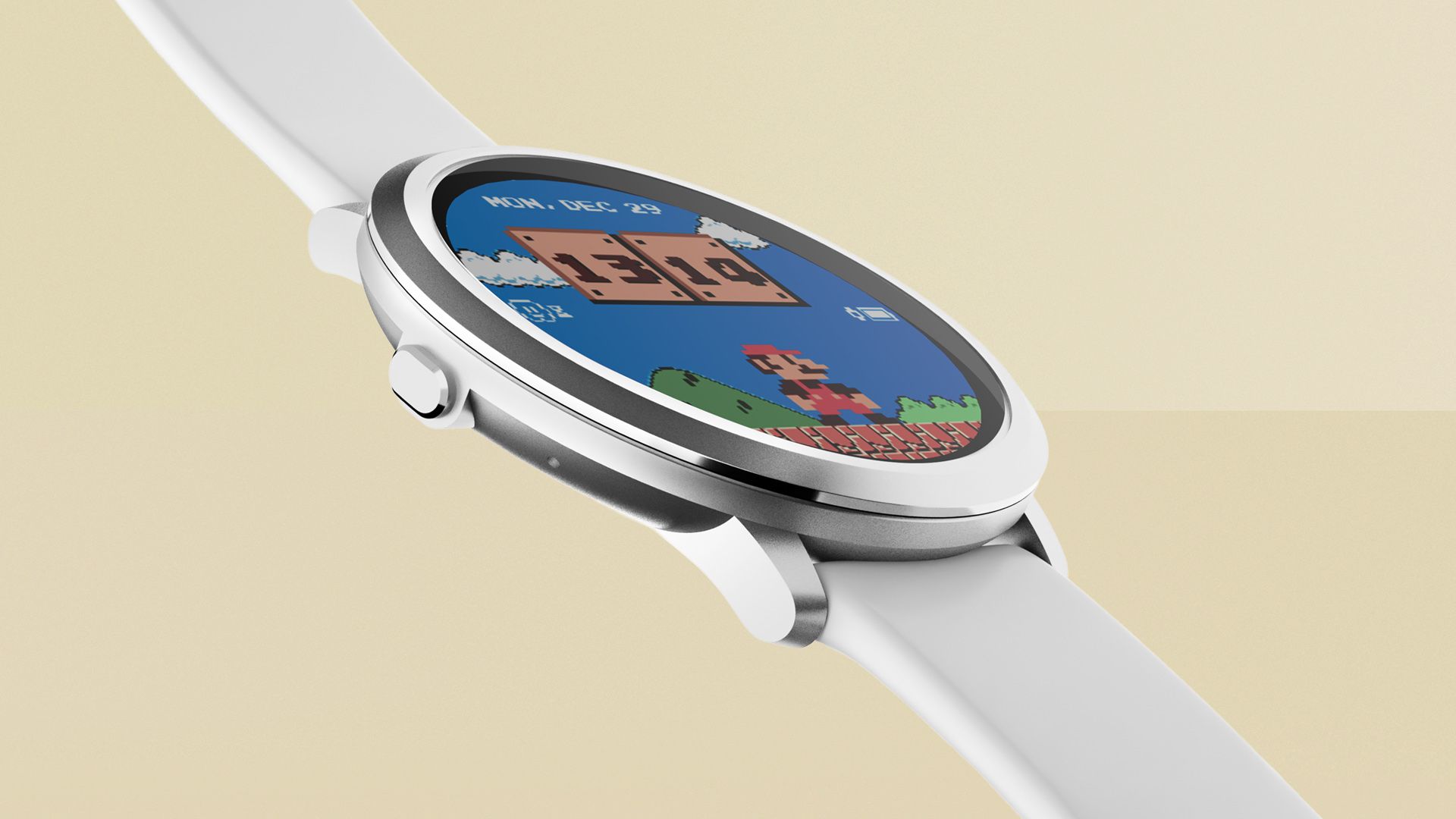
Pebble has relaunched the Pebble Round 2 smartwatch featuring a 1.3-inch edge-to-edge e-paper display, an 8.1mm case and 10–14 day battery life with an always-on screen; pre-orders are $199 with shipping expected May 2026 and options in gold, silver and black with 14mm and 20mm straps. The comeback is led by a five-person, investor-free team emphasizing a calm, minimalist product strategy, open-source PebbleOS and hardware schematics, limited sensors (no HR sensor or speaker) and selective AI integrations (Claude, on-device voice capture) aimed at privacy and long battery life. For investors and competitors, the announcement signals a niche, product-driven revival that is unlikely to move markets but could affect positioning and innovation dynamics within the wearables segment.
Market structure: Pebble’s Round 2 at $199 signals incremental demand for low-power, niche wearables rather than a mass-market displacement of Apple/Android incumbent devices. Winners: Google (GOOGL/GOOG) as an enabler of open OS ecosystems and AI integrations, small component suppliers (e-paper, low-power MCUs) and AI partners (Anthropic/Claude). Losers are legacy premium watch ASPs only if niche devices scale beyond 50k–100k units annually; otherwise impact on GRMN should be neutral to modest downwards pressure on casual-wear segments.
Risk assessment: Tail risks include data-privacy/regulatory action (EU AI Act or CCPA-style litigation) that could force on-device AI changes, supplier disruption for e-paper/batteries, or a failed community revival causing demand <20k pre-orders. Immediate: market reaction is negligible (days); short-term (30–90 days): pre-order and review data will drive sentiment; long-term (12–36 months): open-source ecosystems could erode incumbents’ feature premiums. Hidden dependency: Pebble’s reliance on third-party AI integrations (Claude) and volunteer developer base creates single-point ecosystem risks.
Trade implications: Direct plays — tactically bias to GOOGL (ecosystem/AI optionality) and avoid or hedge GRMN exposure to casual-wear risk. Options: implement a 6-month GOOGL call-spread (buy 5% OTM, sell 25% OTM) sized 1–2% portfolio to capture AI/OS upside while capping cost; pair trade — long 1.5% GOOGL vs short 1% GRMN, reassess after 60 days and when 1st reviews hit. Sector rotation: trim premium-wear hardware long exposure by 1–3% in favor of semiconductor/display suppliers if pre-orders >50k in 30 days.
Contrarian angles: Consensus overestimates threat to incumbents and underestimates the platform value of an open-source Pebble that could catalyze long-tail developer monetization; this is underpriced in GOOGL’s ecosystem optionality. Conversely, if community momentum fails, reaction will be worse for small suppliers than for GRMN. Historical parallel: niche hardware revivals (Fitbit→acquisition) show small devices can become acquisition targets — treat any supplier rally as event-driven, not structural.
AI-powered research, real-time alerts, and portfolio analytics for institutional investors.
Request DemoOverall Sentiment
mildly positive
Sentiment Score
0.32
Ticker Sentiment
