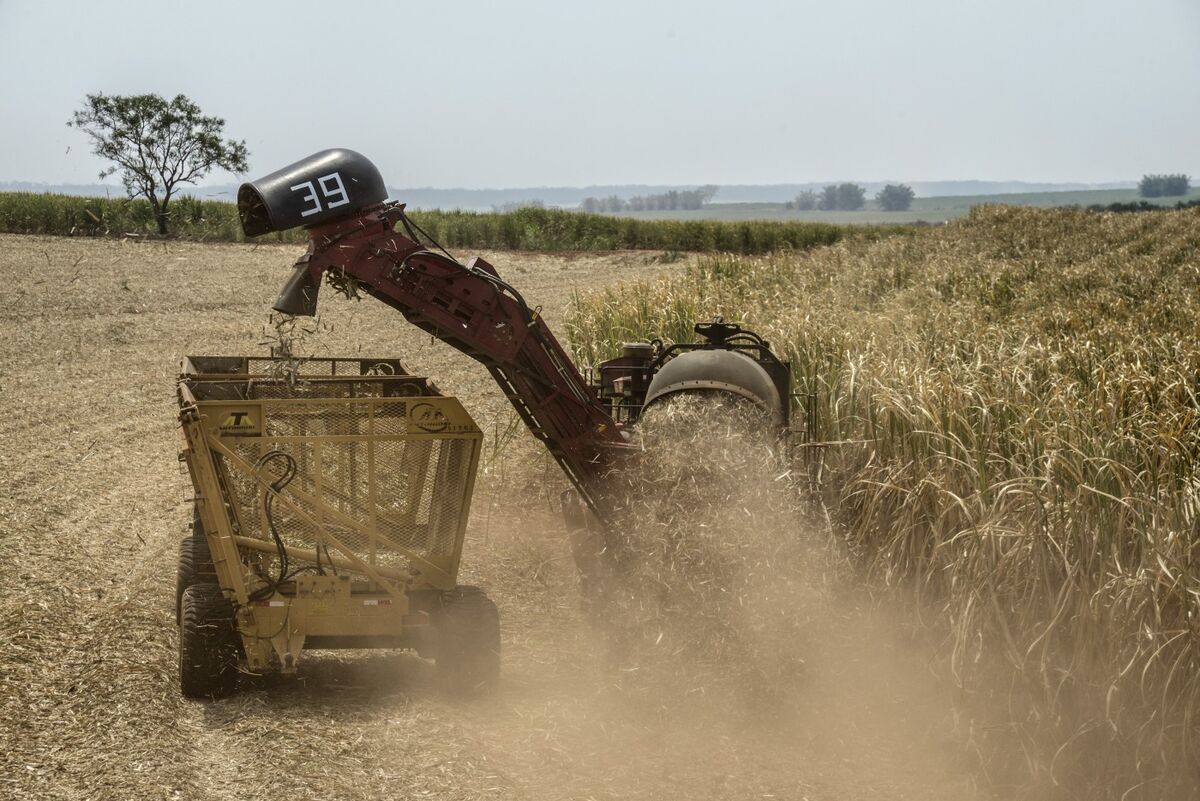
Raw sugar futures in New York climbed for a second session as market participants speculated Brazilian mills may allocate more cane to ethanol rather than sugar. Brazilian millers can switch production toward biofuel when it is more profitable; the prospect of such a shift could tighten sugar supply even as raw sugar futures have already fallen more than 20% year-to-date on a strong supply outlook, prompting potential reassessment of positions in sugar futures and agribusiness exposure to Brazilian output.
Market structure: A switch by Brazilian mills from sugar to ethanol transfers near-term supply out of the global raw-sugar market and into fuel markets, tightening sugar balances and supporting prices after a >20% YTD decline. Direct winners are Brazilian ethanol sellers and mills with flexible crush margins; losers are short-duration sugar longs and low-margin refiners/importers. A 5–15 percentage-point diversion in cane-to-ethanol could plausibly lift ICE raw sugar (SB) 15–30% within 1–3 months under typical demand elasticities.
Risk assessment: Key tail risks include an adverse weather shock (frost/drought) that reduces cane yield (large upside for sugar), a policy reversal on Brazilian ethanol mandates, or an ethanol oversupply that collapses fuel margins. Immediate (days) moves will be rumor-driven; short-term (weeks–months) will follow actual allocation reports and gasoline price swings; long-term (quarters–years) depends on sustainable biofuel demand and RFS-type policy shifts. Hidden dependencies: RBOB/gasoline prices, BRL moves, and US corn ethanol demand interact non-linearly with sugar/ethanol spreads.
Trade implications: Implement directional sugar exposure via ICE SB futures or 90-day call spreads and capture relative value by shorting corn exposure (Teucrium CORN, CORN) to hedge ethanol substitution risk. Use modest sizing (1–3% notional per trade), explicit stops (8–12%) and profit targets (15–25%) and prefer calendar or call-spread structures to limit theta risk. Watch implied vol; buy options when IV < realized vol over prior 30d.
Contrarian angles: Consensus assumes permanent diversion; history shows allocation can revert when ethanol margins compress — ethanol oversupply could send sugar lower again. Mispricing risk: a quick 10–20% sugar rally could be overdone if Brazilian domestic fuel demand weakens or BRL weakens >3%. Use tranche scaling and trigger-based sizing tied to UNICA/CONAB allocation prints and weekly BRL moves.
AI-powered research, real-time alerts, and portfolio analytics for institutional investors.
Request DemoOverall Sentiment
mildly positive
Sentiment Score
0.25
