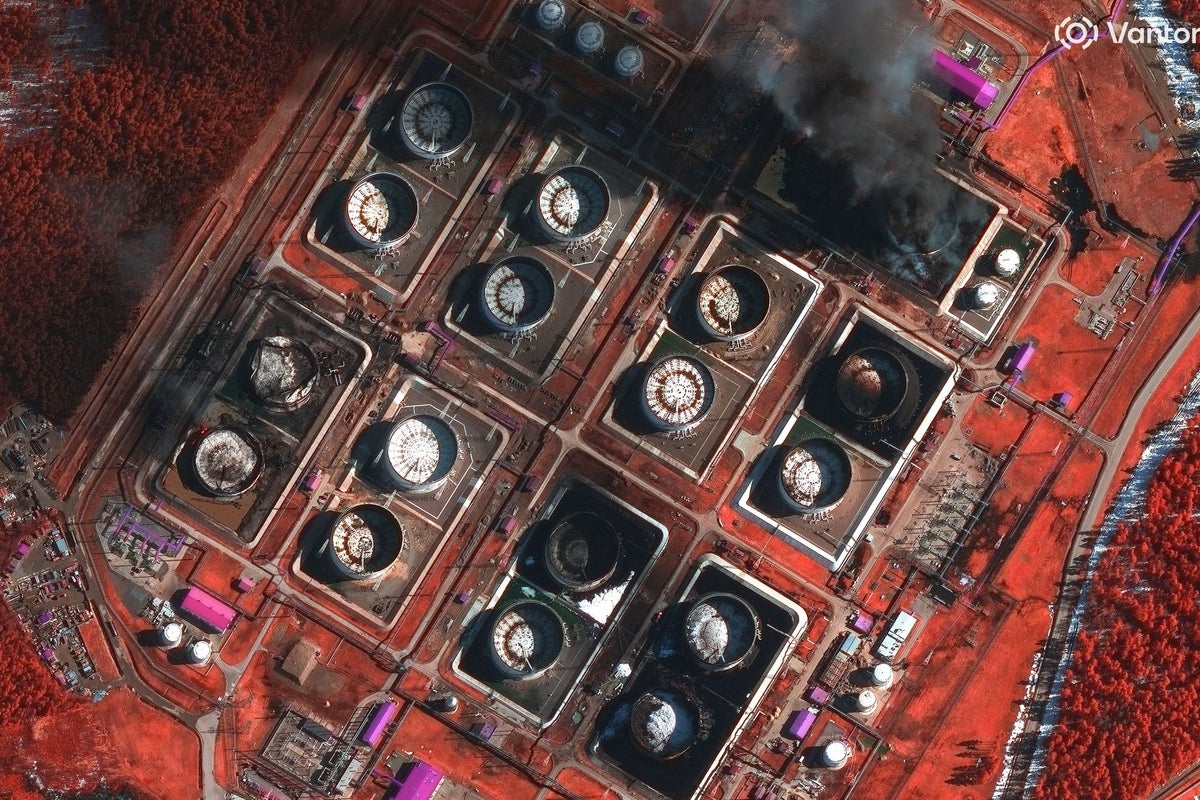
Ukraine has intensified strikes on Russian oil export infrastructure — including three strikes on Primorsk in two weeks and recent attacks on the Sheskharis terminal and a Lukoil refinery in Kstovo — raising near-term risk of Russian export disruptions and upward pressure on energy prices. Russian strikes and Ukrainian operations have also damaged Ukrainian power infrastructure (≈350,000 without power), trapped 41 miners, killed three in Odesa, and sunk a cargo vessel (1 dead, 2 missing), underscoring escalating kinetic risks to shipping, grain exports and logistics. Zelensky warned a prolonged Middle East war could reduce US support (notably Patriot deliveries), increasing defense-supply risk and geopolitical uncertainty. For portfolios, expect a risk-off reaction with potential short-term upside for oil, shipping insurance rates and defense/security-related equities, and heightened volatility in commodity and logistics-linked assets.
The tactical escalation against export infrastructure is a classic asymmetric lever: relatively low-cost, high-impact strikes that create outsized dislocations in logistics and insurance markets without changing upstream Russian production quickly. Expect acute spikes in freight/tanker rates and regional crude differentials (Baltic/Black Sea vs Northwest Europe) over the next 2–12 weeks as shipping reroutes and insurers widen war-risk premia; these ripples will compress refinery intake in Europe and force buyers to pay premiums for replacement barrels. Over a 3–12 month horizon the durability of the price impact hinges on two levers — (1) whether Western allies materially curb Kyiv’s strike tempo in exchange for a diplomatic concession (fast de-escalation), and (2) whether state actors (Russia, India, China) ramp alternative routings and storage to neutralize chokepoints (slower bleed).
Second-order winners are specialty maritime and war-risk insurers, owners of modern double-hulled tankers and flexible transshipment operators who can arbitrage higher freight; losers include owners/operators concentrated in vulnerable littoral ports, grain exporters reliant on Odesa, and European refiners with tight crude slates. Defense demand is a two-tranche story: near-term push for more short- and medium-range air-defence interceptors (patriots, C-RAM) that drives order volatility over 3–12 months, and a longer-term structural increase in tactical drone/ counter-drone spend over multiple years. Watch the political calendar: US engagement in the Middle East is the dominant catalyst — a sustained Iran escalation within 30–90 days materially raises the premium, while a quick diplomatic de-escalation or SPR release could shave 20–35% off the peak move in oil and freight within weeks.
AI-powered research, real-time alerts, and portfolio analytics for institutional investors.
Request DemoOverall Sentiment
strongly negative
Sentiment Score
-0.70
