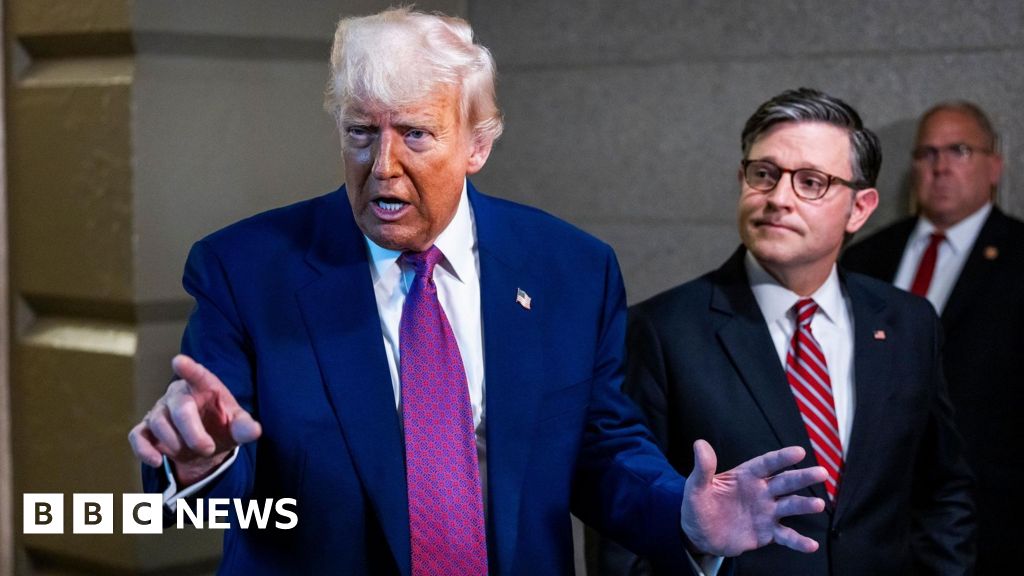
President Trump and House Republicans are negotiating the "One Big Beautiful Bill Act," aiming to extend 2017 tax cuts and increase spending on defense and border security, while facing opposition from the House Freedom Caucus seeking deeper spending cuts and Republicans wanting larger tax cuts for their constituents. The CBO estimates the bill would add $2.3 trillion to the national debt over the next 10 years, and Democrats uniformly oppose the legislation, citing benefits for the wealthy and harm to lower-income Americans; passage in the House is uncertain due to a narrow Republican majority and internal divisions, with a self-imposed deadline looming and the bill then heading to the Senate for further consideration.
President Trump and House Republicans are engaged in critical negotiations for the "One Big Beautiful Bill Act," a comprehensive tax and spending package aimed at extending the 2017 tax cuts, eliminating taxes on tips, increasing defense and border security spending, and reducing government healthcare programs. However, the bill faces significant hurdles: the Congressional Budget Office (CBO) projects it will add approximately $2.3 trillion to the U.S. national debt over ten years, challenging stated goals of fiscal deficit reduction against a backdrop of an existing national debt cited at around $36.2 trillion. Internal Republican divisions are prominent, with the House Freedom Caucus demanding deeper spending cuts, while other Republicans seek larger state tax credits for their constituents. Given the narrow Republican majority in the House and unified Democratic opposition—who argue the bill disproportionately benefits the wealthy and harms lower-income Americans—passage is uncertain. The White House dismisses debt concerns, anticipating economic stimulus from tax cuts and revenue from tariffs, a view not shared by most economists or the CBO. With a self-imposed end-of-month deadline looming and Speaker Johnson targeting a House vote as early as Wednesday night or Thursday, the legislative path remains precarious, as any House approval would be followed by Senate consideration and potential amendments. The overall sentiment surrounding these negotiations is negative and the tone uncertain, reflecting the contentious political dynamics and potential adverse fiscal consequences, which carry a moderate market impact score of 0.6.
AI-powered research, real-time alerts, and portfolio analytics for institutional investors.
Request DemoOverall Sentiment
Negative
Sentiment Score
-0.30
