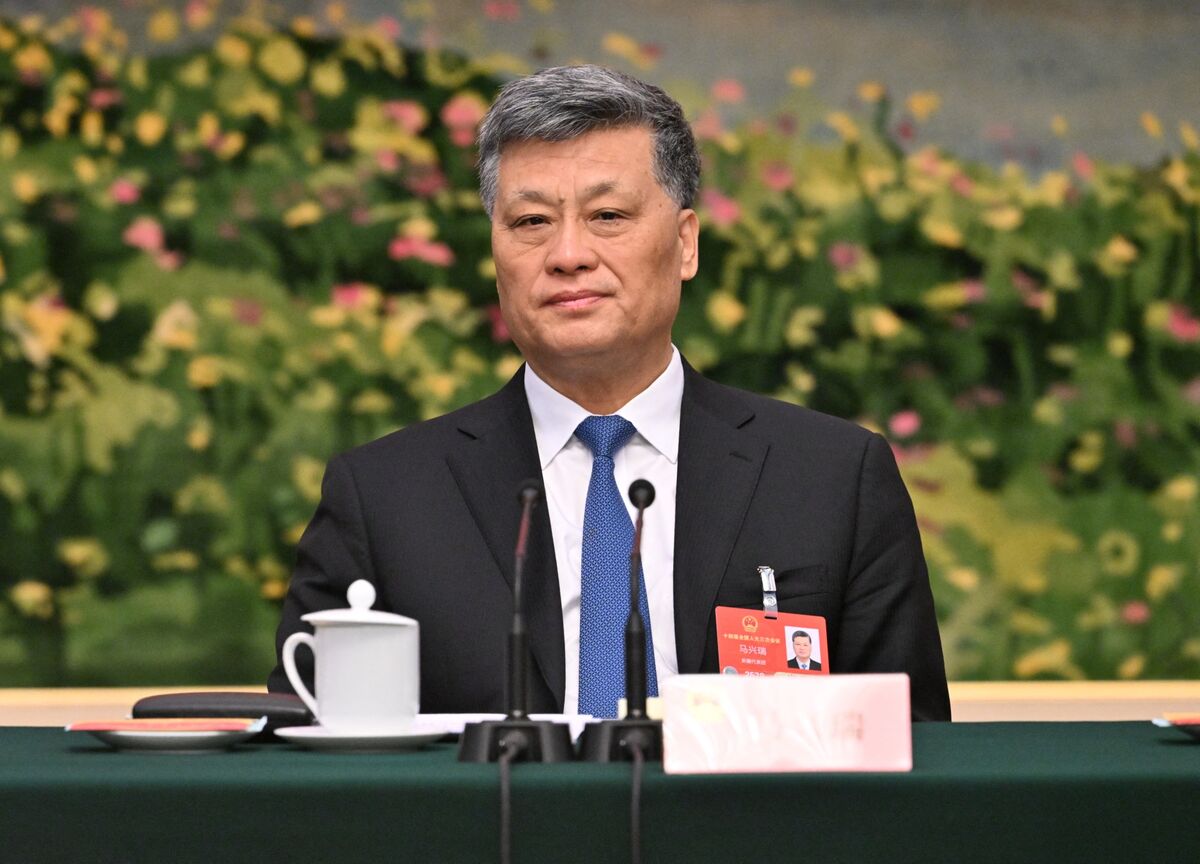
China placed Politburo member Ma Xingrui, former Xinjiang party secretary, under investigation for "severe violations" of laws and party discipline, in what Xinhua called the widest purge since 1976. The move signals a widening of Xi Jinping's anti-corruption campaign and increases political and policy continuity risk for Chinese markets and emerging-market exposure. Expect near-term risk-off flows in China equities and FX and heightened regulatory scrutiny for officials and state-linked entities tied to Xinjiang or provincial governance.
Political-uncertainty shocks in China are not just headline events; they recalibrate incentives for every counterparty that depends on local-state support. Expect credit flows and project approvals to slow as local cadres de-risk — in practice this often shows up as a 50–150bp widening in onshore corporate bond spreads for firms dependent on municipal financing within 1–3 months, and a material pullback in new SOE-backed project issuance over the following 3–9 months.
Operationally, sectors with heavy licensing, security, or land-rights dependence (telecoms, surveillance/security suppliers, regional extractives, and property contractors) face a two-way shock: tighter compliance scrutiny raises transaction costs and converts contingent local support into contingent liabilities, amplifying counterparty and legal risk for foreign JV partners and underwriters. This increases the discount rate applied to China growth exposures by institutional investors — I expect equity risk premia to reprice +150–300bp in stressed scenarios over 3–12 months, not just a one-day repricing.
Near-term market signals to watch that will amplify or reverse the trade: onshore bond issuance volumes and Chinese interbank rates (days–weeks), Hong Kong IPO cadence and secondary ADR flows (weeks–months), and explicit FX intervention or capital-control adjustments from the PBoC (days–months). A swift, visible policy response (liquidity injections + explicit support for high-profile SOEs) is the clearest conditional path to mean reversion; absent that, expect a protracted risk premium tail that favors safe-haven and non-China EM reallocation.
For active managers, this is a liquidity- and information-arbitrage environment — intraday and event-driven trades around official statements, headline cascades, and bond auctions will outperform passive carries. Tail risk is concentrated in correlated funding shortfalls (property + regional government financing), where mark-to-market contagion can occur inside weeks; hedge accordingly.
AI-powered research, real-time alerts, and portfolio analytics for institutional investors.
Request DemoOverall Sentiment
mildly negative
Sentiment Score
-0.35
