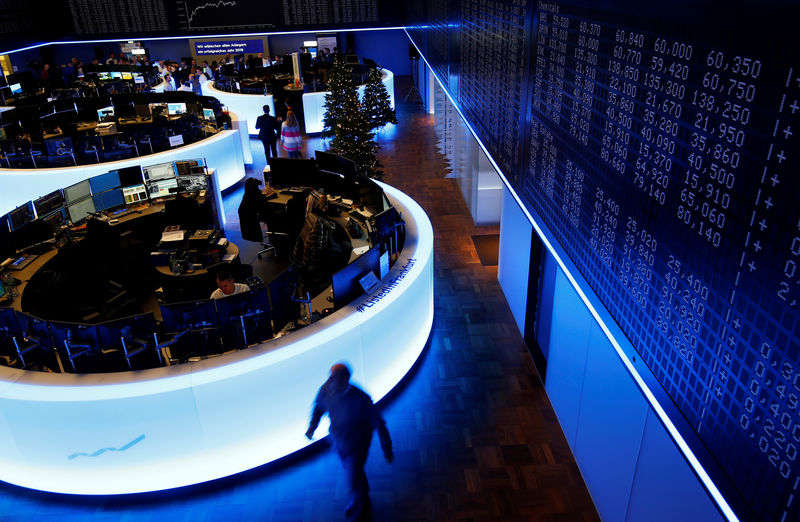
Brent crude fell 2.4% to $98.83 a barrel as reports said the U.S. and Iran are working to restart peace talks, raising hopes for a reopening of Strait of Hormuz tanker traffic. European stocks were mixed to lower, while U.S. equities rallied on Wednesday on expectations the war could end soon. Shell dipped after stronger quarterly profit was offset by reduced share buybacks, and Arm Holdings gave a first-quarter revenue outlook above estimates, supporting chip stocks.
The market is treating the negotiation headline as an oil-supply event, but the bigger near-term effect is a volatility crush in energy-linked assets. If the Strait of Hormuz risk premium fades even partially, downstream winners show up faster than upstream losers: European transport, chemicals, airlines, and consumer names get an input-cost tailwind within days, while integrateds with heavy buyback reliance lose the margin to defend sentiment. That asymmetry matters because the first move is usually in crude, but the second-order move is in equity multiples for sectors that have been priced off persistent $90+ oil.
Shell’s reaction is instructive: the market is signaling that cash-flow quality is no longer enough if capital return is perceived as being dialed back. In a softer-crude regime, integrated oils with weaker share-count reduction stories tend to de-rate faster than pure E&Ps, because investors stop paying for “defensive energy” and start modeling lower terminal FCF. The bigger relative winner inside energy is refiners and midstream with fixed-fee exposure if the geopolitical discount unwinds but physical flows normalize.
The contrarian risk is that the market is over-optimizing a diplomatic process that could fail on verification or enrichment terms, which would snap oil back higher very quickly. With Brent still near psychologically important levels, a one- to two-week headline cycle can whipsaw oil by 5-10%, but the real risk is a failed negotiation forcing a re-risking of shipping insurance and tanker availability over the next month. In that case, the current dip in crude would be a false signal and the equities that sold off on the peace narrative would be the fastest mean-reversion trade.
On semis, the Arm read-through is more important as a validation of capex durability than as a one-day earnings beat. If AI demand remains intact while energy input costs fall, that is a favorable mix for European hardware and chip supply-chain names: margins improve from both ends, and the market can rotate away from macro hedges into secular growth without paying up for the full U.S. AI complex.
AI-powered research, real-time alerts, and portfolio analytics for institutional investors.
Request DemoOverall Sentiment
mildly positive
Sentiment Score
0.15
Ticker Sentiment
