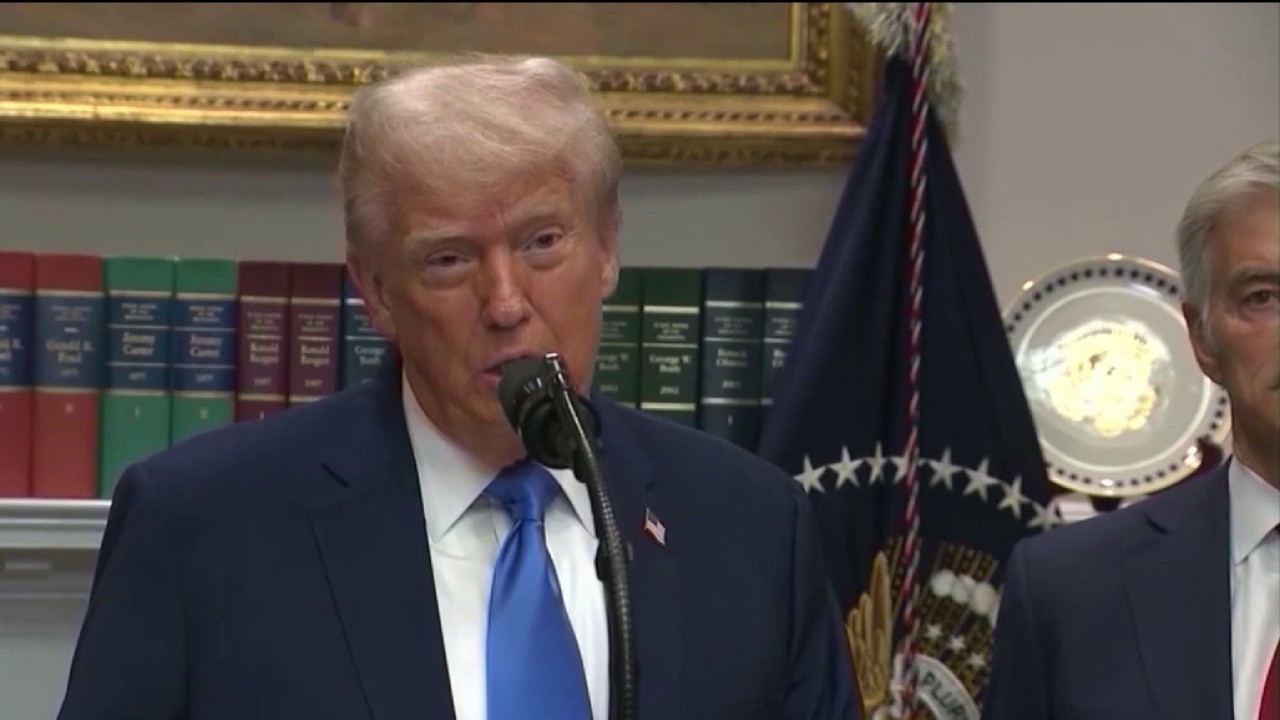
President Trump is scheduled to visit Rome, Georgia, on Thursday to speak on affordability and the economy, tour a local factory and visit Coosa Steel Corporation (speech around 3:30–4:00 p.m.), and participate in a podcast interview. During remarks he suggested possibly deploying the National Guard to Atlanta, and he endorsed Clay Fuller in the special election for Georgia’s 14th Congressional District, with early voting underway, the special election on March 10 and a potential runoff April 7; the White House has not tied the visit explicitly to the race.
Market structure: The visit and talk of National Guard deployments create localized demand winners — domestic steelmakers (procurement for infrastructure/defense-adjacent projects) and large defense primes — and losers are discretionary/local tourism names if unrest rises. Expect idiosyncratic moves (single-digit percent) in regional industrial names rather than a broad market pivot; macro cross-asset effects are muted but a short-lived flight-to-safety (TLT up ~0.5–1%, gold +1–2%) is plausible on protest escalation.
Risk assessment: Tail risks include escalation to multi-city deployments or violent protests that hit regional commerce and muni credit (stress to Georgia muni spreads +10–30bp). Time horizons: immediate (days) for volatility spikes around appearances and March 10 special election; short-term (weeks) for policy signalling; long-term (6–18 months) for any substantive industrial policy/tariff shifts. Hidden dependencies include supply-chain relocalization raising steel input prices (inflationary) and feed-through to OEM margins.
Trade implications: Tactical, small-weight plays are appropriate — overweight domestic steel and defense in the next 3–12 months while holding cash/long-duration bonds as hedges. Options: use short-dated hedges into March 10 (SPX put spreads) rather than directional large equity exposures; monitor VIX >20 as a trigger to add protection. Sector rotation: favor Industrials/Defence (+1–3% overweight) and underweight small-cap leisure/exposure to urban tourism near protest risk.
Contrarian angles: Consensus underestimates the policy implementation lag — rhetoric often outpaces budgetary action, so a durable re-rating requires concrete procurement or tariffs. The market may overpay for immediate “security” beneficiaries; if no material federal budget change within 3–6 months, expect mean reversion (-10–20% from froth prices). Historical parallel: post-2016 manufacturing rhetoric produced short-term 10–20% rallies in select steel names that largely reversed absent structural policy follow-through.
AI-powered research, real-time alerts, and portfolio analytics for institutional investors.
Request DemoOverall Sentiment
neutral
Sentiment Score
0.00
Ticker Sentiment
