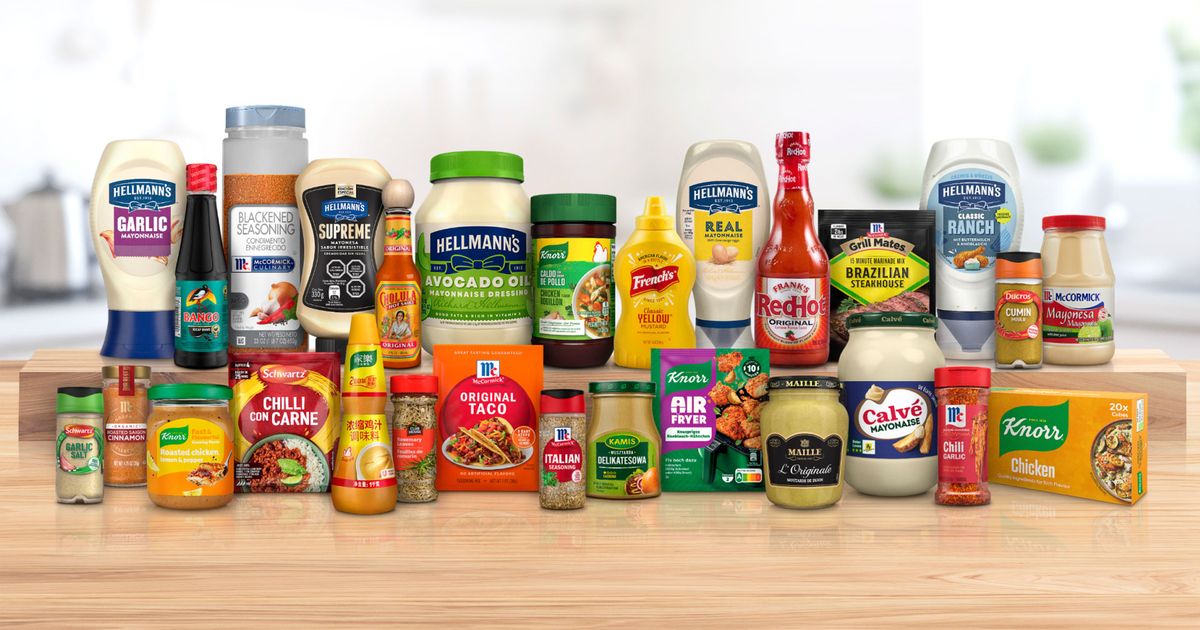
Unilever is combining its Foods business with McCormick in a Reverse Morris Trust valuing Unilever Foods at ~$44.8bn EV; Unilever will receive $15.7bn cash and 65.0% of the combined company's fully diluted equity (Unilever shareholders 55.1%, Unilever 9.9%), with combined FY25 revenues of ~$20bn. Deal metrics: EV/Sales ~3.6x and EV/EBITDA ~13.8x (based on McCormick 1‑month VWAP $57.84); targeted annual run-rate cost synergies of ~$600m (plus $100m reinvested), €6bn share buybacks (2026–29), and closing expected by mid‑2027 subject to approvals. Key risks: regulatory approvals, integration execution, and realization/timing of synergies; committed $15.7bn bridge financing supports the cash component and combined leverage is targeted ≤4.0x at close, returning to ~3.0x within two years.
This is a portfolio-shaping transaction: the obvious synergy story underpins near-term enthusiasm, but the real value arbitrage will come from capital-allocation dynamics and ownership flow rather than pure operational improvements. Expect two distinct windows of market reaction — an immediate rerating as investors revalue each standalone profile, and a multi-year phase driven by integration execution, debt paydown and Unilever’s staged sell-down; the latter creates predictable liquidity and price pressure on the combined equity into year two.
Second-order supply-chain winners include global ingredient and packaging suppliers who will gain negotiating leverage from a larger, consolidated procurement book; conversely, regional contract co-packers and small retail brands reliant on Unilever Foods’ distribution face margin squeeze and shelf displacement. Antitrust and works-council frictions are asymmetric risks: approvals could force targeted divestitures in overlapping condiment/seasoning geographies that materially reduce the modelled procurement synergies and shift where cost takeouts are achievable.
Monitor financing and leverage mechanics as a catalyst barometer — banks providing bridge facilities get paid up-front but the combined company’s refinancing timetable and covenant profile will determine near-term capex and marketing cadence. The consensus overlooks the timing and market impact of Unilever’s planned orderly sell-down; even modest annualized sell volumes from a major holder can create 6–12 month windows of supply pressure that cap upside for the combined stock but support the separated parent via buybacks and yield re-rating.
AI-powered research, real-time alerts, and portfolio analytics for institutional investors.
Request DemoOverall Sentiment
strongly positive
Sentiment Score
0.75
Ticker Sentiment
