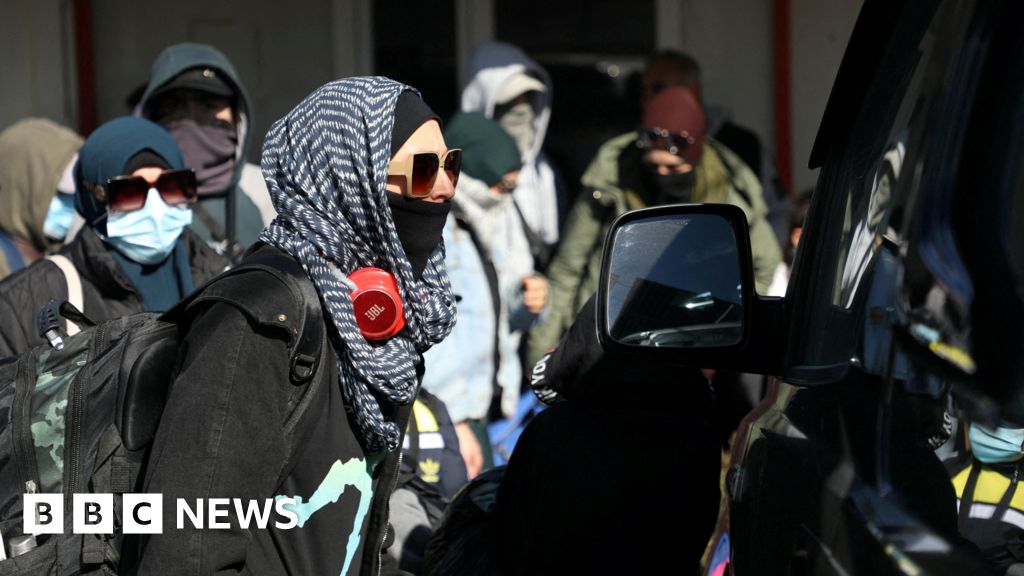
Thirty-four Australian women and children held in the Roj detention camp in northern Syria were released to travel home but were returned to the camp for 'technical reasons', underscoring unresolved coordination and permission issues among authorities in the region. Roj houses over 2,000 people from roughly 40 nationalities and the Australian government says it will not repatriate detainees while security agencies monitor any returns and prosecute criminal acts, a stance in tension with legal obligations around passport issuance and prior citizenship revocations (e.g., Shamima Begum). The episode highlights ongoing geopolitical, legal and domestic-political risks and diplomatic friction but presents limited direct implications for financial markets.
Market structure: Direct winners are defence and private security contractors (Lockheed Martin LMT, Raytheon RTX, BAE Systems BA.L) and niche contractors that supply border-control, biometrics and prison services; losers are politically exposed consumer sectors (airlines DAL/AAL, leisure) if repatriation rhetoric raises travel/security concerns. Pricing power: modest re‑rating potential for defence names (+5–15% over 3–12 months) if governments signal increased counter‑terror budgets; consumer demand elasticity means 2–5% downside in discretionary travel sentiment near-term.
Risk assessment: Tail risks include a low‑probability major terrorist event involving repatriated actors that could spike oil +10–25% and gold +8–15% and force emergency fiscal spending. Time horizons: immediate (days) = headlines/FX knee‑jerk; short (weeks–months) = political signaling and budget re‑prioritization; long (quarters–years) = sustained uplift in defence procurement if several democracies reverse repatriation stances. Hidden dependencies: election cycles, domestic legal rulings (court challenges) and coalition politics that constrain budget action.
Trade implications: Direct plays favor small, tactical long positions in LMT/RTX (3–12 month horizon) and 3‑month call spreads on oil producers (XOM/CVX) to capture geopolitical risk premia; hedge with short airline exposure (DAL). Cross‑asset: consider 1–2% short AUD exposure (FXA or AUDUSD) and tactical gold (GLD) long if violence escalates; sovereign bond impact is second‑order unless a broader regional conflict erupts.
Contrarian angles: Consensus underprices policy inertia and legal barriers — many governments will delay repatriation, muting immediate defence upside; conversely, markets may underreact to sustained political pressure that cumulatively forces higher security budgets. Historical parallel: post‑ISIS 2019 repatriation waves produced multi‑quarter political debates before procurement followed; downside is overpaying early—use event triggers (policy statements, legislation) within 30–90 days as scaling points.
AI-powered research, real-time alerts, and portfolio analytics for institutional investors.
Request DemoOverall Sentiment
neutral
Sentiment Score
0.00
