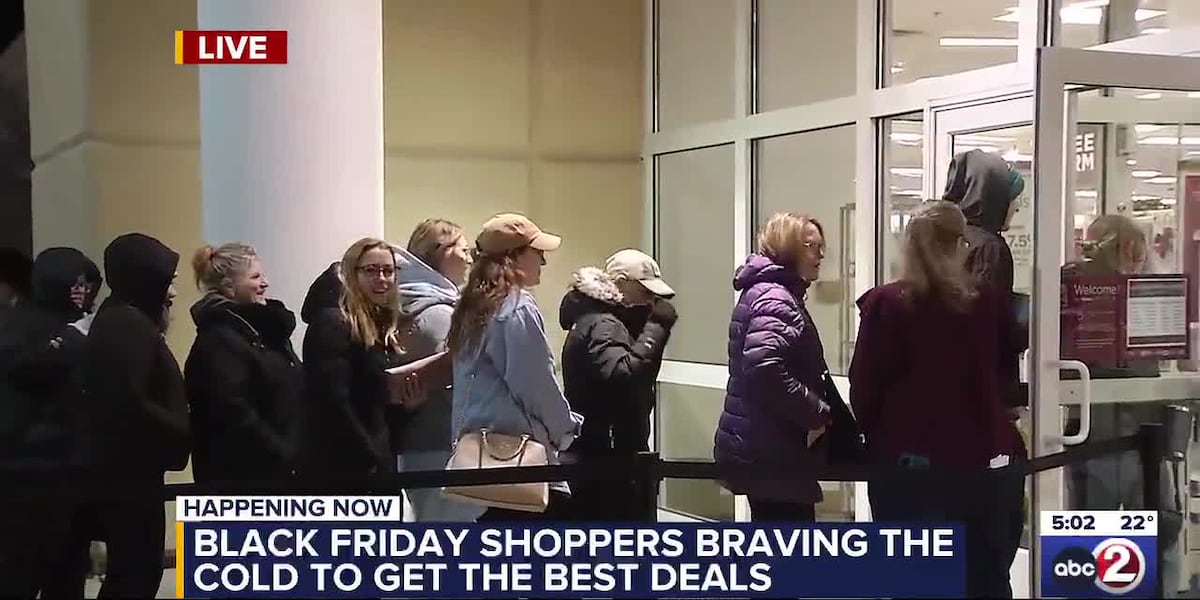
Shoppers in Ashwaubenon, Wis., braved sub-freezing temperatures for Black Friday with Kohl’s opening at 5 a.m. and Bay Park Square Mall opening at 6 a.m., but attendees and reporters noted noticeably lighter crowds than in past years. Shoppers attributed the decline in in-store congestion to the rise of online marketplaces and home delivery, even as groups continue treating in-person Black Friday as a tradition; this suggests continued substitution toward e-commerce with modest implications for brick-and-mortar traffic forecasts rather than an acute retail shock.
Market structure: Black Friday anecdote reinforces an ongoing channel shift — direct beneficiaries are large omnichannel and pure‑play e‑commerce (AMZN, WMT, COST) and payments/logistics (V, MA, UPS/FDX) which gain margin and volume; losers are mall landlords and specialty apparel reliant on foot traffic (regional REITs, KSS, M) as pricing power migrates online. Expect pricing compression on low‑margin in‑store categories and mid‑single‑digit annual traffic declines for legacy malls over the next 12–36 months, increasing capex for omnichannel fulfillment.
Risk assessment: Immediate risk (days) is noisy Black Friday data that can move retail names ±5–10%; short term (weeks/months) the tail risks are inventory gluts, shipping bottlenecks, or a consumer credit pullback that could knock 10–20% off discretionary revenue for exposed names. Long term (quarters/years) regulatory scrutiny on dominant e‑commerce platforms and CRE valuation reprice are 10–30% valuation risks for affected sectors; hidden dependencies include returns cost and gift‑card breakage timing that distort near‑term cash flows.
Trade implications: Implement relative‑value exposure: overweight AMZN and V, underweight KSS and mall REITs (XRT/PEAK) with position sizes 1–3% AUM per idea; use defined‑risk options into December/Jan retail cadence (buy AMZN Jan 2026 call spreads / buy KSS 3‑6 month put spreads). Time entries within 48 hours of consolidated Black Friday sales releases and trim/reevaluate after Dec retail sales and KSS quarterly guidance (target re‑evaluate by Feb 15).
Contrarian angles: Consensus underestimates resilient in‑store social/tradition value — certain experiential retailers (TGT, low‑cost grocers) may outperform despite online tailwinds; conversely, knee‑jerk selloffs in KSS >20% could be overdone if omnichannel initiatives show customer retention +200 bps YoY. Watch return rates and gross margin % as early indicators; mispricing windows likely around earnings revisions and Dec retail data.
AI-powered research, real-time alerts, and portfolio analytics for institutional investors.
Request DemoOverall Sentiment
neutral
Sentiment Score
0.00
Ticker Sentiment
