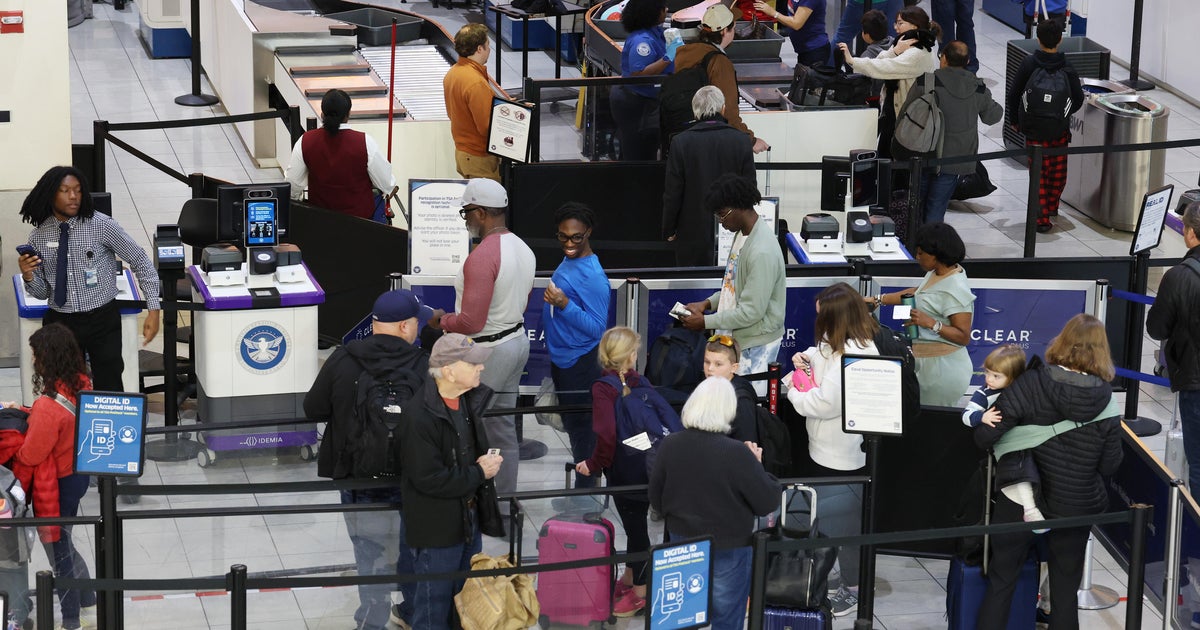
The Department of Homeland Security shutdown has entered roughly its 40th day, leaving TSA workers unpaid and many facing a missed second full paycheck on Friday, while causing hours‑long airport security lines and travel disruptions. The House has twice passed funding bills, but the Senate is deadlocked: Republicans propose funding DHS except ICE Enforcement & Removal Operations, while Democrats demand ICE policy reforms (e.g., body cameras, mask bans, warrants), and the White House ties action to the SAVE America Act. Market impact is limited but negative for travel and airport service providers; broader market moves are unlikely absent escalation (market impact ~0.2).
Operational friction at airport checkpoints is not a one-off consumer inconvenience — it creates asymmetric demand shocks that disproportionately hit low-yield, time-sensitive travel segments and adjacent discretionary revenue pools (parking, rental cars, food & retail). Margins for legacy carriers on these regional and leisure routes are thin, so a sustained drop in same-day conversion or accelerated cancellations will compress unit revenue faster than capacity can be rationalized, producing outsized short-term P&L volatility for carriers with high fixed-cost footprints.
A politically driven funding impasse accelerates a procurement wave once resolved: agencies prefer contracted technology and outsourcing to blunt future operational risk, which creates a 12–24 month revenue runway for screening equipment makers, systems integrators, and large IT/engineering contractors. That shift is durable because capital spending to automate chokepoints has a high one-time conversion rate after authorization — expect a wind-up period of awards and RFPs concentrated in the first 6–12 months post-resolution.
Two resolution paths set our risk framework. A narrowly targeted payroll/funding fix clears the immediate operational drag (fast bounce for travel names); protracted policy bargaining shifts value from airlines/travel intermediaries into contractors and staffing providers over quarters. Key short-term catalysts are procedural votes in the Senate and any targeted appropriation amendments — these are 48–72 hour liquidity events that can flip the trade direction quickly.
AI-powered research, real-time alerts, and portfolio analytics for institutional investors.
Request DemoOverall Sentiment
mildly negative
Sentiment Score
-0.35
