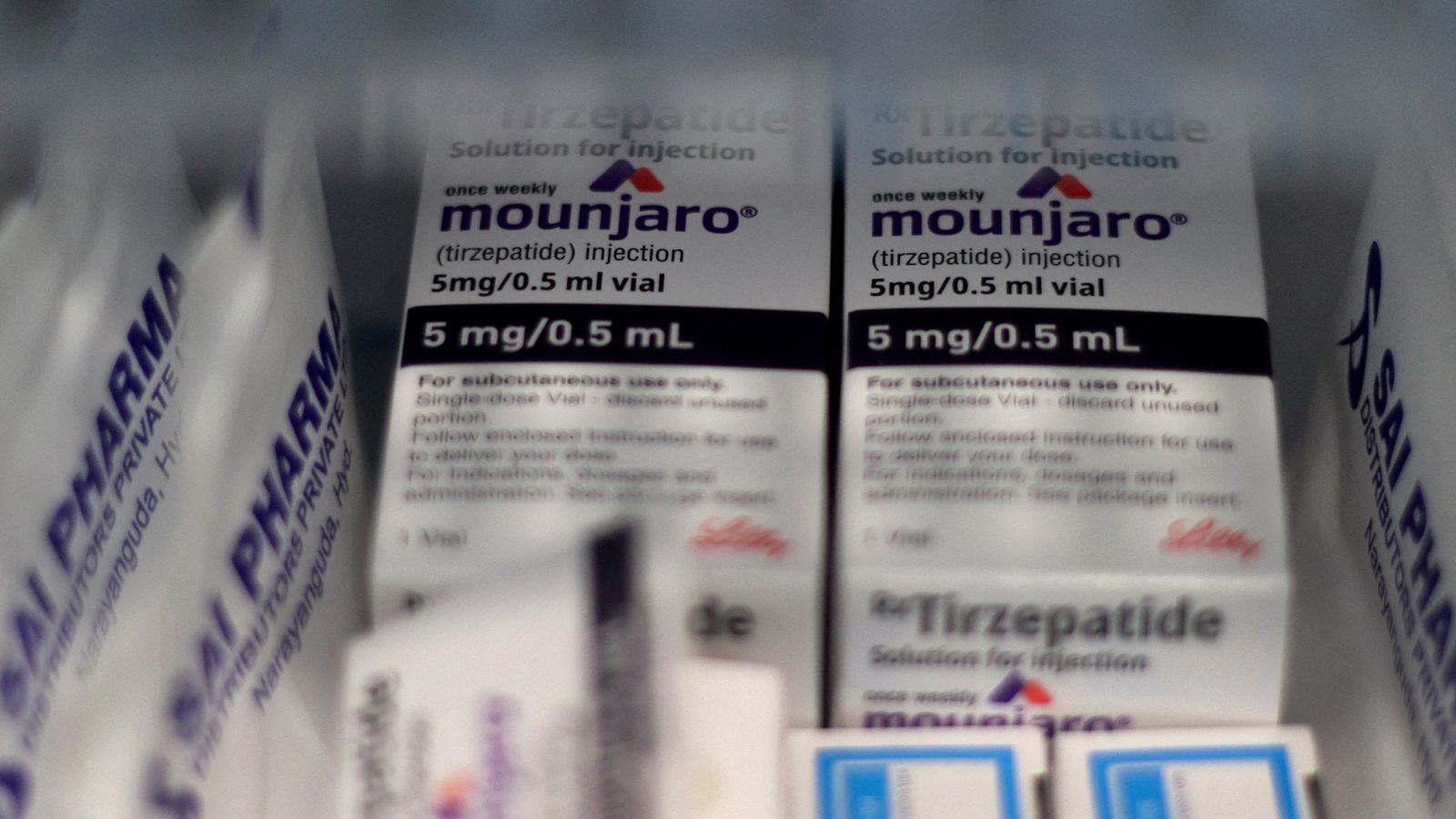
Nearly two million UK adults used GLP-1 weight-loss injections such as Mounjaro and Wegovy in the past year, with most paying privately and costs up to £300/month; new BMJ research finds roughly half of users stop treatment within a year and typically regain lost weight within 1.5 years, with weight returning about four times faster than after dieting. The findings imply these therapies may require long-term or lifelong use—raising affordability and coverage risks that could sustain demand but also prompt regulatory scrutiny and patient attrition due to side effects and cost, factors investors should consider when assessing exposure to makers and private-pay healthcare models.
Market structure: The BMJ finding implies a bifurcated outcome — GLP-1/GIP class manufacturers (Eli Lilly LLY, Novo Nordisk NVO) retain strong pricing power if therapy becomes lifelong, supporting recurring revenue per patient (+20-100% lifetime value vs one-off interventions). However high discontinuation (~50% by 1 year) and private-pay pressure (UK examples: £100-£300/mo) cap penetration and raise churn risk for clinics and retailers (WW). Expect pricing leverage to remain in branded biologics but with downside if payers demand caps or step-therapy.
Risk assessment: Tail risks include rapid payer pushback in Europe/US (price caps, coverage denials) or safety signals prompting label restrictions — each could shave 20-40% off consensus sales in 12-24 months. Near-term (days–months) volatility will track company earnings and regulator comments; medium-term (6–18 months) depends on real-world adherence data and insurer policy changes; long-term (2–5 years) hinges on whether drugs are positioned as chronic care. Hidden dependency: private pay economics — if out-of-pocket burden stays high, addressable market will plateau despite demand.
Trade implications: Tactical overweight LLY vs NVO to play tirzepatide efficacy and broader diabetes label (pair trade long LLY, short NVO), cap positions to 1–2% NAV each and use 6–12 month calls to control downside. Short consumer-weight-loss subscription names (WW) 0.5–1% NAV as secular substitution risk; hedge with healthcare insurers (UNH) long 0.5–1% as they may save on comorbidities over 3–5 years. Options: buy LLY 12-month calls (25–35% OTM) ahead of quarterly prints; sell covered calls after 20–30% appreciation.
Contrarian angle: Market consensus treats GLP-class as unobstructed secular growth — I expect payer-driven utilization management to cap peak penetration at 10–20% of obese population without coverage. If real-world 1-year retention improves >70% or major insurers (Medicare/private) signal broad coverage within 6–12 months, re-rate the sector higher; until then, avoid concentrated long-only exposure and size for regulatory volatility.
AI-powered research, real-time alerts, and portfolio analytics for institutional investors.
Request DemoOverall Sentiment
moderately negative
Sentiment Score
-0.35
