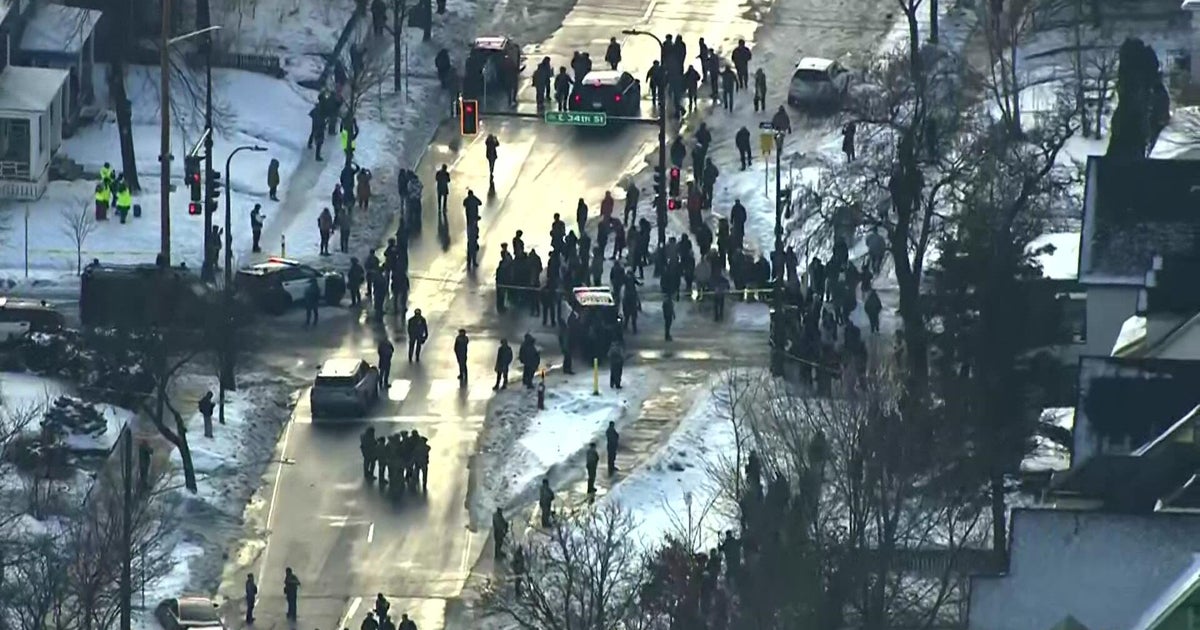
An ICE officer fatally shot a 37-year-old woman in south Minneapolis during confrontations between federal agents and protesters, with DHS asserting the officer fired after the driver 'weaponized' her vehicle and local officials and witnesses disputing that account. The incident has prompted calls for a local, transparent investigation from Hennepin County authorities and sharp political criticism from city and state leaders, intensifying scrutiny of the recent federal law-enforcement deployment and raising localized political and reputational risk for federal operations in the Twin Cities.
Market structure: This is a localized political/operational shock that creates short-lived demand shifts toward federal-surveillance, law-enforcement tech and tactical logistics vendors (body‑cams, surveillance sensors, riot control equipment) while creating reputational, legal and operating stress for municipal services and Minneapolis-area credit. Expect contract re‑allocation opportunities: incremental DHS/DOJ procurement dollars in the mid‑single to low‑double digit millions per program could flow to large defense/surveillance suppliers (LHX, RTX, NOC) over 3–9 months, but national equity impact is likely <2–3% on revenue lines in next fiscal year.
Risk assessment: Tail risks include (A) a national escalation of protests forcing DHS funding reallocation or congressional hearings that either accelerate procurement (+) or force budget/oversight cuts (−), and (B) sustained legal liability/settlements for federal agents that trigger governance changes; probability ~5–15% over 6–12 months but impact on specific contractors could be ±10–25% EPS. Hidden dependencies: DOJ/Hennepin County investigation outcomes within 7–90 days will materially alter narrative and federal posture; media/video releases are high‑info catalysts.
Trade implications: Favor modest, event‑driven long exposure to companies with direct federal contract pipelines for surveillance/evidence systems (LHX, AXON, RTX) sized 1–2% each with 3–9 month horizons; use 3‑month ATM calls to monetize expected volatility spikes around investigations/procurements. Hedge municipal credit risk in portfolio concentrated in Minneapolis/Hennepin issuers by trimming exposure 50% if holdings >1% and by buying short‑dated muni‑spread protection if 10yr Hennepin/Treasury spread widens >15bp.
Contrarian angles: The consensus view that this is purely a political headwind misses the procurement reflex: historically after localized civil‑unrest federal agencies increase non‑lethal and evidence‑capture spending for 6–18 months (Chicago 2012, Baltimore 2015 analogs). Reaction is likely underdone for specialized vendors (AXON) and overdone for local muni credits where spreads may mean‑revert once investigations conclude; trade accordingly with tight stop limits.
AI-powered research, real-time alerts, and portfolio analytics for institutional investors.
Request DemoOverall Sentiment
moderately negative
Sentiment Score
-0.52
