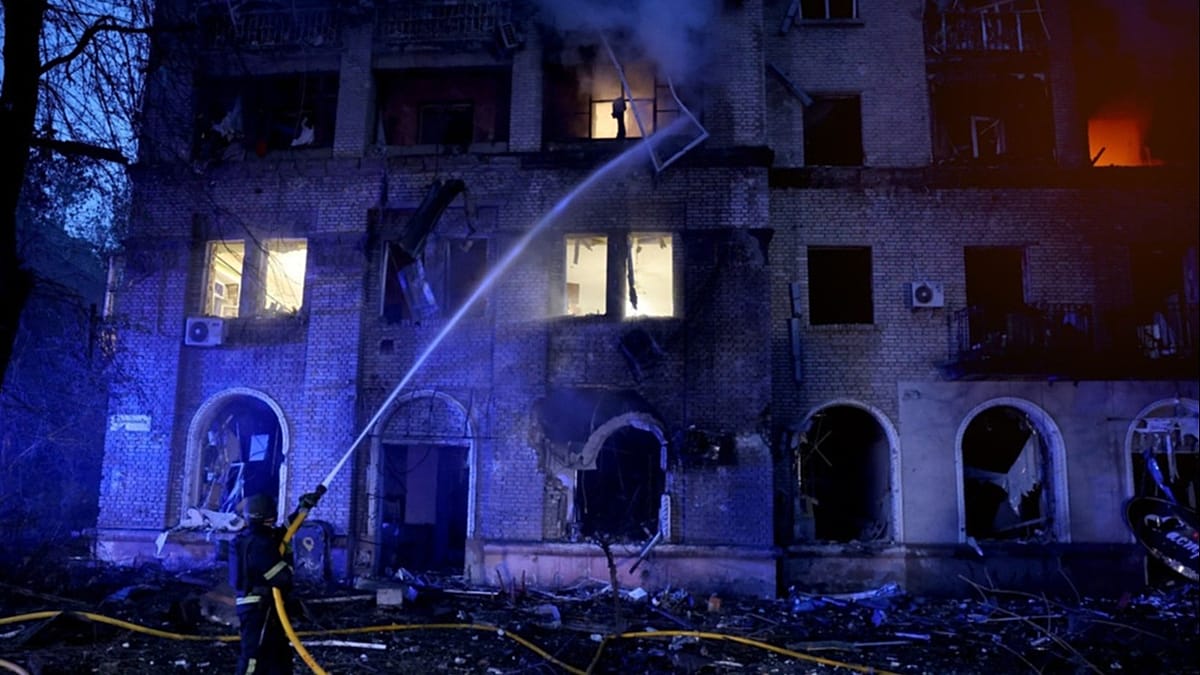
Ukraine reported one of Russia’s largest recent barrages, with at least 524 Shahed drones and close to two dozen ballistic and cruise missiles launched overnight across eight regions, injuring more than two dozen civilians. Russia also said it shot down or jammed more than 1,000 Ukrainian drones over the prior 24 hours, underscoring a sharp escalation in long-range strikes on both sides. The article highlights worsening war risk, continued pressure on energy and infrastructure targets, and no visible progress toward a peace deal despite US diplomatic efforts.
The market consequence here is not a one-day headline trade but a sustained repricing of European security premia. The escalation raises the probability that defense procurement, air-defense interceptors, EW systems, and critical infrastructure hardening remain funded at elevated levels for multiple budget cycles, while the marginal loser is any European industrial with meaningful Ukrainian or Russian exposure through logistics, energy intensity, or sentiment-sensitive demand. A second-order effect is on energy: the real risk is not just physical damage but persistent uncertainty around Black Sea transport, power transmission, and Ukrainian refinery/storage resilience, which can add a volatility bid to refined products and regional gas power pricing even without a direct supply shock. For Russia, deeper Ukrainian strike capability increases the tail risk of bottlenecks in fuel distribution and industrial output, which can matter more for the Kremlin’s fiscal durability than headline battlefield progress. The contrarian point is that markets may be underpricing the duration of the conflict’s industrialization. Each cycle of attack/counterattack expands Ukraine’s domestic strike capacity and makes de-escalation harder, so “peace talk” headlines may continue to fade without reducing defense or energy-risk premiums. The bigger misread is assuming this only affects regional assets; the broader implication is a longer runway for NATO rearmament and higher structural demand for munitions, sensors, drones, and grid-resilience equipment.
AI-powered research, real-time alerts, and portfolio analytics for institutional investors.
Request DemoOverall Sentiment
strongly negative
Sentiment Score
-0.75
