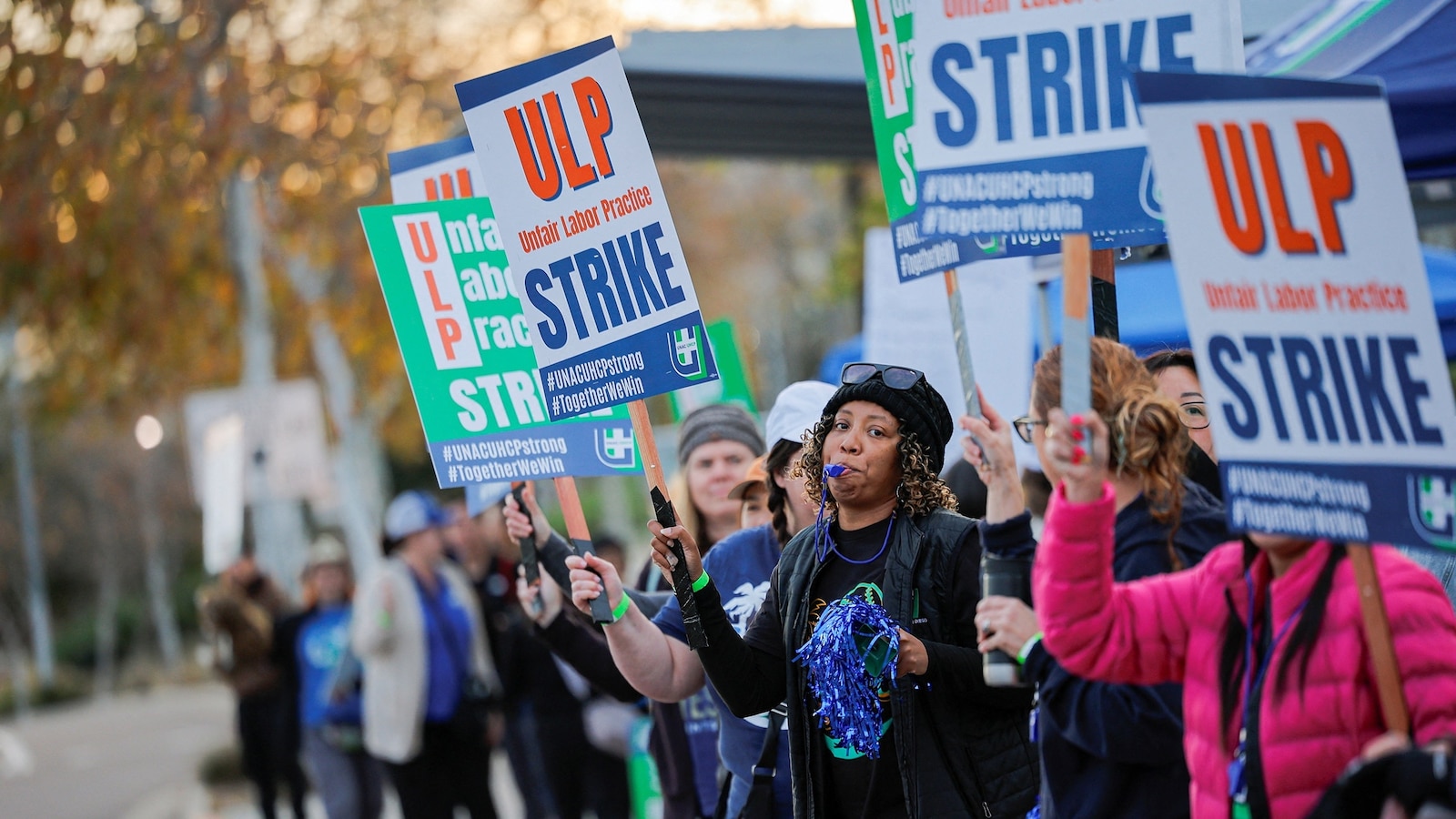
More than 31,000 nurses and health-care workers represented by UNAC/UHCP staged a strike at Kaiser Permanente facilities across California and Hawaii — affecting at least two dozen hospitals and hundreds of clinics — to demand safer staffing levels and fair wages after stalled national bargaining since May. The union has filed unfair labor practice charges with the NLRB and alleged Kaiser is seeking cuts to wages, benefits and retirement while running a surplus and making contested investments, raising operational, legal and ESG risks; Kaiser says a generous offer is on the table, hospitals remain open with contingency plans, and some appointments and elective procedures may be delayed or virtual.
Market structure: The strike externally tightens labor supply for California/Hawaii acute care and raises near‑term wage cost pressure for hospital operators (expected +3–7% labor inflation in affected facilities over 1–3 months). Winners: staffing/locum providers (AMN) and large insurers (UNH, CNC, ELV) that see temporarily lower utilization or can redeploy care; losers: margin‑sensitive hospital operators (HCA, UHS, Tenet) and elective-procedure-heavy outpatient providers with potential 2–6% revenue drag while pickets continue.
Risk assessment: Tail risks include strike escalation into multi‑week work stoppages, regulatory fines or CMS/State interventions, and reputational patient shifts that depress admissions >5% for a quarter. Immediate (days): operational disruption and appointment deferrals; short (weeks–months): wage settlements and margin compression; long (quarters–years): potential outsourcing to staffing firms and renegotiated payer contracts. Watch NLRB rulings and local bargaining timelines (30–90 days) as binary catalysts.
Trade implications: Tactical plays include small, concentrated longs in staffing providers (AMN +1–2% portfolio) and overweight large national payers (UNH/CNC +1–2%) vs shorts in hospital operators (HCA/UHS -0.5–1%). Use options to size risk: buy 3‑month puts 8–12% OTM on HCA/UHS sized to 0.5% portfolio risk; buy 3‑month calls on AMN sized 0.5–1%. Rotate out of hospital muni revenue bonds in CA (trim 30–50% exposure) for 3–12 months.
Contrarian angles: The market may underprice accelerated outsourcing — a strike wave could lift staffing firm bookings 15–25% over 6–12 months, creating a durable revenue leg. Conversely, an abrupt settlement within 7–14 days would create a mean‑reversion rally in hospital stocks; avoid oversized one‑way bets and prefer option structures or pair trades to monetize dispersion. Historical parallels (major prior nursing strikes) show limited long‑term hospital share loss but persistent cost burdens for 2–4 quarters.
AI-powered research, real-time alerts, and portfolio analytics for institutional investors.
Request DemoOverall Sentiment
moderately negative
Sentiment Score
-0.45
