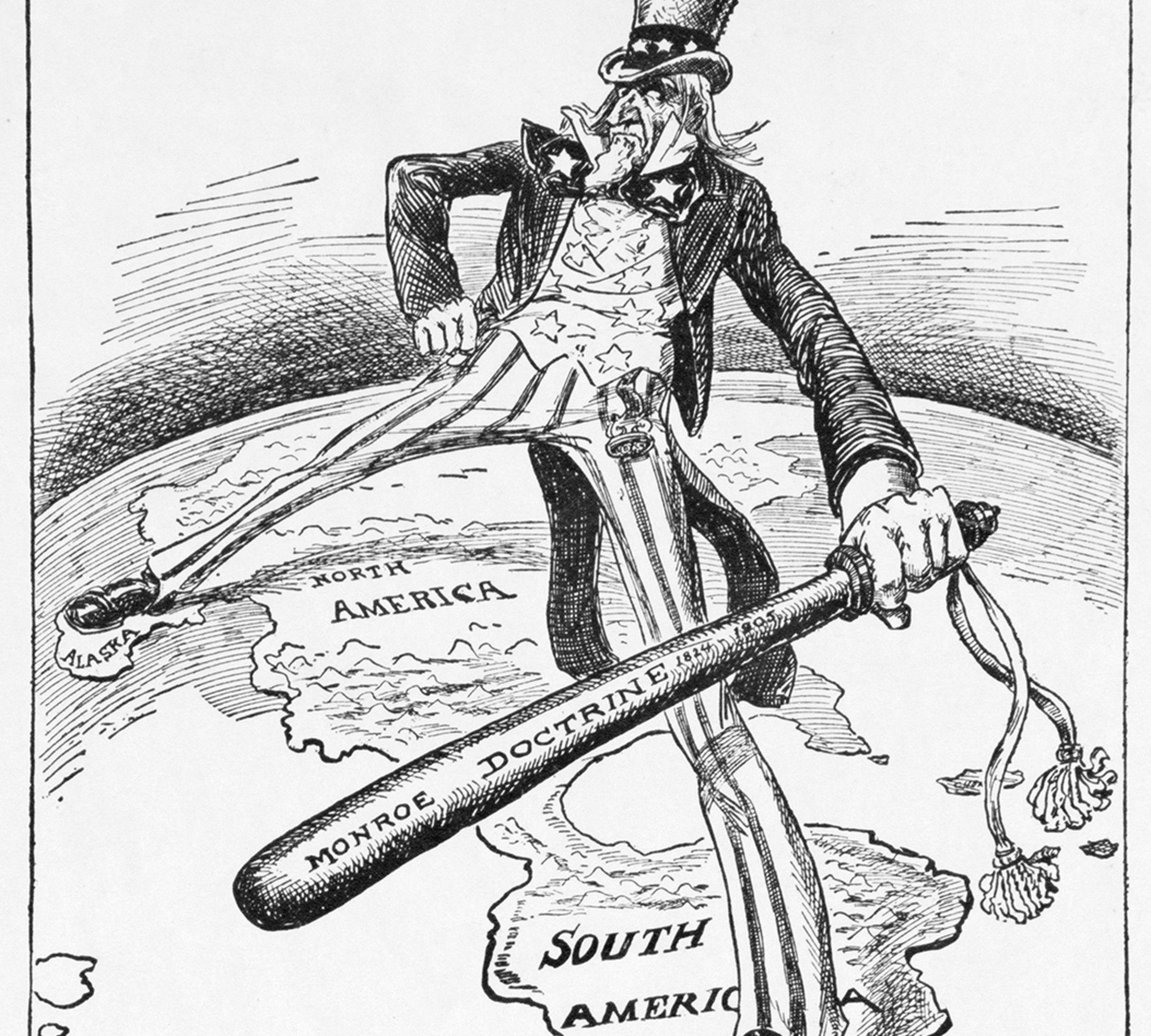
President Trump has explicitly revived the 19th-century Monroe Doctrine — framing a modern “Trump Corollary” in the administration’s National Security Strategy to counter mass migration, drug trafficking, and ‘‘hostile foreign incursion or ownership of key assets’’ in the Western Hemisphere. The administration has already pressed action against Venezuela’s Nicolás Maduro, threatened military options in Mexico and Colombia, asserted potential control over the Panama Canal, and signaled broader interventionist aims reminiscent of the Roosevelt Corollary; the shift raises renewed geopolitical risk for regional stability, potential disruptions to supply chains and energy-linked assets, and heightened policy/legal risks for investors with exposure to Latin America.
Market structure: A renewed, aggressive Western Hemisphere policy is a structural positive for U.S. defense and security suppliers (Lockheed LMT, RTX, GD) via higher program demand and urgent procurement; expect 5–15% revenue tailwinds for tactical systems and ISR over 12–24 months. Energy majors (XOM, CVX) are asymmetric beneficiaries from higher geopolitical risk premium in crude — a sustained supply-risk shock could add $5–20/bbl near-term. Losers: Latin-American sovereign credit and regional equities (EWW, ILF) and corridors exposed to canal/shipping disruption; expect EM sovereign spreads to widen +150–400bp in stressed scenarios and the MXN/COP to depreciate 8–20% if tensions escalate.
Risk assessment: Tail risks include limited military incursion (10–25% probability) raising Brent >$110 and causing localized EM defaults, or broad economic sanctions triggering countermeasures (left-tail systemic). Immediate (days) moves: FX and CDS spike; short-term (weeks–months): commodity volatility and repricing of defense capex; long-term (quarters–years): re-shoring and higher defense budgets. Hidden dependencies: remittances, Panama Canal control (container freight rates), and third-party actors (Russia/Cuba) that alter escalation paths.
Trade implications: Tactical trades should overweight defense equities (2–4% portfolio), add oil exposure via call spreads, and short/selectively hedge LatAm ETFs and MXN with 3–6 month instruments. Use options to cap capital at risk: buy call spreads on XOM/CVX and put spreads on EEM/EWW while holding 1–2% GLD as crisis hedge. Time entries within 2–6 weeks and scale on political/legal catalysts (sanctions, congressional votes, troop movements).
Contrarian angles: Consensus may overprice permanent regional instability — historical parallels (post-2014 short-lived price shocks) show energy weakness once production normalizes. If U.S. achieves quick political outcomes, oil could retrace 15–30% within 3–6 months and LatAm assets rebound; prepare mean-reversion longs if EWW/ILF fall >15% and Brent < $70. Defense names could be crowded; watch for 20–30% pullbacks if no sustained engagements.
AI-powered research, real-time alerts, and portfolio analytics for institutional investors.
Request DemoOverall Sentiment
moderately negative
Sentiment Score
-0.40
