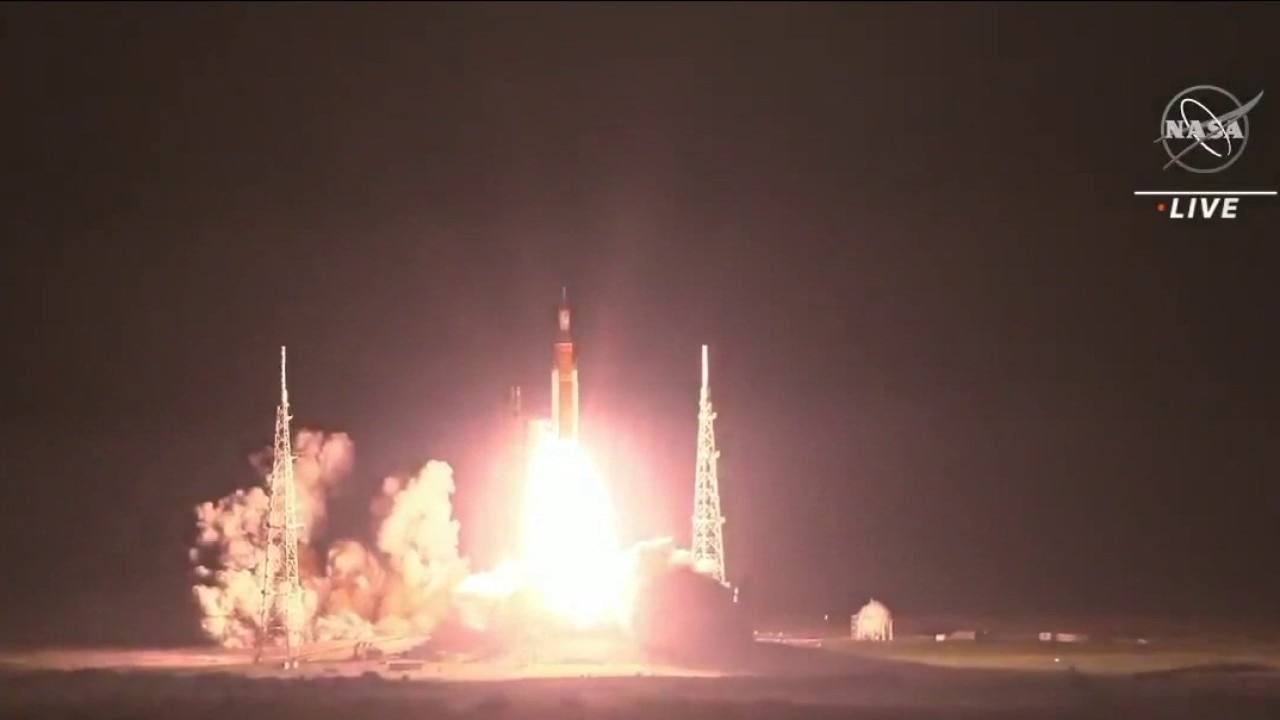
Honeywell’s Clearwater complex employs ~2,500 people and reports it is ~85% complete on Artemis IV hardware while building through Artemis IX, supporting NASA’s Artemis II crewed mission. The site produces mission-critical systems — RS‑25 main engine controllers, dual vehicle management computers, triple‑redundant navigation units and cockpit controls — supplying both the SLS and Orion programs. Positive for Honeywell’s aerospace franchise and Central Florida supply chain (hundreds of local suppliers and diverse skill levels), but the update is operational and localized with limited direct market impact.
Honeywell’s Clearwater anchor function creates a localized supply-chain moat that’s underappreciated: by internalizing system integration and final assembly within one metro, Honeywell reduces multi-node coordination friction that typically adds 6–12 months and 150–300bps of cost to complex aerospace programs. That means program revenue can convert to margins faster than a dispersed supplier base — a structural tailwind to reported aerospace margins over a 2–5 year window if NASA awards and commercial space demand remain stable.
Second-order winners are precision contract manufacturers and EMS vendors with scale in the same geography or capabilities (high-reliability soldering, radiation-hardened electronics). These firms can pick up incremental, higher-margin work without the sales friction of entering a new OEM’s ecosystem; expect their utilization and price negotiation leverage to improve 3–9 months after major program milestones. Conversely, diversified aero suppliers that rely on commodity aerostructures face relative margin pressure as program-specific system integrators capture value higher up the stack.
Tail risks are concentrated and binary: program schedule slips, a visible hardware failure, or a shift in congressional appropriations can push expected revenue and margin recognition 12–36 months later and compress implied multiples by 15–25%. Near-term catalysts to watch are contract award notices, NASA milestone payments and hot-fire/test reports — these will move forward-looking revenue recognition and are actionable within weeks-to-months. Over a multi-year horizon, the bigger catalyst is follow-on mission awards (Artemis IV–IX) which would convert a program-specific premium into a durable growth stream.
AI-powered research, real-time alerts, and portfolio analytics for institutional investors.
Request DemoOverall Sentiment
mildly positive
Sentiment Score
0.35
Ticker Sentiment
