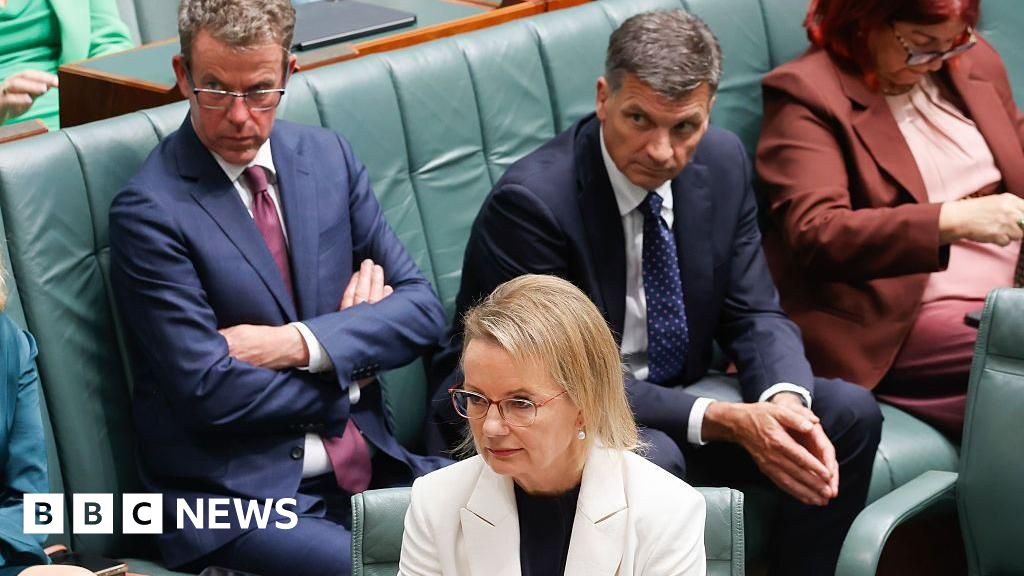
Opposition leader Sussan Ley was ousted after nine months, losing a secret Liberal Party ballot 34-17 to former shadow defence minister Angus Taylor, who named Jane Hume as deputy. Ley said she will resign as an MP and the party has suffered repeated splits and poor polling, with surveys showing the populist One Nation overtaking the Coalition for second place behind Labor; internal disagreement over energy and climate policy is a central fault line. The leadership change increases policy and political uncertainty for investors watching Australian domestic politics and sector exposure to energy/climate regulation, though immediate market impact is likely limited.
Market structure: Taylor's elevation tilts the opposition toward conservative, pro-fossil‑fuel and defense narratives—beneficiaries in a 6–12 month window would be oil & gas and domestic defense contractors, while high‑beta renewables/transition names and politically sensitive utilities face downside if policy rhetoric hardens. Pricing power shifts are modest near term because the Coalition is in opposition, but increased political noise raises risk premia on AUD and ASX small‑caps, compressing multiples by ~5–10% in stressed episodes. Cross‑asset: expect knee‑jerk AUD weakness (20–80bp) and short‑term ASX200 volatility spikes; Australian sovereign spreads could widen 5–15bp on credible risk of early poll volatility or coalition fragmentation.
Risk assessment: Tail risks include an early election (within 6 months) or a Coalition pivot that materially changes energy policy, each capable of moving sector returns by +/-20–30%. Immediate (days) effect is sentiment-driven FX/ETF moves; short‑term (weeks/months) affects sector rotation; long‑term (quarters) depends on policy concretization. Hidden dependencies: corporate capex plans already committed—real policy impact requires federal power or credible legislative path. Catalysts to watch: formal policy platform release, budget statements, and One Nation polling breaching 10–12%.
Trade implications: Tactical plays favor selective longs in WDS.AX/STO.AX and defense names (EOS.AX, ASB.AX) sized small (1–3% each) with 6–24 month holds; hedge overall market exposure with ASX200 puts or AUD put spreads for 1–3 month windows. Use pair trades to capture relative winners (big miners) versus renewables/retail energy transition losers (AGL.AX/ORIGIN-like) to exploit policy skew without net market direction risk. Options: favor buying puts (3‑month) on STW.AX or structuring AUDUSD put spreads to limit cost while retaining convexity.
Contrarian angles: Consensus overstates immediate policy power of an opposition leader—markets may overprice a permanent shift; if Taylor fails to consolidate (margin <60% in party) the short‑term market pain could reverse quickly, creating 10–20% buying opportunities in beaten renewable/utility stocks. Historical parallel: mid‑2000s leadership skirmishes created 1–3 month selloffs then rebounds when no policy change materialized. Unintended consequence: aggressive defense/energy rhetoric could accelerate corporates’ preemptive hedging or M&A, creating idiosyncratic winners beyond the obvious names.
AI-powered research, real-time alerts, and portfolio analytics for institutional investors.
Request DemoOverall Sentiment
mildly negative
Sentiment Score
-0.30
