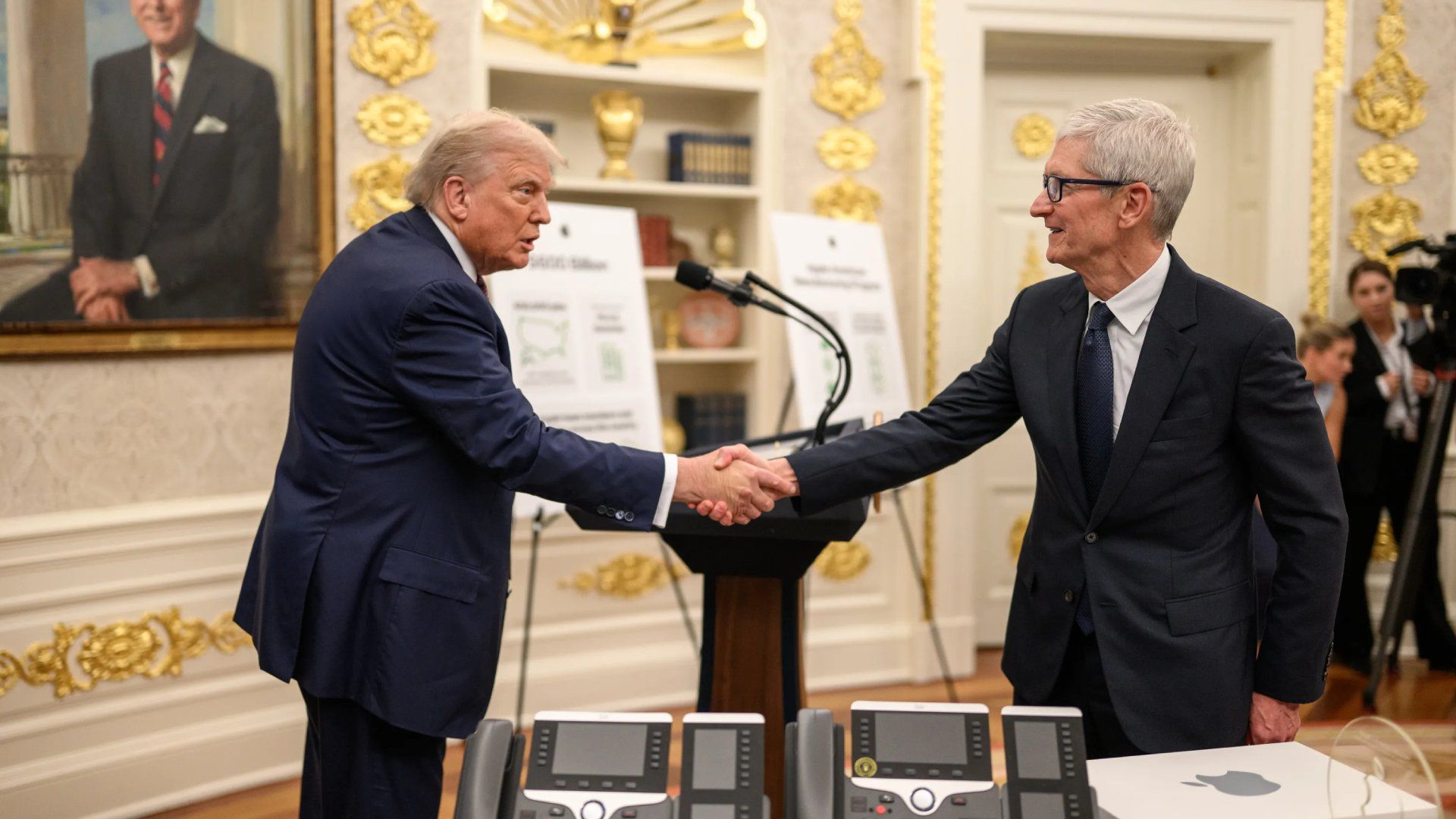
Apple CEO Tim Cook said the Trump administration is "very accessible," stressing engagement on policy rather than partisan politics and reaffirming that Apple's values remain unchanged. He highlighted Apple's priorities — user privacy, the environment, accessibility and education — and framed direct dialogue as essential for navigating complex local laws and regulations.
Apple’s ability to sustain direct, routine access to the U.S. executive branch is a non-linear governance asset: it shortens the lag between policy proposals and company-level mitigation (carve-outs, implementation windows, or technical exemptions). Practically, that reduces the probability of abrupt, revenue-damaging measures (broad tariffs, immediate export controls or forced data localization) that would otherwise force expensive, multi-quarter supply‑chain reconfiguration and inventory overhang. Treat this as volatility insurance — not an elimination of risk — which in our view compresses policy-driven earnings volatility over the next 6–18 months.
Second-order winners are Apple’s upstream contract ecosystem and capital-intensive manufacturing partners because predictable policy reduces the incentive to onshore capacity immediately. Suppliers with concentrated Apple exposure (large RF, optical and packaging vendors) see a higher effective utilization tailwind and lower working capital drawdowns if trade frictions are negotiated rather than imposed. Conversely, smaller handset OEMs and China-headquartered firms without similar Washington access are second-order losers: they face both the same regulatory scrutiny and less capacity to shape outcomes, increasing relative operational risk.
Primary tail risks remain politico-electoral swings and discrete national-security decisions that bypass negotiation (executive orders, emergency export controls or court injunctions), with event windows in the coming 3–12 months around hearings, report releases and campaign cycles. A reversal can occur rapidly if political calculus changes — price action would likely be front-loaded (days) while remediation (supply-chain shifts, legal defenses) would play out over quarters to years. The market consensus underprices the optionality embedded in sustained access: investors treat political risk as binary (on/off) when in reality it is a controllable continuum that Apple can monetize through delay, carve-outs and operational workarounds.
AI-powered research, real-time alerts, and portfolio analytics for institutional investors.
Request DemoOverall Sentiment
neutral
Sentiment Score
0.00
Ticker Sentiment
