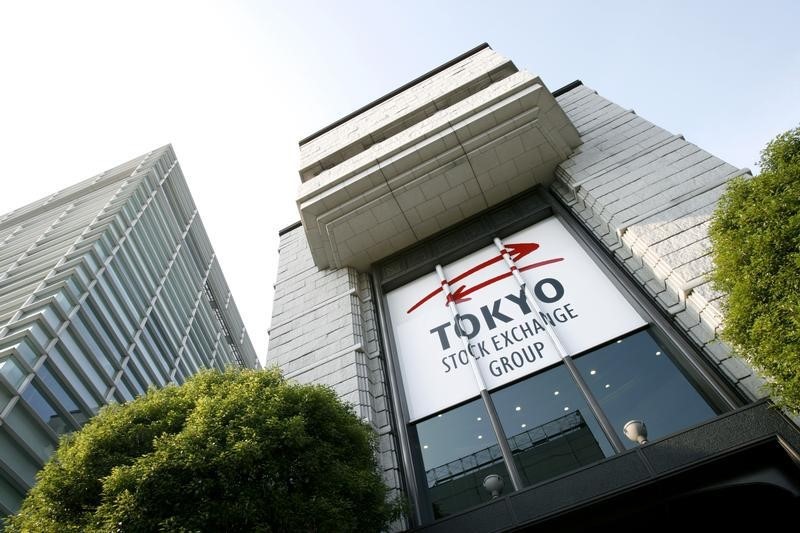
Bank of America says the recent Nikkei 225 selloff likely marked a short-term bottom after volatility spiked, but Japanese equities remain highly sensitive to escalating Middle East tensions around the Strait of Hormuz. A rapid unwind of crowded AI-linked positions amplified losses, while rising gasoline and energy prices from potential supply disruptions could prolong pressure across equities and commodities. If geopolitical tensions ease, BofA sees a resumption of the longer-term uptrend supported by solid corporate fundamentals and foreign buying; continued disruptions could trigger renewed volatility and push markets below recent lows.
The market move has created a liquidity topology where energy and shipping insurance premia are now the marginal drivers of corporate input-cost surprises — a sustained 30–80% rise in war-risk insurance and spot freight could add roughly $2–5/bbl to landed oil and raise delivered LNG/coal costs by mid-single-digit percent within 4–12 weeks. That margin shock hits high fixed-cost manufacturers and commodity processors disproportionately, compressing operating leverage where input costs cannot be fully passed through, and it mechanically favors commodity producers with short-cycle cash flows.
Crowded, long-only AI and high-beta positions have left a structural short-gamma footprint: delta-hedging around big hedges magnifies intraday moves and creates reflexive selling into news. If headlines stabilize within 2–6 weeks, expect a fast, technical squeeze in small-cap growth and AI-exposed names driven by short-covering and re-leveraging rather than fundamentals — peak-to-trough snap-backs of 15–30% are plausible in compressed liquidity regimes.
Macro-structural responses matter materially over months: policy actions such as strategic reserve releases, coordinated naval escorts, or targeted export incentives can normalize logistics costs within 2–3 months; conversely, a prolonged disruption forces durable capex reallocation into energy security and logistics resiliency, favoring E&P, LNG midstream, and specialist insurers over a 12–24 month horizon. FX and local monetary policy (notably Japan) are the wildcards — a weaker local currency amplifies domestic equity pain even if revenues are stable in USD, so hedged exposure is critical for multi-month positions.
AI-powered research, real-time alerts, and portfolio analytics for institutional investors.
Request DemoOverall Sentiment
mildly negative
Sentiment Score
-0.20
Ticker Sentiment
