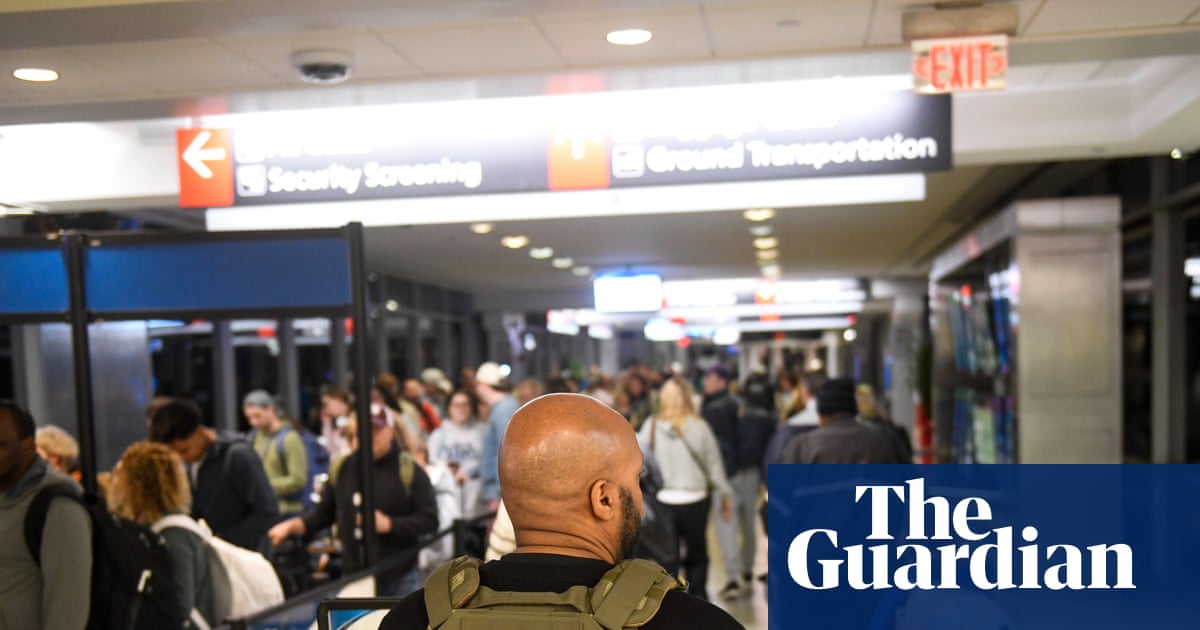
House passed a stopgap DHS funding bill 213-203 to fully fund DHS for eight weeks after rejecting a Senate bipartisan measure that excluded ICE and Border Patrol. The funding stalemate has left TSA staff unpaid since mid-February, prompted nearly 500 TSA resignations and major airport delays; the White House says Trump ordered funds to pay TSA and DHS tweeted paychecks could begin by March 30. Continued deadlock risks further disruption to airlines, airports and logistics providers and the House-Senate disagreement makes passage of a final funding solution uncertain.
The political impasse has become an operational shock to a thin-margin, timing-sensitive travel ecosystem; the dominant transmission mechanism is schedule integrity rather than headline funding. Delays and heightened absenteeism at security checkpoints create asymmetric costs: hub-and-spoke legacy carriers absorb crew re-rostering, maintenance disruptions and misconnects much faster than point-to-point low-cost carriers, so revenue-per-available-seat-mile (RASM) impacts will be highly concentrated by hub.
Second-order winners and losers are non-obvious: airport concessionaires, rental car firms and travel insurers face front-loaded cash-flow disruption from refunds and decreased dwell time while temporary demand for private screening and contract security spikes, benefiting staffing contractors and security-tech providers able to deploy quickly. Cargo and time-sensitive logistics nodes routed through affected airports will see knock-on inventory costs and rerouting premia; shippers that can flex to nearby non-impacted airports will gain pricing power.
Key catalysts compress into three horizons: days-weeks (operational volatility around peak travel dates and potential executive patching of pay), 1-3 months (Congressional horse-trading or clean funding passage that restores normalized staffing), and 6-18 months (structural responses — higher pay, overtime budgets, acceleration of automated screening tech — that change unit economics for airports and vendors). Tail risk remains a protracted political stalemate that forces permanent passenger behavior shifts and accelerates investments in screening automation and decentralised routing options.
AI-powered research, real-time alerts, and portfolio analytics for institutional investors.
Request DemoOverall Sentiment
mildly negative
Sentiment Score
-0.30
