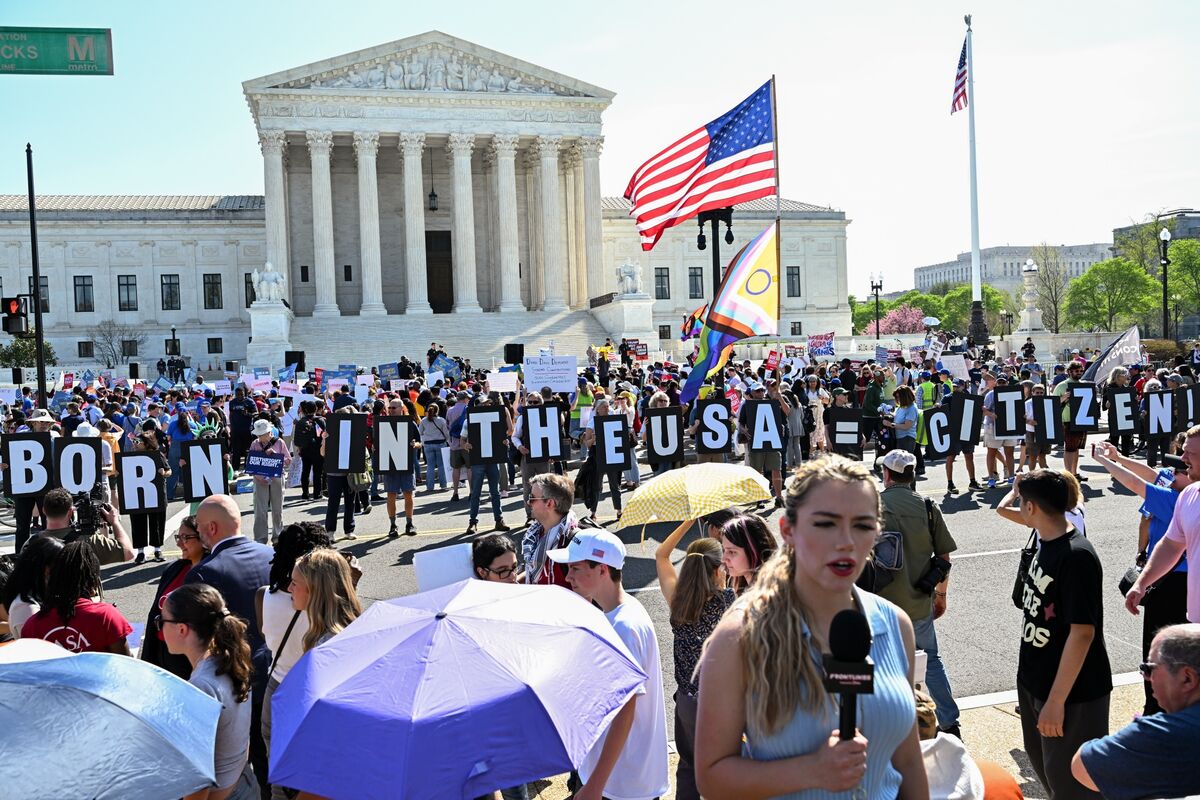
The US Supreme Court signaled skepticism and appears likely to reject President Trump’s executive order attempting to curtail birthright citizenship, citing potential conflicts with the 14th Amendment and federal law. Trump attended part of the arguments; justices from across the ideological spectrum questioned the legality of the post-inauguration order. This likely represents a notable legal rebuke that reduces the odds of a major administrative immigration win; expected market impact is limited, though political headline risk may persist ahead of elections.
A legal rebuke that narrows the scope for unilateral immigration policy materially lowers the tail risk of abrupt labor-supply shocks in sectors that depend on immigrant labor (construction, hospitality, food processing). Mechanically, less prospect of sudden exclusionary rules reduces the probability of localized wage spikes and project stoppages that have forced 5-8% margin compression in labor-heavy subcontractors during past disruptions; expect those margin pressures to be re-priced lower over the next 3–12 months.
The precedent also has cross-asset effects: it weakens a lever for rapid, headline-driven policy changes ahead of a contested election, compressing political-risk premia that disproportionately inflate implied vol across small caps, regional lenders, and staffing-service providers. That should favor multiple expansion in cyclical, domestically biased firms while reducing the attractiveness of tail-hedge insurance priced into options markets for politically sensitive names over the next 1–6 months.
Finally, a durable judicial limit on sweeping executive moves increases the runway for industry-specific regulatory stability (healthcare enrollment rules, workplace compliance) and boosts recurring-revenue legal/compliance vendors who sell to corporates adapting to a more litigation-centric environment. Expect steady demand for e-discovery, compliance SaaS, and litigation advisory over 6–24 months even as short-term headline volatility subsides, creating asymmetric opportunities in both equities and event-driven credit of firms exposed to these income streams.
AI-powered research, real-time alerts, and portfolio analytics for institutional investors.
Request DemoOverall Sentiment
neutral
Sentiment Score
0.00
