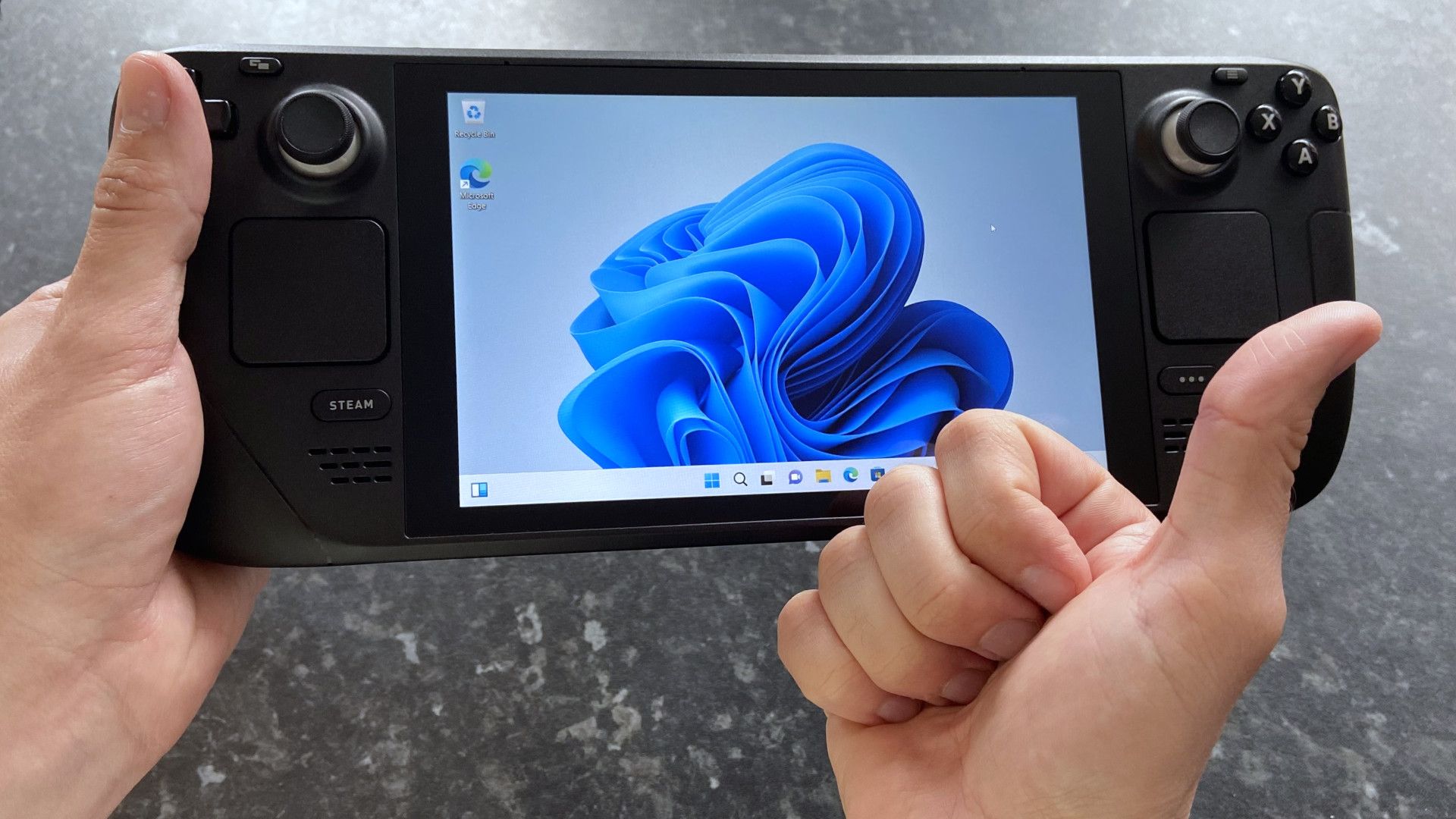
Steam's December 2025 hardware/software survey shows Windows 11 posting a large month-on-month gain of 5.24% to reach 70.83% of Steam users while Windows 10 fell 2.36% to 26.70%, likely driven by Windows 10 end-of-life migrations and new handheld Windows devices. Linux's share essentially stalled, slipping 0.01 percentage point to 3.19% (Fedora bucking the trend with +0.05%), while system memory and hardware trends shifted: 32GB RAM configurations rose 2.11% as 16GB fell 0.80%, NVIDIA's RTX 3060 became the most common GPU overtaking the RTX 4060 Laptop GPU, and Meta's Quest 3 VR adoption jumped 24.42% to become the top headset. These metrics indicate continued Windows platform consolidation and modest demand signals for mid-range GPUs and higher-RAM configurations, but they are unlikely to be material market-moving events for investors.
Market structure: Winners are GPU incumbents (NVDA) and VR platform owners (META) because RTX 3060 prevalence and Quest 3 +24.4% share point to sustained consumer GPU and headset demand; DRAM vendors (MU, 6-12 month cyclic tailwind) also benefit as 32GB systems rose +2.11%. Losers include small Linux distributions and vendors reliant on legacy Windows 10 lifecycle; competitive dynamics favor NVDA pricing power on mid/high-end GPUs and OEMs bundling Windows 11, tightening margins for lower-cost GPU competitors.
Risk assessment: Tail risks include regulatory scrutiny of NVDA/META, a PC demand shock from macro weakness, or Steam-survey sample bias (hardcore gamer skew) that misstates broader market momentum; supply-chain shocks (wafer or substrate shortages) could invert the apparent demand signal. Immediate (days) impact is low; short-term (weeks–months) catalysts are CES, holiday sales reports and earnings; long-term (quarters–years) hinge on enterprise Windows 11 refresh cadence and sustained VR monetization.
Trade implications: Tactical trades favor 2–3% conviction long NVDA (benefit from mid-tier GPU dominance) via 3–6 month call spreads targeting 15–25% upside, and 1–2% tactical long in META via 9–12 month calls to capture Quest 3 monetization; add 1% exposure to MU (DRAM) via equity or 6-month call spread. Pair trade: long NVDA / short AMD (AMD) small notional 0.5–1% to express relative GPU share gains; size positions to limit portfolio Vega and exit/trim if any single name moves ±20%.
Contrarian angles: The market may over-rotate to NVDA/META on a Steam sample that overweights gamers vs enterprise, and Windows 11 is already 70.8% — incremental upside is bounded. Historical parallels (2017 crypto GPU boom) warn of boom→oversupply cycles; unintended consequence: faster Windows consolidation could reduce OS-level competition, concentrating pricing power but also making NVDA/META regulatory targets — avoid levered directional exposure without hedges.
AI-powered research, real-time alerts, and portfolio analytics for institutional investors.
Request DemoOverall Sentiment
mildly positive
Sentiment Score
0.28
Ticker Sentiment
