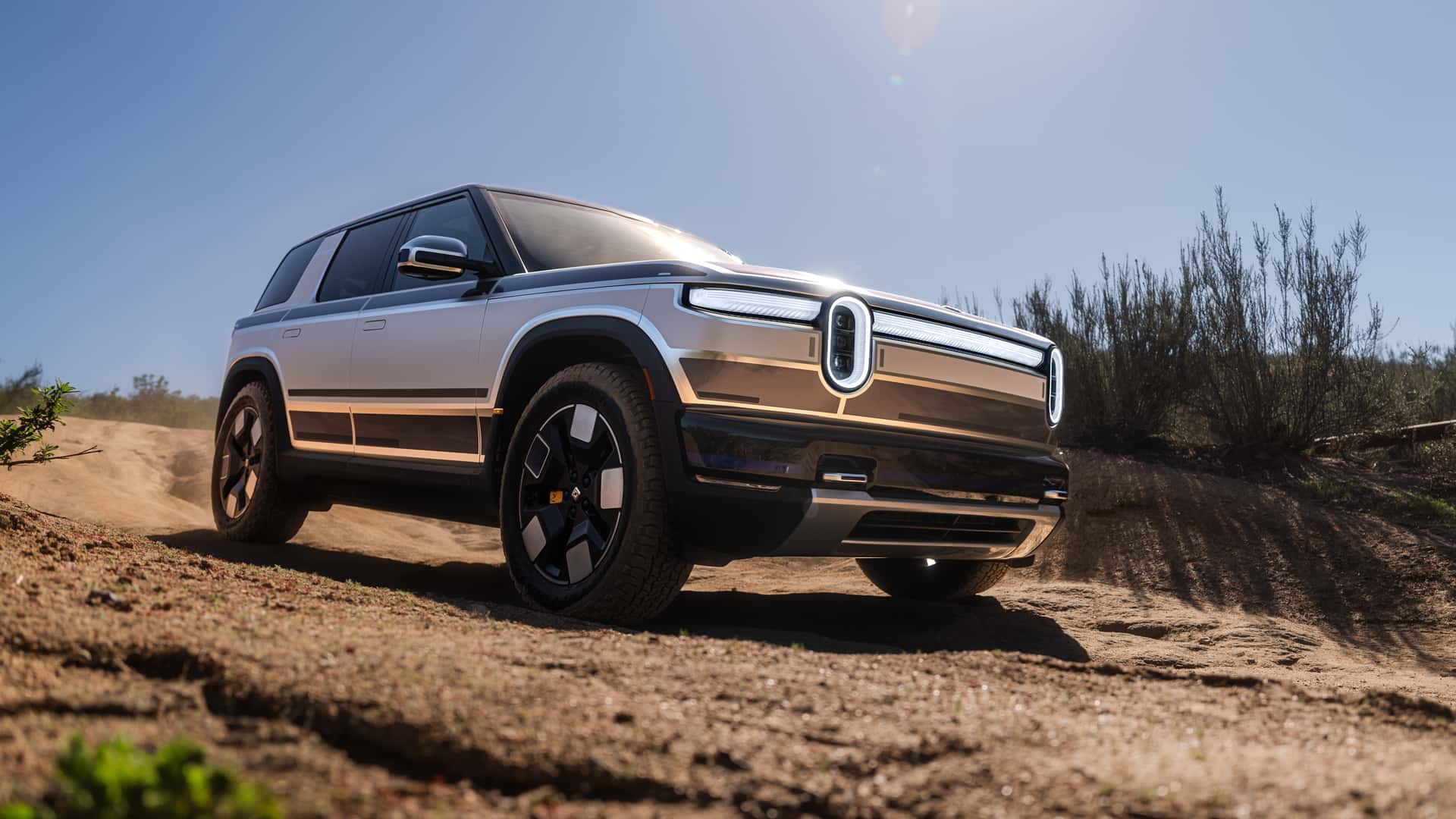
EPA tests show the 2027 Rivian R2 Performance (21" wheels) achieved 335 miles on a usable 88.67 kWh battery (3.77 mi/kWh or 26.52 kWh/100 mi), outperforming the Tesla Model Y Performance (306 miles; 3.125 mi/kWh or 32 kWh/100 mi). A 20" all-terrain test yielded 314 miles from 89.5 kWh (3.5 mi/kWh), R2 peak DC charging is 210 kW and AC charging 11.5 kW, and all R2s include an improved heat pump. Deliveries start this spring with R2 Performance priced at $59,485, R2 Premium $55,485, R2 Standard $49,985 (and a later $46,495 smaller-battery Standard with ~275+ mile range).
Rivian’s EPA reveal is a structural signal, not just a product win: an EV with meaningfully higher on-road efficiency tightens the economics calculus across ownership, fleet procurement, and used-resale curves. The immediate competitive lever isn’t horsepower but lower energy-per-mile, which compresses both operating cost and charging-time frequency for commercial operators — that’s the cohort most sensitive to TCO and quickest to switch volume.
Second-order supply-chain implications matter: gains that come from integrated thermal systems and powertrain efficiency shift value toward heat-pump/thermal suppliers, SiC inverter vendors, and tire/wheel aero work — these are the marginal-content winners if Rivian scales. Conversely, fast-charger networks see a mixed signal: per-vehicle kWh consumption falls (reducing marginal charging revenue) but more attractive EV economics should expand fleet and retail unit growth, increasing aggregate utilization over 12–36 months.
Key risks are execution and environment: initial EPA figures are lab benchmarks and can diverge in cold-weather, tow/roof-load, or with accessory packages; early build-quality and warranty claims in the first 30–90 days are the highest single reversal risk. Strategically, Tesla’s response set is clear and fast — price adjustments, software efficiency improvements, or localized hardware iterations could erase this edge within a single product cycle, so any position should be sized for a two-way outcome and monitored around Tesla’s next firmware and configuration updates.
AI-powered research, real-time alerts, and portfolio analytics for institutional investors.
Overall Sentiment
moderately positive
Sentiment Score
0.45
Ticker Sentiment
