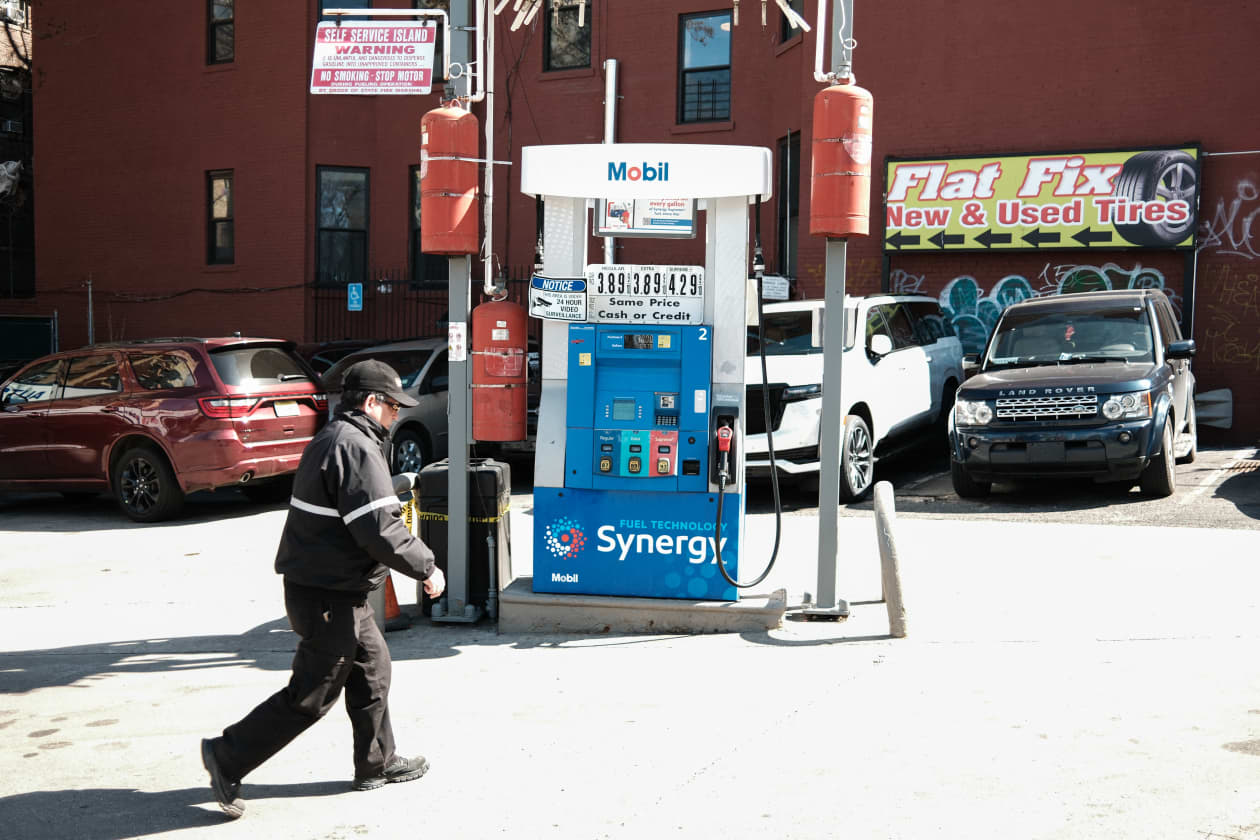
Georgia suspended its 33.3¢/gal state gasoline tax for 60 days (and paused a 37.3¢/gal diesel tax), a move that one estimate says could lower pump prices by about $0.25/gal. Average gas prices are near $4/gal, and the temporary cut is framed as relief amid market uncertainty tied to the Iran conflict. The effect is primarily state-level and likely modest for national energy markets, but it will reduce consumer fuel costs and lower diesel expenses for businesses in Georgia in the near term.
The headline stimulus to consumers is economically modest on a per-driver basis, so the highest-probability market effect is margin reallocation rather than a sustained demand impulse: fuel retailers and forecourt operators will decide how much of the benefit they pass through versus retain as incremental margin, and that decision will determine whether the policy meaningfully shifts consumer spending into other retail categories. Diesel-focused users (LTL/less‑than‑truckload, food distribution, large fleet operators) see a clearer short-term P&L effect because diesel is a large line-item; even a single-digit percentage cut in fuel expense can move quarterly operating margins by a few hundred basis points for marginal carriers. On the other side, state-level transportation budgets face a predictable revenue shock that will manifest across 1–12 months as delayed maintenance, postponed capex awards, or reallocated line-items — outcomes that create second‑order winners (equipment lessors with backlog) and losers (regional road contractors, civil works suppliers) depending on contract geography and timing.
Catalysts and risks are bifurcated by horizon. Over days-to-weeks, retail pricing behavior (pass-through vs. retention) and neighboring-state pump spreads are the primary drivers — watch retail chains’ pricing algorithms and east/SE regional price differentials for arbitrage signals. Over 1–6 months, the fiscal follow-through matters: if states plug the revenue gap with fees or reduced capital spending, expect the credit spreads on state transportation/revenue bonds to widen and local construction firms’ revenue to rebase; a broader multi-state adoption materially raises the probability of such credit/contract sequencing. The main reversal risk is crude/diesel spot volatility — a sustained crude rally would negate any consumer/operating-cost relief and re-center oil markets as the dominant driver.
The consensus framing that this is a pure consumer win underestimates two dynamics: 1) retail pass-through asymmetry means consumers may capture only a minority of headline savings, concentrating the economic effect in margins; and 2) the policy is a timing shift, not a permanent tax cut — delayed infrastructure spend and potential compensating fiscal actions (fees, levies) create concentrated sectoral pain that is underpriced by many investors. If multiple states follow, the net macro effect is non-linear: small per-driver savings scale to a multi-hundred-million-dollar state budget problem, which raises idiosyncratic political and credit risks that the market will price in over a 3–12 month window.
AI-powered research, real-time alerts, and portfolio analytics for institutional investors.
Request DemoOverall Sentiment
neutral
Sentiment Score
0.00
