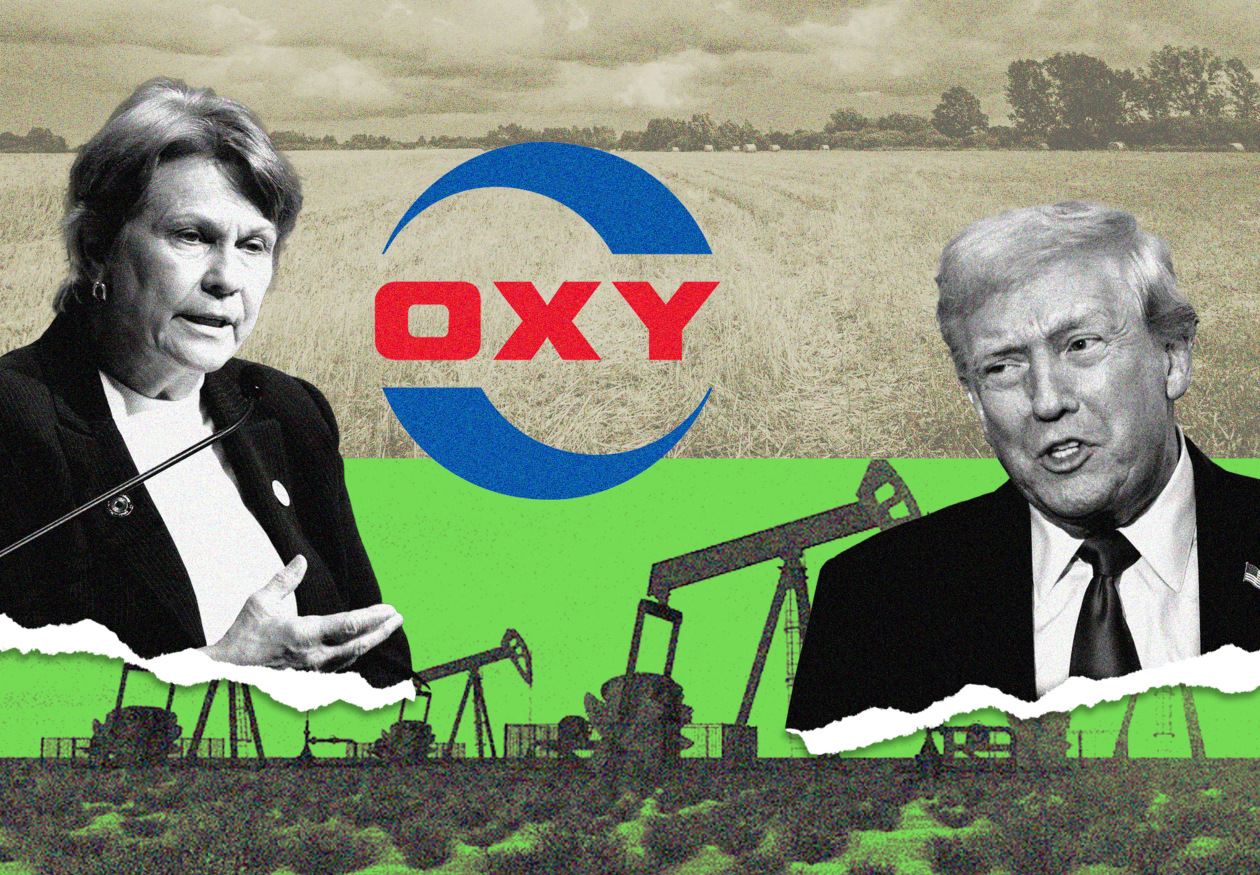
Congressional Republicans preserved and expanded the 45Q carbon-capture tax credit in the One Big Beautiful Bill Act, raising parity between storage and CO2 use (including enhanced oil recovery) with rates up to $85/ton for point-source and $180/ton for direct-air capture, a policy change that disproportionately benefits oil and gas (estimated to account for ~40% of captured CO2). The move follows heavy fossil-fuel lobbying (roughly $954 million 2005–2024) and comes amid DOE cancellations of roughly $4 billion in green grants, producing conflicting signals about federal support; cost estimates for the 45Q expansion range from $14–17 billion to over $100 billion across 10 years and the credit has a history of compliance issues. Implication for investors: companies with CCUS and EOR exposure (notably Occidental) stand to gain from tax incentives, but grant uncertainty, reputational risk, potential policy reversals, and unresolved effectiveness/cost questions create execution and regulatory risk for clean-energy and fossil-fuel portfolios.
Market structure: The OBBBA’s expansion of 45Q is a clear near-term win for integrated oil producers that can monetize CO2 via enhanced oil recovery (EOR) — notably OXY — because it converts tax credits into immediate incremental barrels and cashflow. Renewables installers, EV supply chains and project developers lose relative policy support; expect downward growth re-rating for names levered to IRA credits by 10–30% of forward EBITDA over 12–24 months if subsidy diversion persists. EOR scale-up also creates a paradox: it supports certain oil equities while adding marginal oil supply that can cap crude price upside over 1–3 years.
Risk assessment: Tail risks include abrupt policy reversals (new grants clawbacks or judicial constraints on 45Q), a Treasury/IRS tightening of credit qualification (audit risk recreating 2019 withholding), or technology failure at DAC sites; any of these could inflict 25–50% downside on development-stage CCUS names. Immediate (30–90 days) triggers are DOE grant lists and Treasury guidance; medium term (3–12 months) is project FID and OXY quarterly earnings; long term (2–5 years) is cost curve trajectory for DAC/point-source. Hidden dependency: EOR ROI depends on paired oil prices — a sustained sub-$70 WTI reduces the business case materially.
Trade implications: Favor concentrated equity exposure to OXY (direct beneficiary) and selective midstream players that will host CO2 infrastructure; short or underweight pure-play renewable installers/ETFs (e.g., TAN, FSLR exposure) that lose IRA tailwinds. Use options to express asymmetric views: 9–12 month call spreads on OXY and protective collars for legacy renewable positions. Catalysts to watch: Treasury 45Q regs (30–90d), OXY project updates (quarterly), CBO/OMB fiscal notes.
Contrarian angles: Consensus treats 45Q as permanent subsidy — that’s not guaranteed; markets may be underpricing the probability of audits and clawbacks (10–30% implied policy risk). Conversely, investors underappreciate near-term monetization of credits into free-cash-flow: if OXY hits targeted DAC/EOR scale, EPS upside could be 20–40% vs. consensus in 12–24 months. Historical parallel: ethanol tax-credit cycles show large upside during policy tailwinds and sharp drawdowns on reversals — size positions accordingly and stage capital deployment.
AI-powered research, real-time alerts, and portfolio analytics for institutional investors.
Request DemoOverall Sentiment
moderately negative
Sentiment Score
-0.35
Ticker Sentiment
