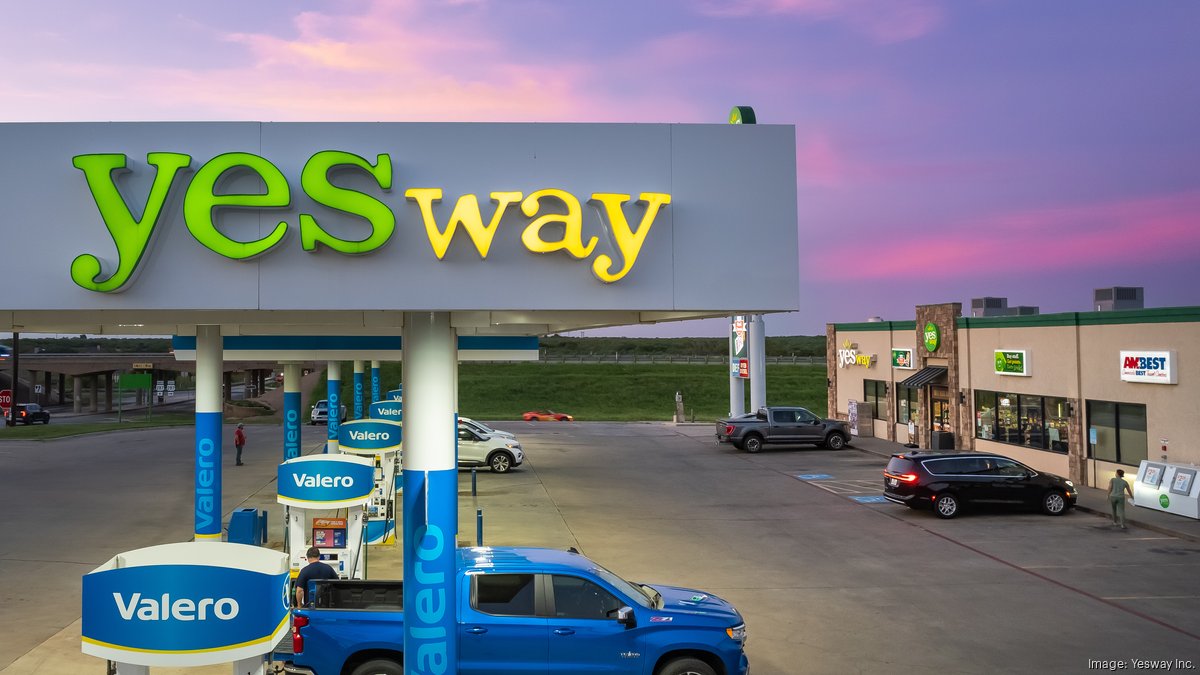
Yesway raised $280 million in its Nasdaq IPO, selling 14 million shares at $20 each and beginning trading under ticker YSWY. The convenience-store operator said it had 419 stores at year-end 2025 and plans to open about 130 more over the next five years, with parent BW Ultimate Parent LLC posting $2.67 billion of 2025 revenue, up 6% year over year. The offering improves access to capital and could support future expansion and selective acquisitions.
The key second-order signal is not the IPO itself, but the shift in financing mix: public equity plus a likely lower spread on secured borrowing can meaningfully compress the cost of capital for a store-format rollup that still has a long runway of greenfield openings. If management can actually sustain a mid-teens unlevered new-store IRR, the equity market may reward a capital-light growth narrative more than a pure acquisition story, especially because the market is implicitly assigning a scarcity premium to scaled convenience platforms with real estate optionality.
The competitive implication is that independent operators and smaller regional chains become more vulnerable, not because Yesway is suddenly a better operator, but because it now has a cheaper currency to fund site buildouts, remodels, and selective tuck-ins. That can pressure local acquisition multiples, which may cascade into lower valuations for private c-store brokers and fuel distributors tied to those rollups. The most exposed counterparties are those relying on sale-leaseback financing or high-cost mezzanine debt; as public capital becomes available, their financing edge erodes.
The near-term risk is execution dilution over the next 2-3 quarters: opening a small number of stores is manageable, but scaling to a multi-year pipeline while preserving site-level returns is where margin slippage, labor inflation, and capex creep typically surface. Another latent risk is that investors may underwrite the IPO as a simple growth equity story, when in reality the model is still highly sensitive to fuel margins, food mix, and same-store traffic stability. If macro weakens and lower-income consumers trade down, convenience spend can hold up longer than discretionary retail, but basket size and margin mix can still compress.
Consensus may be overestimating the M&A upside and underestimating the value of organic build economics. In a high-multiple environment, disciplined greenfield expansion can be the superior use of capital, but only if management resists the temptation to chase headline growth through lower-return deals. The stock should be viewed as a capital-allocation test more than a pure IPO pop trade: if the company demonstrates that public-market funding lowers WACC without forcing suboptimal deals, the rerating can persist for months; if not, the post-IPO premium likely fades quickly.
AI-powered research, real-time alerts, and portfolio analytics for institutional investors.
Request TrialOverall Sentiment
mildly positive
Sentiment Score
0.35
Ticker Sentiment
