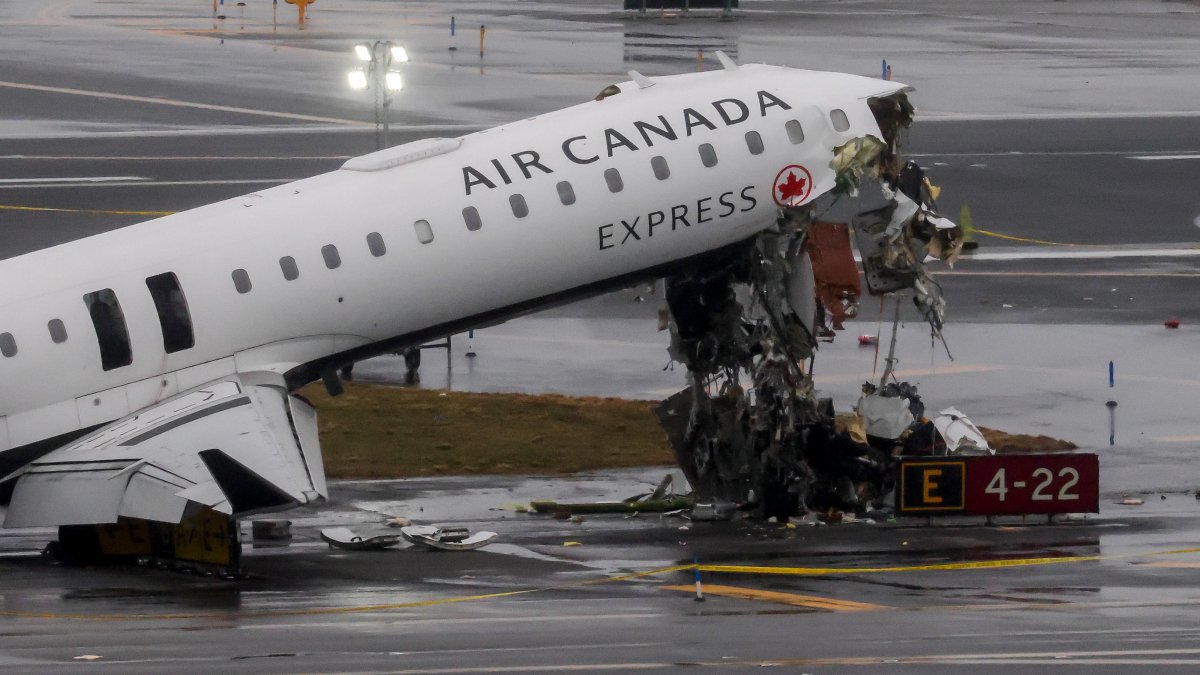
An Air Canada jet carrying more than 70 passengers collided with a fire truck at LaGuardia; the nose was destroyed and both pilot and copilot were killed, while a flight attendant strapped in a four-point crew seat survived with multiple leg fractures. Expect operational disruption, regulatory scrutiny and potential liability/insurance costs for Air Canada, which could modestly pressure the airline's shares (single-digit % downside risk) and prompt investigations into airport emergency procedures and crew safety standards.
Market reaction will be dominated by three channels: investor risk-off selling, regulatory scrutiny, and the near-term operational hit from inspections and potential groundings. Expect a mechanical equity impact in the first 48–72 hours as liquidity providers and quant funds de-risk, followed by a 1–3 month window where class-action filings and regulator inquiries (civil aviation authorities, Port Authority oversight) determine direct cash exposure and insurance reserve draws.
The second-order winners/losers are non-obvious and actionable: aftermarket MROs and specialist suppliers (airframe repair shops, avionics shops) see a spike in workflow and parts demand over 3–18 months, while aircraft insurers and reinsurers face acceleration of loss-cost recognition and will likely reprice airline casualty coverage over the next 12–36 months. Airports and ARFF vehicle OEMs (firms that supply rescue/fire trucks and training) could get ordered procurement or retrofits — procurement cycles stretch 6–24 months, creating a durable revenue leg for those vendors.
Key catalysts to monitor with time buckets: days — share price momentum and option-flow; weeks–months — formal investigations, preliminary legal filings, and insurer loss notifications that determine reserve sizing; 6–24 months — insurance repricing, procurement contracts, and any regulatory changes to airport ground operations. Reversal scenarios: quick regulatory exoneration, full insurance coverage with limited balance-sheet draw, or an outsized rebound in bookings that re-anchors sentiment, any of which could materially reduce downside within a month.
Contrarian angle: the panic trade risks over-discounting Air Canada’s underlying cash flow generation and the industry’s high fixed-cost leverage means temporary share-price overshoots are common; if investigations focus on procedures rather than systemic maintenance failures, much of the sell-off will be mean-reverting. That creates asymmetric tactical opportunities using limited-risk option structures to express downside while capturing potential snap-backs if newsflow stabilizes.
AI-powered research, real-time alerts, and portfolio analytics for institutional investors.
Request DemoOverall Sentiment
strongly negative
Sentiment Score
-0.65
Ticker Sentiment
