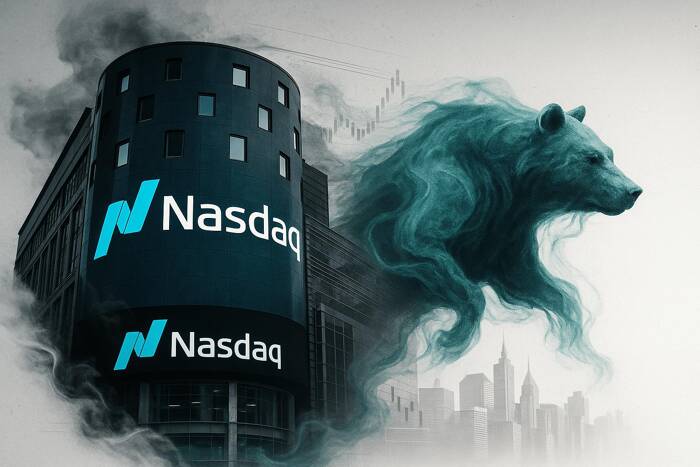
Geopolitical tensions in the Middle East and fuel‑shortage concerns have pushed rates higher and triggered a risk‑off move, with the commentator citing a potential Nasdaq drop toward the 23,000 level and the Dow testing 45,750. The S&P briefly reclaimed 6,500 then fell to ~6,450 from a peak near 7,000 (≈8% pullback), driven by headline risk rather than earnings or fundamentals; a positive Middle East headline could reverse the move quickly.
This selloff is primarily headline-driven and is amplifying an ongoing re-pricing of duration: a 50bp move higher in 10-year yields mechanically knocks roughly ~10% off a long-duration growth equity's present value assuming a 15–25 year cash‑flow horizon, so even modest yield volatility translates to outsized index moves. Second-order beneficiaries are real‑asset and security-oriented sectors — energy, defense, shipping insurers — because rising geopolitical risk increases forward margins (insurance and rerouting costs) and raises the value of near-term cash flows versus long-duration optionality.
Time compression matters: expect intraday/near‑term (days) knee‑jerk drops on fresh headlines, a multi‑week drift if commodities ratchet higher and break-even inflation lifts, and a structural reweight over quarters-to-years if capex shifts toward energy/defense become permanent. Key reversal catalysts are not earnings but event-driven: credible de‑escalation, coordinated SPR releases, or a >15–20bp reversal in real yields that restores growth multiples.
Microstructure and positioning amplify moves — dealers are likely short gamma after recent skittish rallies, so volatility will spike nonlinearly on bad news and widen spreads, making delta-heavy directional trades expensive. Practically, asymmetric, defined‑risk option structures and pair trades that capture commodity upside while shorting duration sensitivity are preferable to naked directional bets; size for headline risk and use tight execution bands because liquidity will evaporate at the extremes.
AI-powered research, real-time alerts, and portfolio analytics for institutional investors.
Overall Sentiment
moderately negative
Sentiment Score
-0.45
