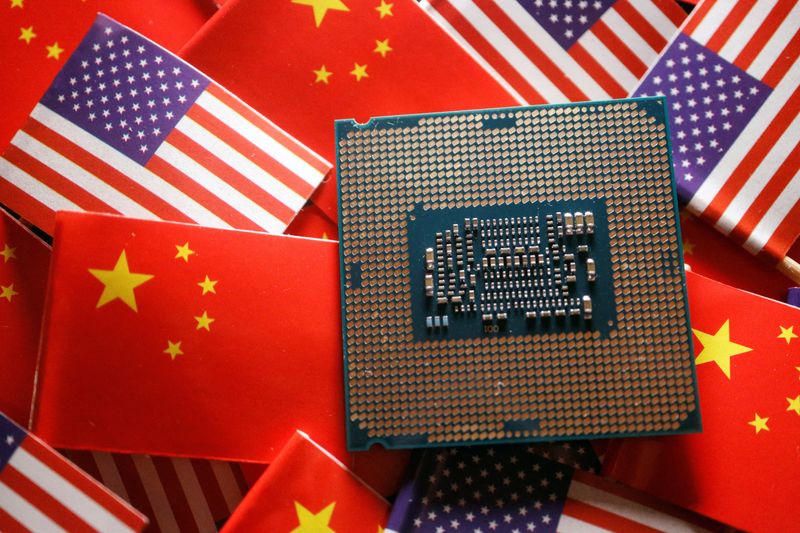
Washington and Beijing are considering official AI discussions ahead of a possible Trump-Xi summit in Beijing next week, with key focus areas including erratic AI behavior, autonomous military systems, and AI-enabled attacks. Treasury Secretary Scott Bessent is slated to lead the U.S. side, while China has not yet named a counterpart. The report is more about policy and geopolitical risk framing than immediate market action, though it could modestly affect AI, cybersecurity, and defense sentiment.
The market is likely underpricing how quickly an AI safety dialogue can turn into a procurement and export-control signal. Even if the talks are framed as guardrails, they implicitly widen the policy aperture around model governance, cyber attribution, and dual-use compute, which should favor firms selling the picks-and-shovels layer rather than frontier-model names. That is structurally constructive for infrastructure beneficiaries with domestic manufacturing exposure, but it also raises the probability of a more fragmented AI supply chain over the next 6-18 months.
Second-order, the cybersecurity angle is more important than the headline diplomacy. If governments start treating autonomous cyber capability as a strategic risk, buyers will accelerate spend on defense-grade monitoring, identity, and incident response, while capex-heavy AI platforms may face slower enterprise adoption cycles from compliance friction. The biggest losers are likely smaller model developers and hardware names dependent on unrestricted global demand, because policy scrutiny can compress multiple at the same time earnings remain intact.
Contrarian view: the knee-jerk reaction to read this as “AI regulation hurts the trade” is probably too simplistic. In the near term, policy meetings usually expand the addressable market for compliance, defense, and secure compute before they meaningfully constrain spending. The real risk is not an immediate selloff, but a rotation over weeks to months from beta-heavy AI winners into companies that monetize control, security, and domestically anchored supply chains.
AI-powered research, real-time alerts, and portfolio analytics for institutional investors.
Overall Sentiment
neutral
Sentiment Score
-0.05
Ticker Sentiment
