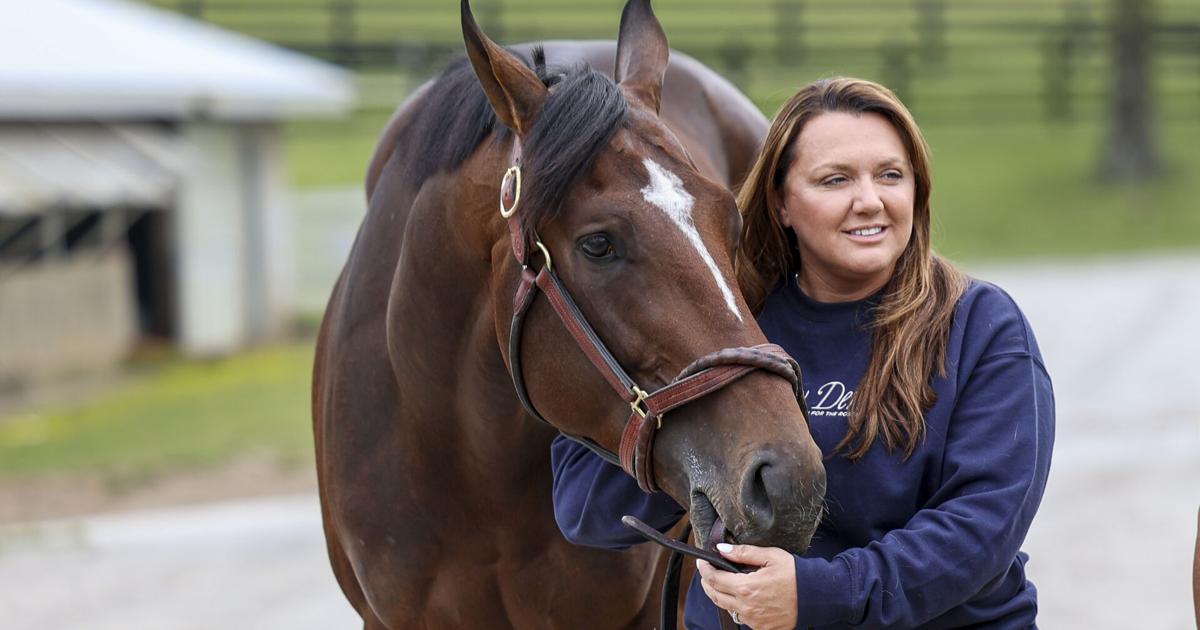
Cherie DeVaux, fresh off training Kentucky Derby winner Golden Tempo, has not yet decided whether the colt will run in the Preakness and expects to make a call by the end of the week. The horse is scheduled to jog Wednesday and Thursday, then gallop Friday, with jockey Jose Ortiz committed if Golden Tempo enters. The piece is largely a profile of the trainer's process and the horse's condition, with little direct market relevance.
The immediate investable angle is not the Derby winner himself, but the business model around the event. A Preakness run meaningfully increases short-duration monetization for the sport’s media, wagering, and adjacent hospitality ecosystem; a skip would compress that window and likely shift spend to Belmont/season-long narratives instead. The second-order effect is that uncertainty itself is valuable for engagement: the market tends to underestimate how much handle, ad inventory, and travel demand is pulled forward by a live Triple Crown chase versus a one-and-done post-Derby victory cycle.
The larger signal is operational, not emotional. A horse that was managed to peak on a precise schedule and may have enough residual condition to reappear quickly suggests that careful training optimization can shorten recovery windows versus the market’s default assumption after a major race. That matters because the horse’s path creates a binary catalyst in the next 3–5 trading days for sports-media sentiment, wagering activity, and local Kentucky/ Maryland hotel and transport demand. If he runs, the event retains scarcity value; if he doesn’t, the disappointment is likely priced in quickly and could mean a fast fade in attention rather than a prolonged decline.
Contrarian view: consensus will frame a Preakness decision as purely sports-driven, but the real variable is the marginal consumer conversion rate around the chase. The market may be overestimating the downside of a skip for long-term franchise value and underestimating the upside of preserving the horse for later high-certainty appearances. In other words, the economically optimal choice may be the one that looks less dramatic in the short run.
From a positioning standpoint, the cleaner trade is through venues and media exposure, not equine outcomes. The risk/reward is asymmetrical over the next week because the catalyst is binary and the downside is limited to a missed spike in engagement, while the upside of a run is a measurable jump in volume and bookings across the ecosystem.
AI-powered research, real-time alerts, and portfolio analytics for institutional investors.
Request DemoOverall Sentiment
neutral
Sentiment Score
0.15
