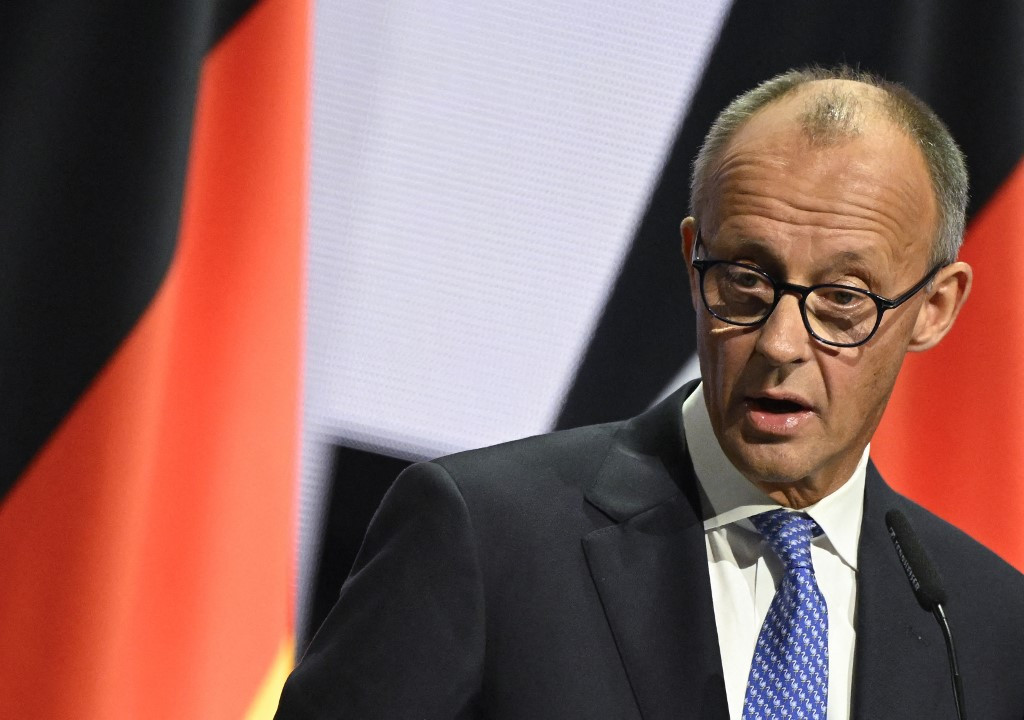
German Chancellor Friedrich Merz said Berlin is intensifying coordinated work with Kyiv on long‑range strike capabilities and has agreed to avoid public detail as a deliberate ambiguity toward Russia, signaling a clearer shift toward deeper military support; he confirmed Germany is expanding long‑range options for Ukraine, including possible production in Ukraine. Merz announced an additional €3 billion in military aid for 2026 and a €60 million contribution to the Ukraine Energy Support Fund (bringing German energy-support to €450 million), and backed an EU unified stance on using frozen Russian assets to pressure Moscow. He stressed that continued assistance requires Ukraine to fight corruption and be a reliable partner, underscoring Germany’s view that bolstering Ukraine’s long‑range and energy resilience is both a duty to Kyiv and a German national‑security interest as Russia escalates attacks ahead of winter.
German Chancellor Friedrich Merz announced that Berlin is intensifying covert coordination with Kyiv on long-range strike capabilities, explicitly confirming Germany is expanding long-range options for the Ukrainian military and may support production of such systems on Ukrainian soil; he said details will be withheld to maintain “a certain degree of ambiguity” toward Russia. This marks a clear policy shift from previous German caution on long-range weapons and signals an operational deepening of military support as Russia steps up attacks on Ukraine’s energy infrastructure.
Merz also committed an additional €3 billion in German military aid for 2026 and confirmed a €60 million contribution to the Ukraine Energy Support Fund, bringing Germany’s energy support to €450 million; he framed assistance as both a duty to Kyiv and a German national-security interest. He tied continued support to Ukraine’s anti-corruption progress and reliability as a partner, and backed an EU unified stance on using frozen Russian assets as leverage, making future flows conditional on political and reform milestones.
Investment-relevant implications include near-term upside for European defense and energy-resilience spending tied to German support and potential procurement or on-shore production, while policy conditionality and the risk of escalation introduce execution and timing uncertainty. Investors should monitor formal procurement announcements, EU decisions on frozen assets, and Kyiv’s anti-corruption progress as triggers that will determine the scale and timing of contracts and related market impact.
AI-powered research, real-time alerts, and portfolio analytics for institutional investors.
Request DemoOverall Sentiment
moderately positive
Sentiment Score
0.35
