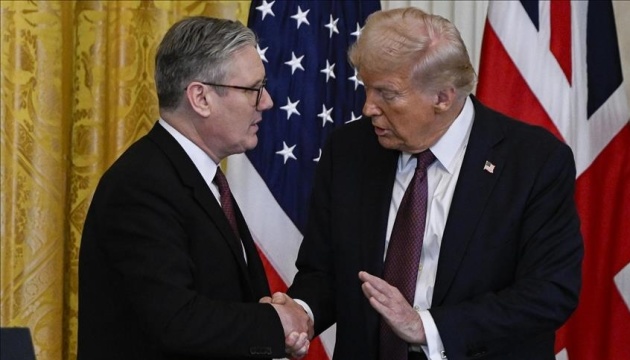
UK Prime Minister Keir Starmer and former US President Donald Trump held a call to discuss the situation in Ukraine, highlighting overnight Russian attacks that struck critical national infrastructure — including energy systems — during temperatures below -20C. They also reviewed the strategic importance of the Diego Garcia military base amid the UK's planned sovereignty transfer to Mauritius with retained base control, a decision sharply criticized by Trump. The conversation underscores elevated geopolitical and energy-supply risk that could pressure regional energy markets and defense-related assets, though the report contains no immediate fiscal or corporate figures and is unlikely to move broad markets materially in isolation.
Market structure: Immediate winners are defense primes (US/UK) and LNG/exporting oil majors as energy-security rhetoric and winter disruption raise demand for fuel and military goods; expect 5–15% incremental order-flow tailwinds for large primes over 6–12 months and 10–30% spot volatility in European gas this winter. Losers are European gas-dependent utilities and insurers exposed to infrastructure damage; pricing power shifts to LNG cargonauts and integrated oil majors while European refiners/utilities face margin compression and potential government intervention.
Risk assessment: Tail risks include a low-probability (~5–15% next 3 months) escalation that triggers sanctions, NATO political fractures, or coordinated strikes raising oil >$100/bbl and gas >+50% vs current TTF levels; longer-term (12–24 months) risks include accelerated defense budgets driving inflation and rate repricing. Hidden dependencies: LNG ship capacity, storage fill levels, and Arctic weather; election outcomes (US/UK) within 0–12 months are key catalysts that can amplify or blunt spending commitments.
Trade implications: Tactical (days–weeks) expect risk-off rallies in Treasuries and USD; medium-term (3–12 months) favor selective longs in LMT/RTX/BAESY and US LNG/majors (LNG/XOM) while shorting euro-area utility/refiners. Volatility trades: buy 3–6 month call spreads on defense names and 1–3 month calls on Henry Hub/Brent if gas/oil breaches +15% intraday.
Contrarian angles: Consensus underestimates downstream winners from rebuilding (EPCs, sensors/cybersecurity) and overestimates uniform defense winners—small/agnostic primes or European renewables exposed to political backlash are mispriced. Be wary that sustained defense-driven inflation would invert long-duration bond trades; hedge duration if holding long-defense equities beyond 12 months.
AI-powered research, real-time alerts, and portfolio analytics for institutional investors.
Request DemoOverall Sentiment
moderately negative
Sentiment Score
-0.40
