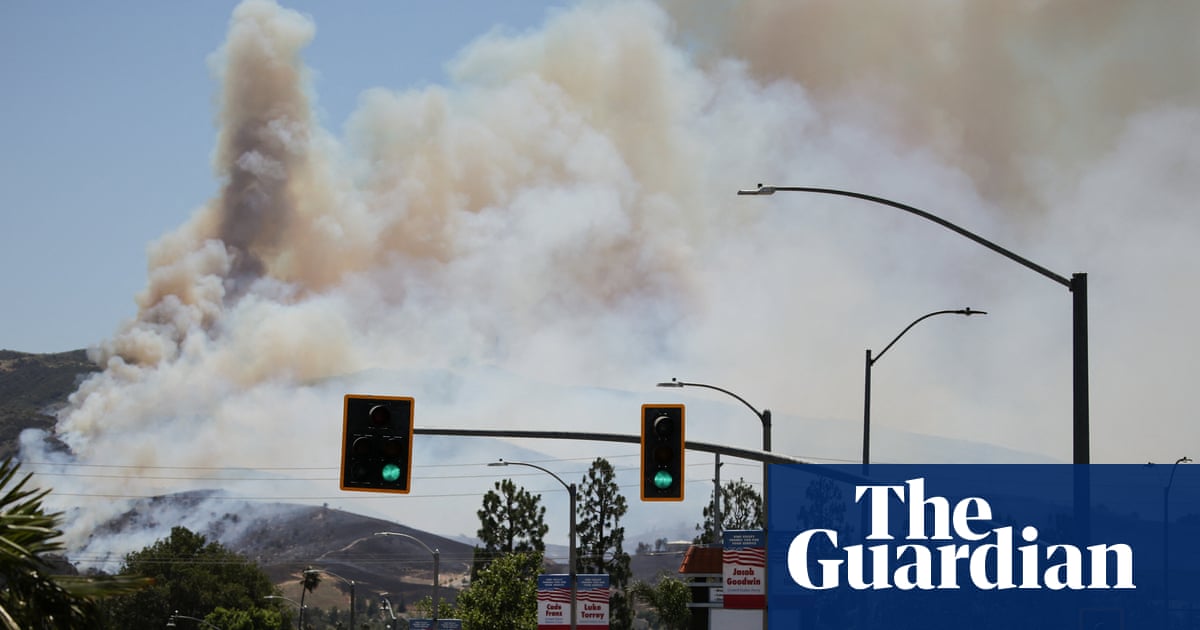
A fast-moving wildfire in Simi Valley burned more than 800 acres by mid-afternoon, triggered mandatory evacuations for over 20,000 residents, and damaged at least one home. The fire was 0% contained amid 30+ mph gusts, with crews using helicopters to slow spread toward Thousand Oaks. The Ronald Reagan Presidential Library and Museum closed for the day, and the cause remains under investigation.
The immediate market read-through is not the fire itself but the clustering risk it creates across Southern California housing, municipal services, and physical retail. In the next 24-72 hours, the biggest economic hit is likely from forced evacuations, property loss, and localized interruption of discretionary spending, but the second-order effect is more important: repeated fire episodes increase the perceived probability of underwriting losses and higher premiums across the region, which can pressure affordability and transaction volumes for months.
For insurers and reinsurers, this is a frequency-over-severity setup unless the fire materially expands. One event like this typically won’t move statewide earnings, but it can matter for names with concentrated California exposure because wildfire losses are increasingly correlated with non-catastrophe homeowner attrition and re-pricing friction. The more durable channel is not claim size alone; it is the combination of higher policy non-renewals, slower home sales, and a widening spread between replacement cost and insurable value in fire-prone ZIPs.
The contrarian angle is that the market often over-discounts broad Los Angeles-area housing and tourism assets on a single headline, when the true beta is very localized and short-lived unless power outages or transportation disruptions spread. If winds ease and containment improves over the next 1-2 days, the knee-jerk selloff in adjacent real estate and leisure proxies should fade quickly. The harder-to-price tail risk is that this becomes another data point in a multi-year trend of insurers pulling back from California, which would support a structural re-rating of housing quality-of-location and a persistent affordability headwind.
From a trading perspective, this is better expressed as a tactical volatility event than a directional macro shock. The cleanest setup is to buy short-dated optionality on local property/casualty names if they are liquid enough, or use a pair against broader financials to isolate California catastrophe risk. For housing exposure, any weakness in homebuilders or mortgage-sensitive names should be faded only after containment and wind data improve; otherwise the right framing is to wait for a multi-day stabilization before adding risk.
AI-powered research, real-time alerts, and portfolio analytics for institutional investors.
Request DemoOverall Sentiment
strongly negative
Sentiment Score
-0.60
Ticker Sentiment
