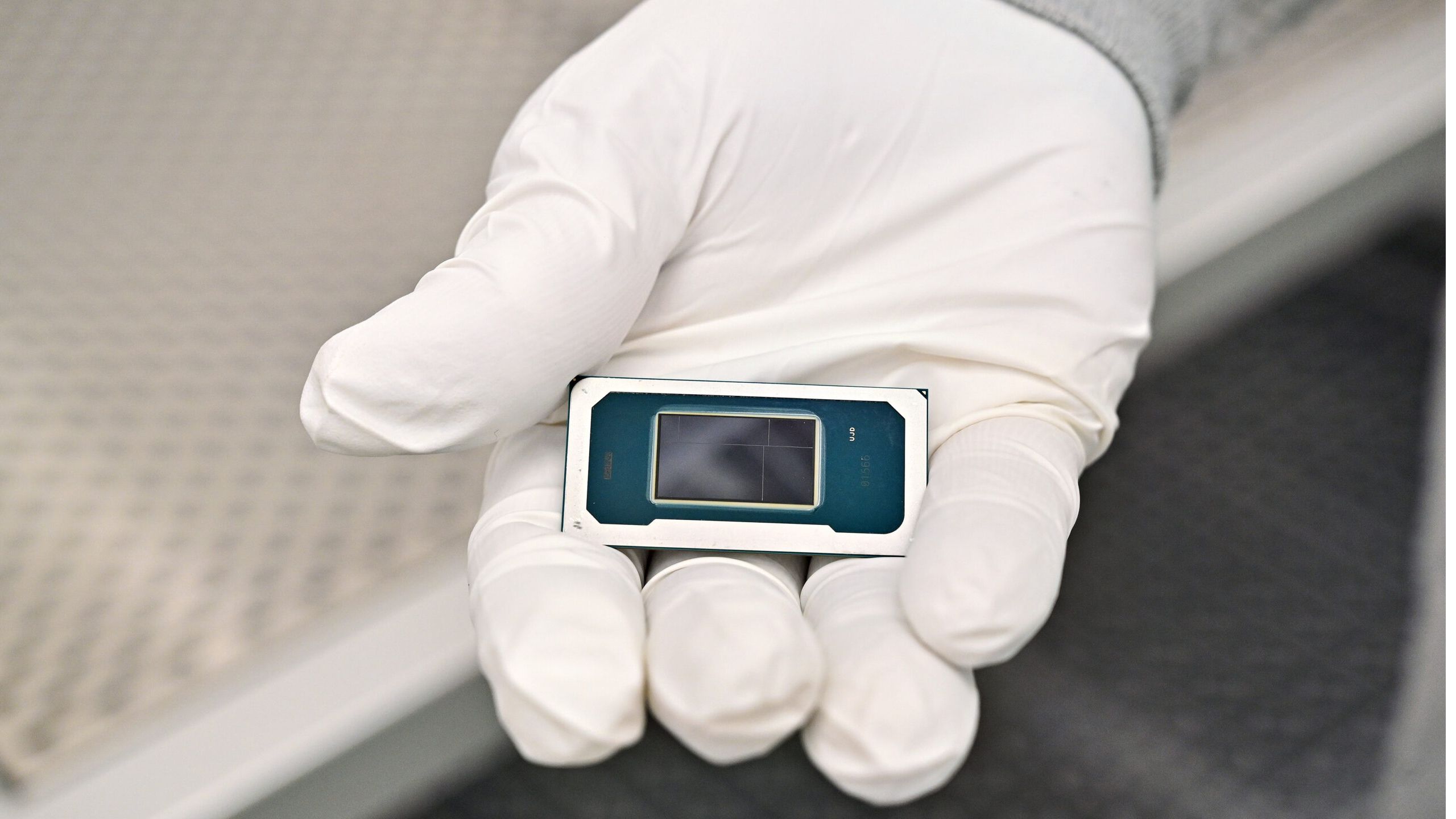
Intel has posted a LinkedIn job for a senior CPU verification engineer tied to a 'Unified Core' x86 project, indicating active mid-stage development where architecture is still being refined and RTL implementation is ongoing. The article estimates tape-out is likely 18–24 months away from the current stage, with mass production an additional 18–24 months, yielding an optimistic first-product window of 2029 and a more realistic 2030, but with significant uncertainty about microarchitectural details and commercial impact.
Market structure: Intel's hiring signal for a 'Unified Core' suggests a multi-year product roadmap (tape-out ~18–24 months after current phase, mass production 36–48 months), which benefits Intel (INTC) if execution succeeds and benefits EDA/IP vendors like Synopsys (SNPS) through sustained verification spend. Direct losers include small core-IP licensors and OEMs that rely on AMD (AMD) differentiation if Intel reclaims scalability across client/datacenter. Macro cross-asset: higher Intel capex and R&D could pressure its credit metrics modestly (bond spreads +10–30bp risk), lift implied vols in INTC options, and marginally raise demand for semiconductor capital equipment equities.
Risk assessment: Tail risks include prolonged delays (slippage >12 months), failed microarchitecture leading to lost market share, or geopolitical/EDA supply constraints; any of these could erase multi-year upside. Immediate market impact is negligible (days); expect measurable signals in hiring cadence, EDA vendor contracts, or tape-out notices over 6–36 months. Hidden dependencies: fabs/process node parity (TSMC/Intel), ISV optimization cost, and third-party IP licensing; these are gating factors that can convert roadmap into either moat or millstone. Key catalysts: formal Intel architecture disclosures, Synopsys contract wins, and a declared tape-out date.
Trade implications: Tactical trades favor SNPS exposure (software verification monetizes across Intel/AMD) and asymmetric long INTC exposure via LEAPs because upside is binary but long-dated; avoid naked short AMD on thesis alone. Pair trades: long SNPS vs. short AMD captures secular EDA demand while hedging core-competitive risk; size modestly (0.5–1% NAV). Options: buy INTC 24–36 month LEAP calls (~2029 expiry) sized 0.5–1% NAV and finance with short-dated covered calls if holding stock.
Contrarian angles: Market likely underprices the multi-year serviceable-addressable-market uplift to SNPS from Intel's verification needs and overprices near-term Intel product success; consensus ignores integration and software ecosystem risk that historically delayed Intel architecture pivots (Alder Lake transition). If Intel's Unified Core is primarily a software-defined clustering approach rather than a single efficient core, OEM ASPs could compress and benefit AMD's homogeneous Zen roadmap instead, creating a scenario where positive hiring news actually increases competitive uncertainty.
AI-powered research, real-time alerts, and portfolio analytics for institutional investors.
Request DemoOverall Sentiment
neutral
Sentiment Score
0.05
Ticker Sentiment
