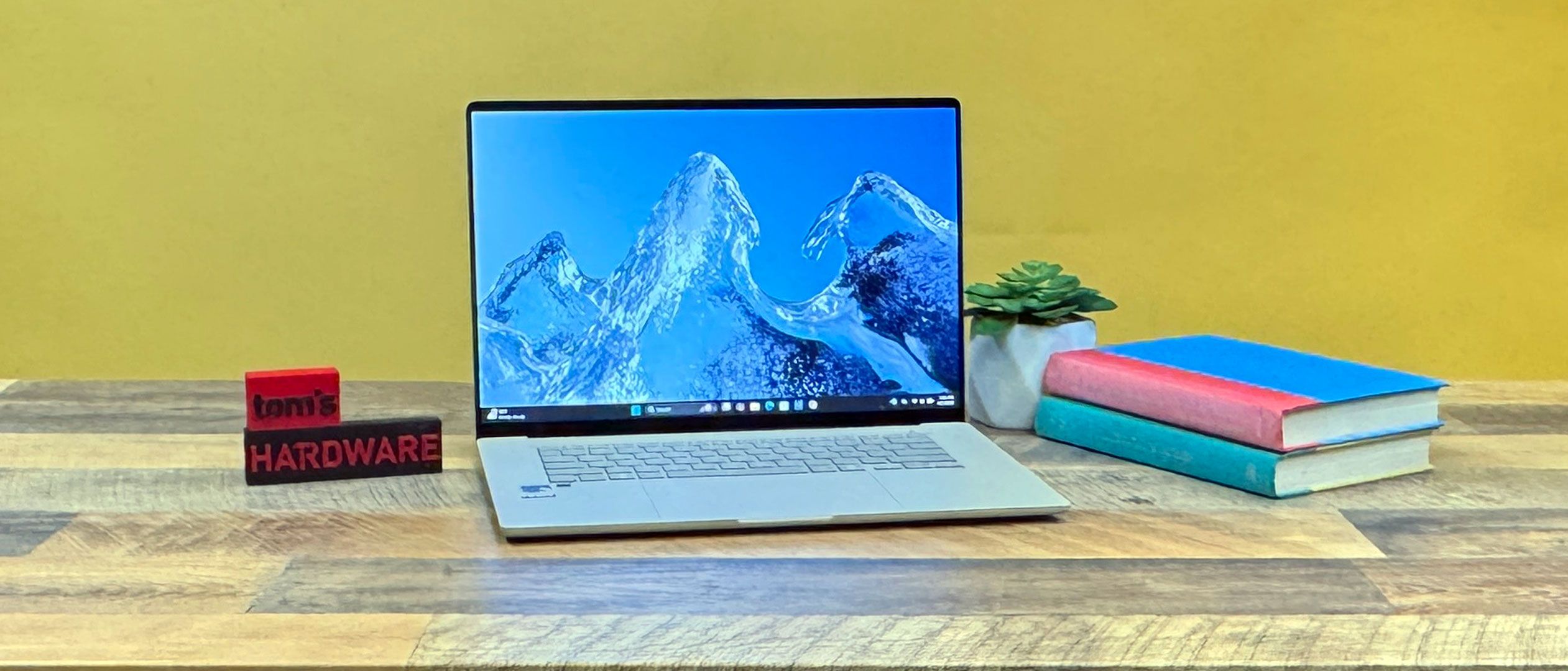
Asus' Zenbook A16 showcases Qualcomm's Snapdragon X2 Elite Extreme with strong benchmarks (Geekbench single-core 3,807, multi-core 22,733) and an unusual 48GB of on-package RAM at a $1,699.99 configured price, but the laptop is hampered by a flimsy magnesium-infused chassis and underwhelming battery life (10h26m in Tom's Hardware rundown). The device is light (2.87 lbs) and well‑connected, yet suffers software bloat, inconsistent gaming/graphics behavior, and relatively dim OLED brightness (429.4 nits), making it a niche pick for users who prioritize Arm performance over build quality or endurance. For portfolios, this is modest product news unlikely to move market prices materially, though it highlights Qualcomm's competitiveness in Windows-on-Arm silicon while underscoring potential adoption friction for premium OEM designs.
Qualcomm sits at an inflection: its silicon is no longer the technical underdog, but real-world adoption will be determined by OEM execution and the user experience that surrounds the chip. If end customers experience build-quality, battery, or driver friction twice, device-level perception will cap the silicon multiple — even if the wafer-level economics improve.
The second-order beneficiaries are incumbents that can credibly claim “no-compromise” battery/thermals and a mature app/driver ecosystem; that asymmetry favors players with integrated hardware+software narratives and deep channel trust. Retailers and channel partners will internalize higher return rates and service costs if early premium devices disappoint, creating short-term inventory/marketing drag for whoever front-loads these launches.
Enterprise adoption is the gating factor: until legacy drivers and pro apps are consistently stable, refresh cycles will skew toward proven x86 and closed ARM ecosystems, delaying meaningful share shifts. Microsoft and major ISVs are the natural hinge — their roadmap and certification cadence (next 3–12 months) will materially accelerate or stall OEM wins.
Watch the cadence of follow-on flagship launches, post-launch firmware/driver updates, and measured return/repair metrics over the next 90 days; those datapoints will decide whether this is a technology upgrade story or a marketing mismatch that benefits incumbents over time.
AI-powered research, real-time alerts, and portfolio analytics for institutional investors.
Request DemoOverall Sentiment
mildly negative
Sentiment Score
-0.25
Ticker Sentiment
