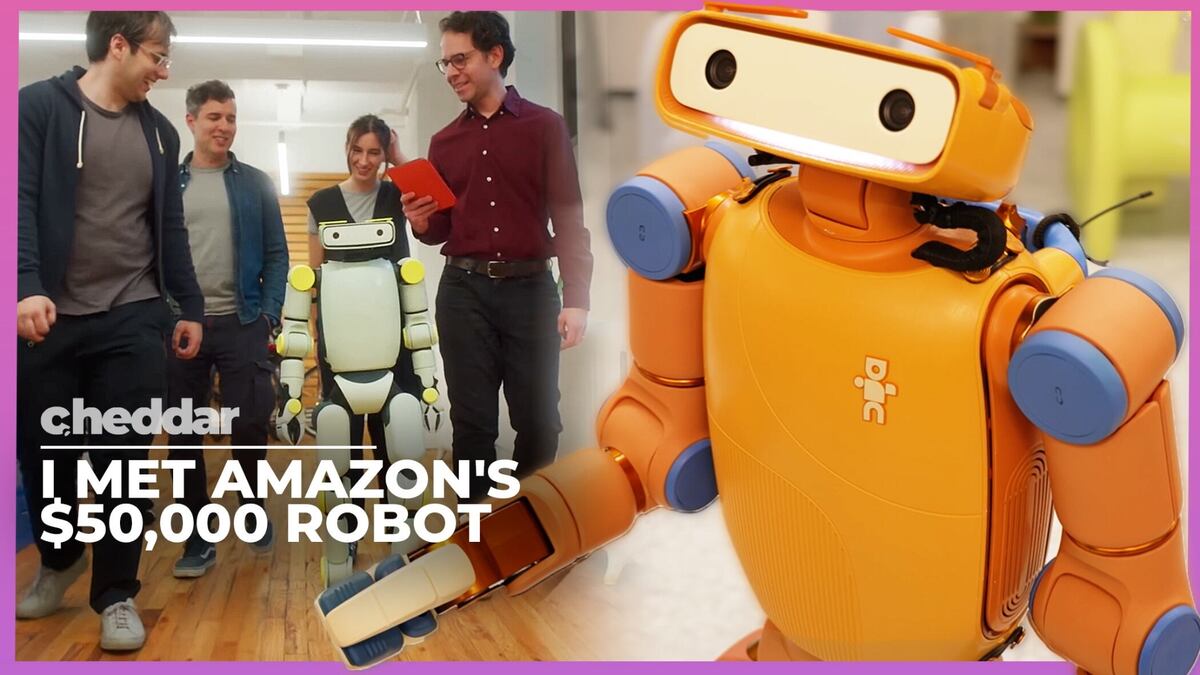
Amazon has acquired Sprout, a $50,000 humanoid robot that can walk, talk, and dance, highlighting Big Tech's push into home robotics. The piece frames this as an early-stage shift in consumer robotics and AI-enabled hardware rather than a quantified financial event. The broader implications are strategic and speculative, with limited immediate market impact.
Amazon is not just buying a novelty robot; it is effectively underwriting the supply chain and systems integration stack for embodied AI. The equity read-through is that the real monetization is unlikely to come from the humanoid itself near term, but from components, middleware, fleet-management software, and the logistics/fulfillment data Amazon can use to train manipulation models faster than pure-play robotics firms. That creates a strategic moat: Amazon can absorb low-unit-margin hardware today if it shortens the path to warehouse automation and eventually home-service subscriptions. The second-order winner set likely extends beyond AMZN to contract manufacturers, actuator/sensor suppliers, and frontier AI tooling vendors that benefit from training data and deployment feedback. The losers are labor-sensitive fulfillment peers and smaller robotics startups that will face a valuation reset if investors conclude the bar for commercialization is now "distribution plus data" rather than standalone hardware IP. Over 6-18 months, the market may start pricing humanoids less like a speculative category and more like an arms race where only scaled platforms can survive the burn. The main contrarian point is that the market may be overestimating near-term consumer adoption while underestimating enterprise pull. Home robots have brutal edge cases, support costs, and liability issues; commercial warehouses and controlled environments are the real near-term wedge. If the first visible deployments are in logistics, the hype cycle could rotate away from consumer robotics names before any meaningful household TAM is proven. Catalyst-wise, the next 1-3 quarters matter more for narrative than earnings: any demo, pilot expansion, or supplier disclosure can move sentiment, but actual P&L impact should remain negligible for 12-24 months. The key downside tail is a safety or product failure that forces Amazon to slow rollout and the market to de-rate humanoid optionality as another "AI hype" bucket.
AI-powered research, real-time alerts, and portfolio analytics for institutional investors.
Overall Sentiment
neutral
Sentiment Score
0.15
Ticker Sentiment
