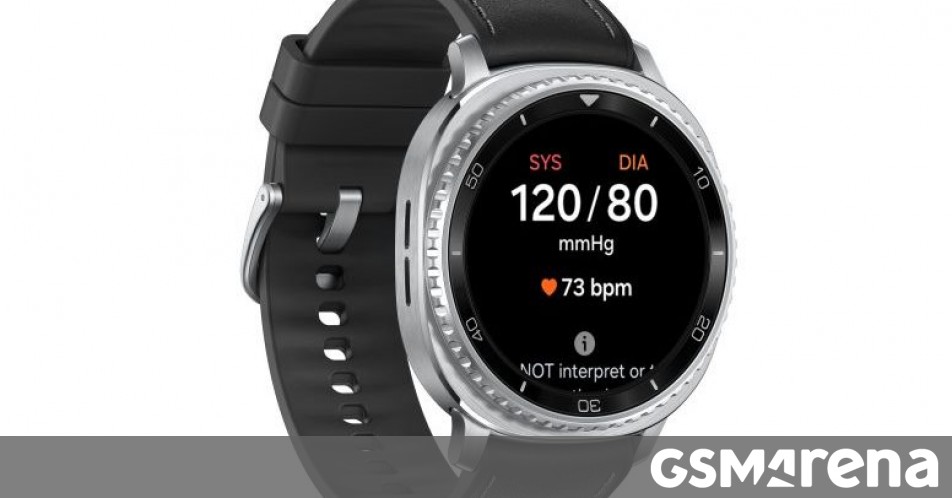
Samsung has enabled blood pressure measurement in the US for Galaxy Watch4 and later models running Wear OS 4+ via the Samsung Health Monitor app, but the watch must be calibrated with an upper-arm cuff every 28 days. The feature reports systolic/diastolic and heart rate and will add passive trend monitoring later this year, though accuracy caveats remain (periodic cuff calibration and a Samsung phone required) and cuff-based competitors like the Huawei Watch D2 claim superior precision.
This rollout shifts the battleground from single-device accuracy to ecosystem-managed clinical-grade monitoring. A feature that requires periodic external calibration and a companion phone creates recurring demand for peripherals, replacement cuffs and interoperability software; that recurring revenue is small per-user but highly sticky and could meaningfully increase accessory spend per active-wearable user over 12–24 months.
Second-order beneficiaries are not just the OEM but the medical-device peripherals and sensor-supply chain: firms that make accurate inflatable cuffs, pressure sensors and secure health-cloud ingestion stand to gain steady B2B volume as payors and remote-care vendors warm to hybrid workflows. Conversely, vendors that compete on a pure consumer convenience proposition without clinical-validation pipelines face a longer path to monetization as clinicians and regulators prefer calibrated, auditable signals.
Regulatory and legal risks are asymmetric and front-loaded. Early-stage accuracy divergence in practice — especially when consumers act on readings — invites rapid scrutiny from regulators, payors and plaintiff attorneys, which could force conservative labeling, reimbursement hurdles, or mandatory software updates over quarters, not years.
Strategically, the most important variable is adoption by clinical partners and insurers: if large health systems incorporate longitudinal wearable trends into chronic-care pathways within 6–18 months, that accelerates platform monetization and creates switch costs; absent that, the feature will be a modest stickiness tool that mainly boosts handset/watch attachment rates among health-conscious cohorts.
AI-powered research, real-time alerts, and portfolio analytics for institutional investors.
Request DemoOverall Sentiment
neutral
Sentiment Score
0.00
