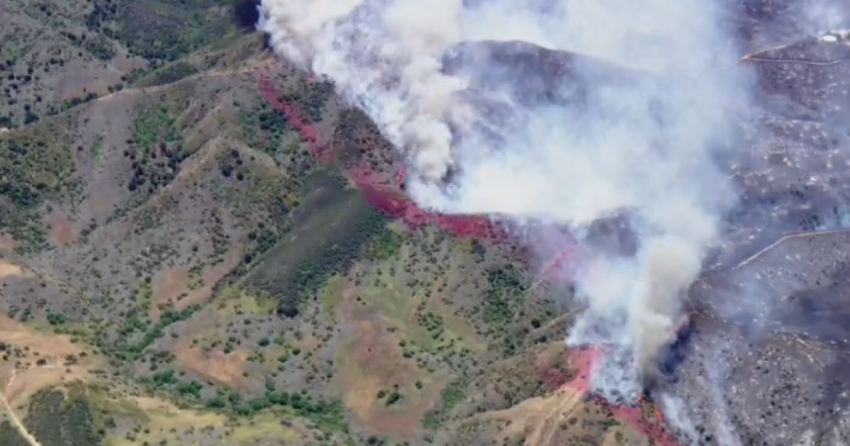
The Sandy Fire in Simi Valley has grown to more than 700 acres with no containment, prompting mandatory evacuations in multiple zones and forcing the Ronald Reagan Presidential Library to close. The blaze has destroyed at least one home, threatened structures and infrastructure, and led to school evacuations and shelter-in-place orders due to poor air quality. Gusty Santa Ana winds are expected to keep conditions volatile into Tuesday, increasing near-term fire risk.
This is a near-term negative shock with a wider second-order setup than the headline suggests. In California wildfire events, the first-order impact is local property loss and temporary disruption, but the tradable read-through is usually to insurers/reinsurers with California exposure, utilities whose assets may be scrutinized, and contractors tied to emergency response and rebuild activity. The fact pattern also raises the odds of a localized power shutoff or line inspection regime over the next 24-72 hours, which can create a short-duration demand hit for adjacent commercial activity even if the fire itself is contained quickly.
The bigger risk is that a fast-moving wind-driven fire turns into a multi-day liability event rather than a one-day headline. If containment lags and damage estimates rise, expect pressure on California homeowners carriers first, then on reinsurance pricing for the next renewal cycle; wildfire severity tends to reprice not just current-quarter losses but future premium adequacy. Housing and education are more of a sentiment and disruption story today, but prolonged evacuations can delay closings, inspections, and local labor availability, which matters if the fire footprint expands toward denser residential zones.
Consensus may underweight the rebuild-beneficiary leg because investors often focus only on loss severity. The better setup is to separate immediate loss exposure from eventual restoration spend: the more destruction that is confirmed, the more incremental demand ultimately flows into debris removal, roofing, HVAC, and infrastructure repair, but only after a lag of weeks to months. If wind conditions ease overnight and the fire stays below the most populated corridors, the market could fade the issue quickly; if another Santa Ana round arrives, the event shifts from a local incident to a statewide wildfire-risk repricing episode.
AI-powered research, real-time alerts, and portfolio analytics for institutional investors.
Request DemoOverall Sentiment
strongly negative
Sentiment Score
-0.70
