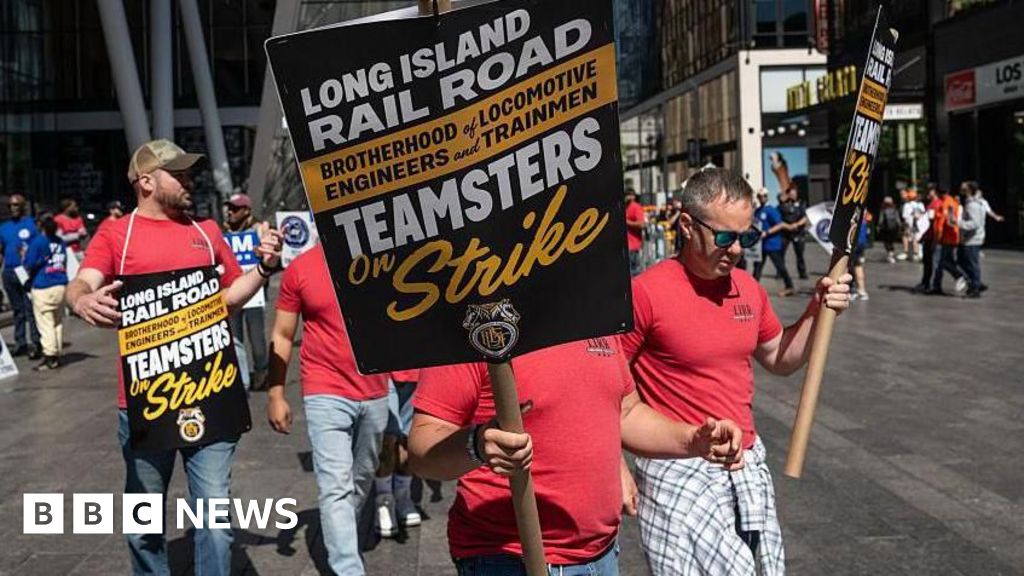
A strike has shut down the Long Island Rail Road, disrupting roughly 250,000 weekday riders and causing severe congestion across New York during rush hour. Union workers are seeking a 5% wage increase, while the MTA has offered 3% to 4.5% and warned that a settlement could require fares to rise as much as 8%. Negotiations resumed after intervention from Governor Kathy Hochul and a federal labor agency, but commuter disruption is already significant.
The immediate market read-through is not just transit disruption; it is a short-duration shock to urban friction costs that redistributes spend from rail users to higher-margin, app-mediated transport. That creates a near-term demand spike for ride-hail and private-car alternatives, but the bigger second-order effect is margin pressure from surge pricing backlash and higher driver incentives, which can blunt the benefit if the outage lasts more than a few sessions. The cleaner winner is any platform with dense city coverage and fast dispatch, while the losers are commuter-dependent businesses with low pricing power in outer-borough and Long Island catchments.
The political economy matters more than the strike itself. A resolution that implies fare increases or taxpayer support raises the probability of a multi-week headline cycle around affordability, labor, and transit governance, which is bearish for agencies tied to discretionary commuter usage and bullish for systems that can absorb disrupted traffic. If talks break down, expect a nonlinear pickup in absenteeism, delayed office returns, and hospitality leakage in Manhattan, with the impact concentrated over 1-2 weeks rather than becoming a structural demand destruction story.
Consensus may be overestimating the durability of the disruption trade. Historically, these events compress into a very short window once negotiations re-open, so any rally in alternatives driven by peak chaos can reverse quickly on a settlement headline. The better setup is to treat this as a volatility event: monetize the first-order beneficiaries early, while keeping a tail hedge on transit-adjacent sentiment if the dispute extends into payroll cycles and becomes a broader cost-of-living issue ahead of political messaging season.
AI-powered research, real-time alerts, and portfolio analytics for institutional investors.
Request DemoOverall Sentiment
moderately negative
Sentiment Score
-0.45
Ticker Sentiment
