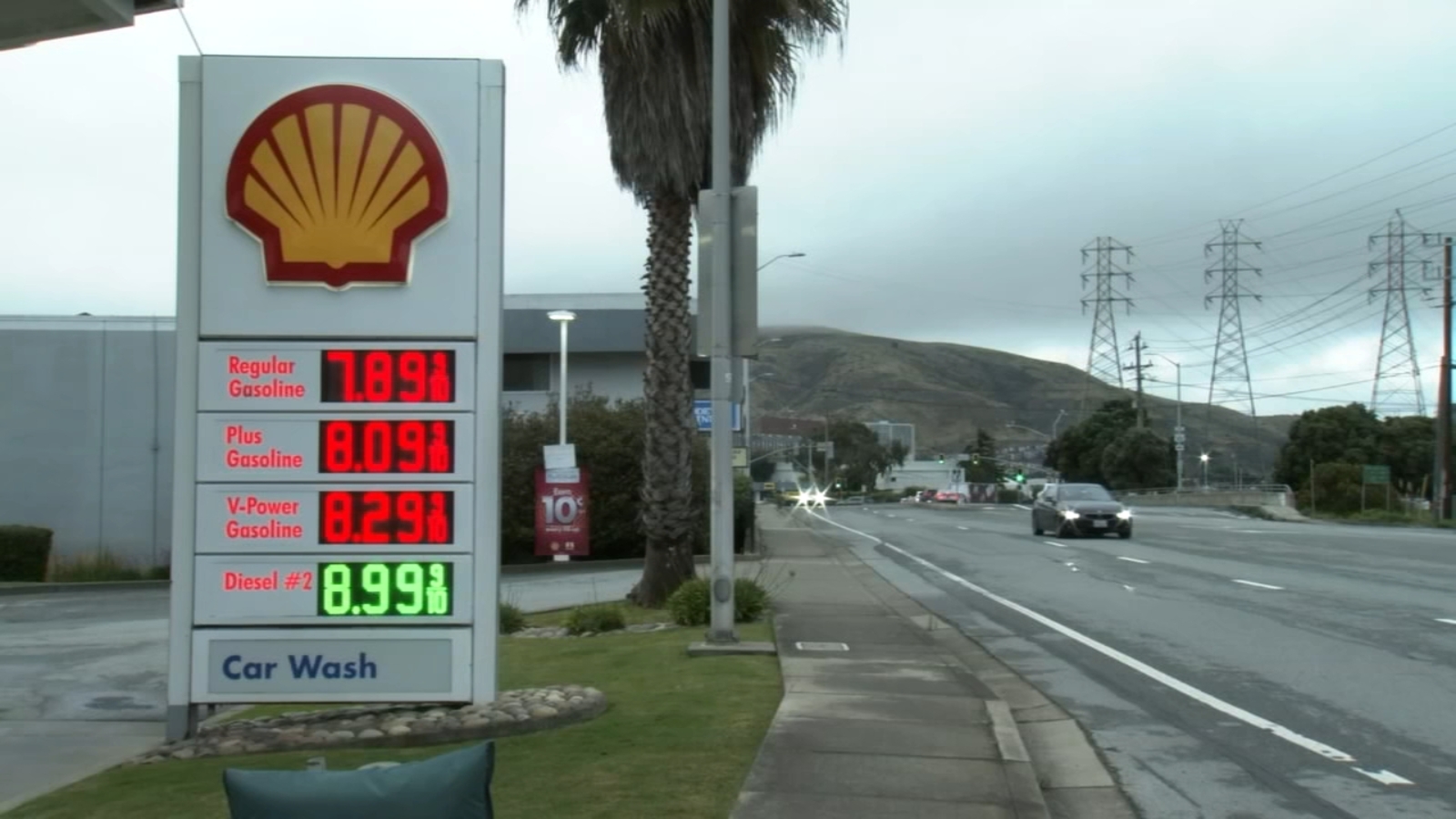
Bay Area gas prices surged overnight, with some South San Francisco stations charging $7.89 to $8.99 per gallon and California's statewide average rising to $6.13. Patrick De Haan warned the national average could reach $4.55 to $4.75 by Memorial Day, and potentially all-time highs by July 4 if the Strait remains closed into June. The spike, tied to the war with Iran and higher crude prices, is a broad negative for consumers and transportation-intensive businesses.
The immediate market impact is less about retail gasoline headlines and more about margin compression in transport-heavy, price-elastic businesses. Uber is the cleaner public-market expression: drivers bear most fuel inflation in the near term, but the platform cannot fully pass through higher operating costs without pressuring supply during peak demand windows. That creates a lagged risk of lower utilization, more driver churn, and higher incentive spend, so the earnings hit should show up first in gross bookings quality and take-rate durability rather than a clean revenue miss. The bigger second-order effect is inflation persistence. Fuel acts as a tax on households and small businesses, and the most vulnerable categories are discretionary travel, ride-hailing, delivery, and lower-income retail spend. If the current move sustains for several weeks, expect a visible demand elasticity response in the 2-6 week window: fewer miles driven, softer weekend leisure traffic, and a rotation toward closer-in, lower-ticket consumption. That matters for broader cyclicals because it tightens real disposable income just as summer demand would normally provide support. For energy, the upside is asymmetric only if the geopolitical supply shock remains unresolved past the next several weeks. Integrated names like Shell are beneficiaries of stronger upstream pricing, but the market will quickly discount the risk that policy response, strategic reserve actions, or de-escalation caps the move before it becomes a structural earnings upgrade. The real tail risk is not another incremental rally; it is a fast reversal on any diplomatic opening, which would leave late buyers holding beta with limited fundamental follow-through. The contrarian angle is that the market may be overestimating persistence and underestimating demand destruction. At these fuel levels, the elasticity is not linear: fleets, rideshare drivers, and commuters start altering behavior quickly, which can self-correct prices at the pump even if crude stays elevated. That argues for treating the move as a tactical shock rather than a durable regime shift unless supply disruption remains in place into mid-summer.
AI-powered research, real-time alerts, and portfolio analytics for institutional investors.
Request DemoOverall Sentiment
strongly negative
Sentiment Score
-0.55
Ticker Sentiment
