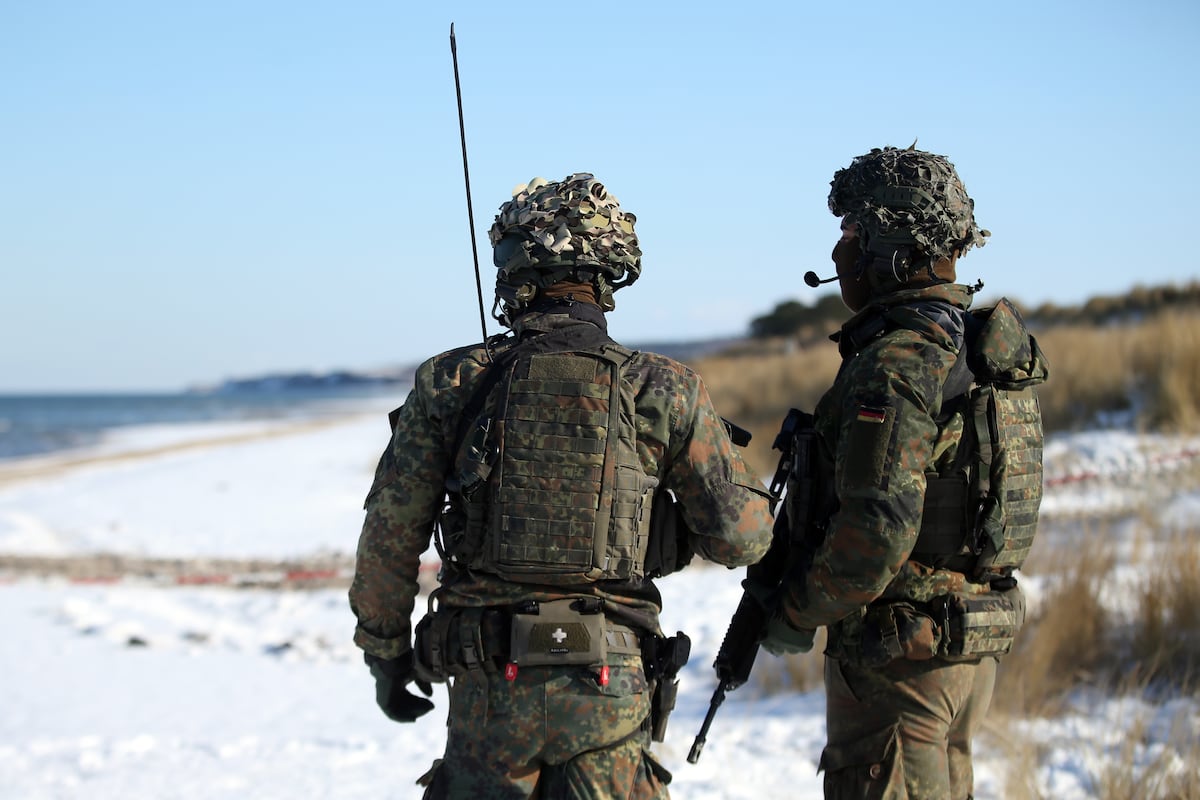
Germany unveiled its first standalone military strategy and a 20-year Bundeswehr overhaul, targeting 260,000 active-duty troops and at least 200,000 reservists by the mid-2030s, with a goal of becoming Europe's strongest conventional force by 2039. The strategy identifies Russia as the primary threat and shifts planning toward NATO territory, the Middle East and the Indo-Pacific, while EMA26 lays out 153 measures and 580 steps to cut bureaucracy and deploy AI in administration. The package is strategically significant for European defense spending and procurement, but near-term market impact is more policy-driven than earnings-driven.
This is less a headline about German defense spending than a multi-year industrial demand signal for Europe’s entire security stack. The biggest second-order effect is that Berlin is shifting procurement from platform-count logic to effects-based requirements, which tends to favor software, sensors, EW, C4ISR, air defense integration, and munitions over legacy heavy armor. That should compress the old procurement cycle for vendors with deployable capability packages and punish primes whose revenue mix still depends on slow-moving tank/airframe programs.
The reserve and logistics emphasis is the underappreciated catalyst. If Germany is serious about being NATO’s eastern logistics hub, beneficiaries extend beyond classic defense names into rail, trucking, secure communications, warehouse automation, and dual-use infrastructure; the demand is for mobilization throughput, not just battlefield lethality. That creates a broader capex cycle in European industrials, but also raises execution risk because logistics bottlenecks are usually hidden until a crisis forces stress-testing.
The main constraint is supply, not funding. The fastest bottleneck is likely in air defense interceptors, radars, propulsion, and the component-level electronics chain, where lead times can remain long even if budgets are locked in; that means order visibility can improve before revenue does, but margins may be capped by capacity and rush premiums. The AI/bureaucracy angle matters too: automation of back-office procurement can accelerate award velocity, but it also increases the probability of larger, more centralized framework contracts that favor scale players and integrators over niche suppliers.
Contrarian view: the market may be overpricing near-term beneficiaries while underpricing the lag. A 2030s force-structure target is not the same as a 12-24 month earnings step-up, and recruitment targets plus industrial ramp constraints make slippage more likely than the policy rhetoric implies. The better setup is to own the enablers with recurring software/service content and short the slow-turn legacy exposure, not to chase headline defense beta indiscriminately.
AI-powered research, real-time alerts, and portfolio analytics for institutional investors.
Request TrialOverall Sentiment
neutral
Sentiment Score
0.15
