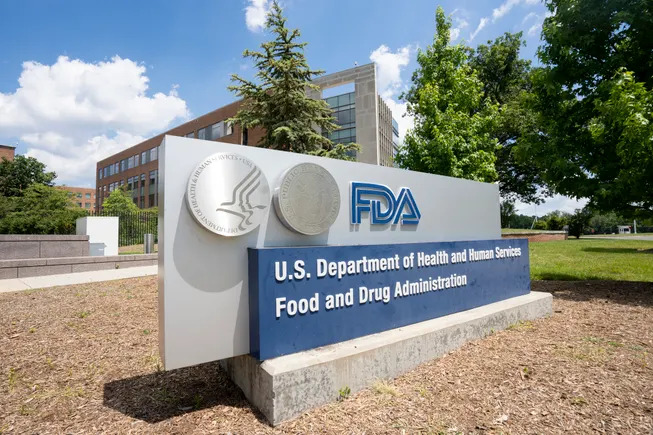
The FDA published draft guidance allowing drugmakers to use a weight-of-evidence risk assessment and human-relevant models (e.g., organoids) instead of mandatory primate toxicology for some experimental monoclonal antibodies, which could reduce reliance on tests that typically use ~100 macaques, run three months or more, and cost roughly $50,000 per animal. The move, part of Commissioner Makary’s push to streamline development, aims to lower costs and speed early-stage programs; it complements other agency initiatives including an AI review tool, expanded AI workforce use, a voucher fast-pass program (15 awards so far) and a lighter pathway for ultra-rare disease drugs, amid competition from China’s biotech sector.
Market structure: Lowering required primate testing is an immediate cost and time lever for antibody programs — typical primate studies cost ~100 macaques at ~$50k each (~$5M+) and add 2–3 months of timeline per program. Winners: large-cap antibody makers (e.g., REGN, LLY, AMGN) and platform players that can deploy organoids/AI; losers: CROs with concentrated nonclinical primate revenue (e.g., CRL) and suppliers tied to animal facilities. Faster IND-enabling timelines will compress capital needs for early-stage biotechs and increase hit-rate economics for programs valued on NPV and time-to-market.
Risk assessment: Tail risk is a low-probability/high-impact safety incident from reduced animal testing that could trigger trial halts and regulatory rollback — estimate a 5–10% chance over 24 months with potential 30–70% drawdowns for implicated issuers. Near-term (days–weeks) volatility around guidance/comments; short-term (3–12 months) re-pricing of CRO revenue; long-term (1–3 years) structural shift to human-relevant assays and AI-enabled validation. Hidden dependencies: CROs can pivot to offer organoid/assay services, and global regulators (EU/China) may diverge, creating geographic winners/losers.
Trade implications: Favor selectively long antibody incumbents and tool/AI integrators while short CROs with heavy primate exposure. Implement durationed option hedges to reflect binary regulatory/catalyst risk (final guidance, adverse event). Size trades modestly (1–3% portfolio per idea) and use relative pairs (CRO short vs IQV/LH long) to reduce market beta.
Contrarian angles: The market may underprice CROs’ ability to repurpose assets — CRL downside could be limited if they convert facilities to in vitro platforms. Conversely, smaller biotech winners are likely concentrated in firms that can operationalize organoid/AI workflows; dispersion will rise. Historical parallel: regulatory-driven testing shifts (e.g., phasing out certain animal tox models) often produce transient volatility then consolidation in specialized service providers.
AI-powered research, real-time alerts, and portfolio analytics for institutional investors.
Request DemoOverall Sentiment
mildly positive
Sentiment Score
0.28
