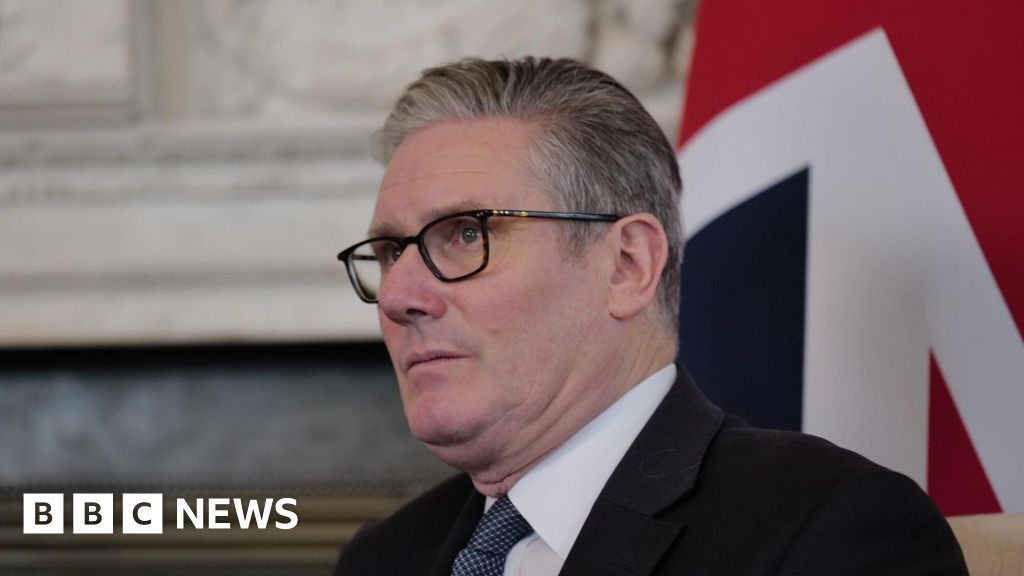
British Prime Minister Keir Starmer is making the first UK prime ministerial visit to China since 2018, meeting President Xi and leading a delegation of about 60 business and cultural figures including HSBC, GSK and Jaguar Land Rover as part of a push to “reboot” UK–China ties. The trip signals potential commercial re‑engagement that could affect trade and corporate access to China, but is balanced by explicit Downing Street commitments to raise human‑rights and security concerns, recent MI5 warnings about Chinese espionage, approval of a large new Chinese embassy in London and sharp domestic political criticism — all factors that create political and regulatory risk for investors.
Market-structure: A UK prime-ministerial reset with China favors exporters, banks with China franchises (HSBA.L), luxury autos (Tata Motors/TTM.N via JLR exposure) and commodity miners (RIO.L, BHP.L) if it meaningfully eases trade/flows; domestic tech and defense suppliers lose relative political support as security scrutiny rises. Pricing power will shift slowly — expect incremental re-rating over 3–12 months (miners +10–20% under a China demand scenario, banks +8–12%) rather than an immediate surge; GBP could firm ~1–3% on sentiment and capital flows if concrete MOUs appear. Cross-asset: modest tightening in UK Gilt yields if FDI inflows resume, industrial metals up 5–15% on demand expectations, and FX volatility spikes around summit headlines (IV +30–50% intra-day).
Risk assessment: Tail risks include a rapid U-turn (UK sanctions, US pressure) that triggers capital flight and a 10–20% drawdown in China-exposed UK names, or a security incident prompting stricter FDI/tech export controls. Time horizons: immediate (days)—headline-driven volatility; short-term (weeks/months)—deal-announcement-driven moves; long-term (quarters/years)—structural reallocation of supply chains. Hidden dependencies: many FTSE firms have opaque China revenue exposure and rely on Chinese supply chains; MI5 warnings and parliamentary backlash are negative catalysts. Key triggers to watch in 0–90 days: joint communiqués, investment MOUs, US reactions and any new UK FDI legislation.
Trade implications: Prefer selective longs: establish 2–3% long in HSBA.L over 3–6 months (target +12% if re-engagement proceeds; stop-loss -8%) to capture trade/FX and fee tailwinds. Add 1–2% longs in RIO.L or BHP.L as a China-demand play (6–12 month horizon, target +15% on stimulus, hedge 30% of position with short GLD if commodity inflation spikes). Implement a 0.5–1% notional GBP/USD 3-month call spread to play GBP upside; size options to risk <0.5% portfolio. Buy 6-month FTSE put protection (2% notional) to guard against geopolitical blow-ups.
Contrarian angles: Consensus focuses on security risks; it underestimates services and higher-margin pharma/consumer healthcare upside in China (GSK.L) if regulatory access improves — a measured 6–12 month re-rating is plausible. Reaction may be underdone for cyclicals and overdone for headline-sensitive financials if no immediate deals are announced; historical parallel: 2014–18 UK-China thaw then freeze shows re-engagement is iterative, not binary. Unintended consequence: accelerated investment-screening could favor larger diversified multinationals (HSBC, BHP) and punish niche tech/critical supply players; position sizes should be trimmed if parliament signals new FDI curbs.
AI-powered research, real-time alerts, and portfolio analytics for institutional investors.
Request DemoOverall Sentiment
mixed
Sentiment Score
0.00
Ticker Sentiment
