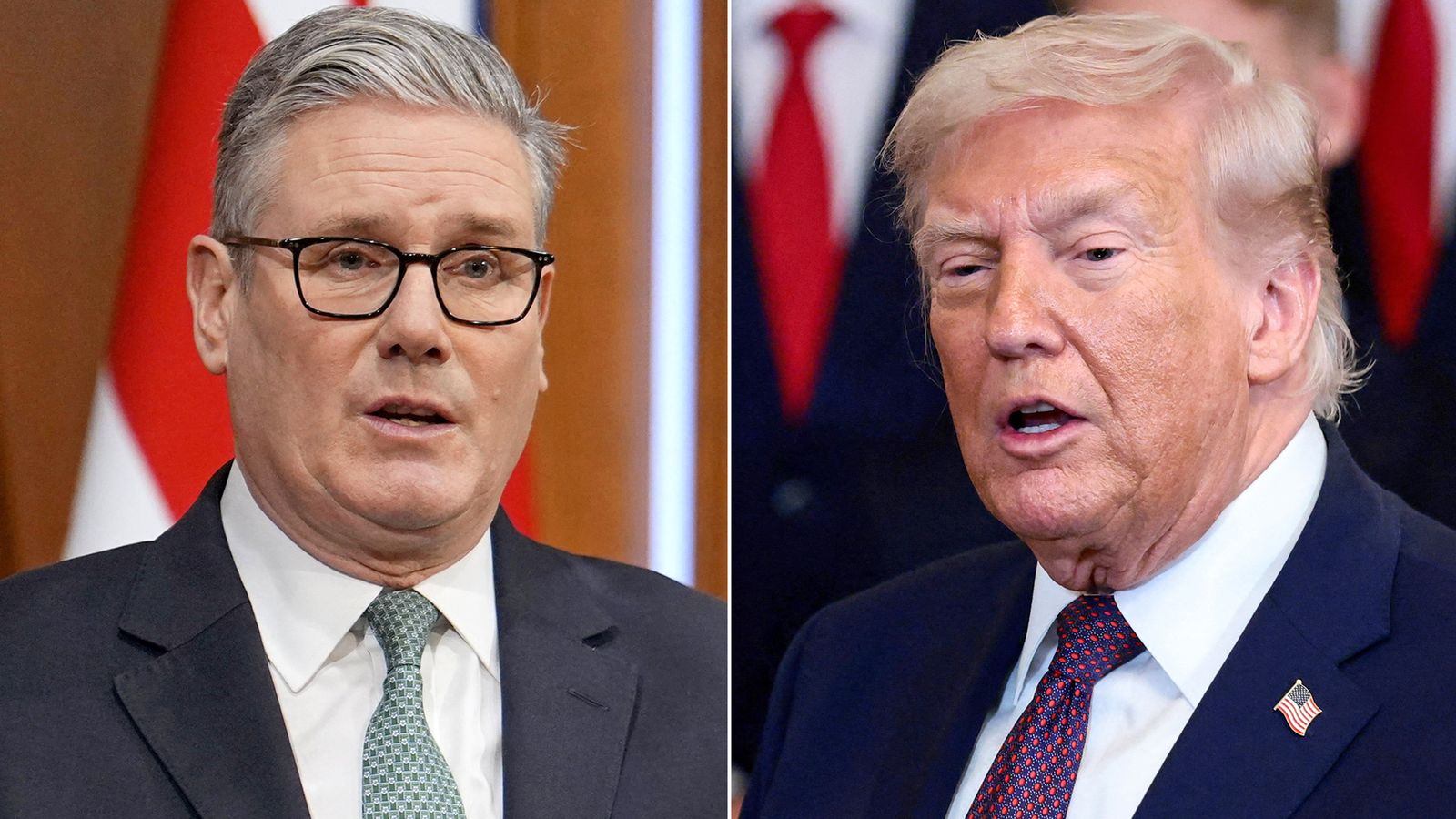
Former US president Donald Trump publicly urged Prime Minister Keir Starmer to scrap the UK-Mauritius agreement on the Chagos archipelago, warning against giving away the Diego Garcia military base and calling the deal 'a blight'. The intervention—contrasting with a recent US government statement of support—has intensified domestic political pressure from opposition parties and raises the risk of a Labour policy reversal or a fraught ratification process, increasing short-term political and defence-cooperation risk for investors with exposure to UK-US defence and sovereign-policy-sensitive assets.
Market structure: Short-term winners are defence contractors and logistics providers tied to long‑range basing (BAES.L, RTX, LMT), as political uncertainty increases the premium for assured access to Diego Garcia; expect a 5–15% relative re‑rating tail to defence names in 1–3 months if access is perceived at risk. Losers are domestically sensitive UK assets (consumer cyclicals, regional banks) and sterling, which could weaken 1–3% on persistent diplomatic friction, pressuring UK equity multiples and widening 2s–10s gilt spreads vs USTs by 10–30bp in risk episodes.
Risk assessment: Tail risk — a sustained US–UK diplomatic rift that leads to parliamentary blockage or US base withdrawal — is low probability (5–15%) but high impact (50–100bp gilt shock, 10–25% defence revenue rehypothecation risk for contractors reliant on UK co‑hosting). Timing: immediate (days) for FX/volatility spikes, short term (weeks) for equity repricing, long term (quarters) for contract awards and capex shifts. Hidden dependencies include US domestic politics (Trump tweets) and congressional funding cycles that can rapidly flip sentiment; key catalysts are explicit White House/State Department clarifications and UK parliamentary votes within 7–30 days.
Trade implications: Tactical: establish small, conviction‑sized longs in defense while hedging currency — scale 1–3% portfolio positions in BAES.L and 1–2% in ITA (US Aerospace & Defence ETF) with stop‑loss at 12% adverse move; buy 1‑month GBPUSD 3% OTM puts (size 0.5–1% portfolio) to protect sterling exposure while clarity emerges. Pair trade: long BAES.L vs short FTSE 100 futures (ratio 1:10 market cap adjusted) to capture defence premium vs broad UK risk; options: buy 3‑month call spreads on RTX (buy 1, sell 1 at +8–12% strikes) to limit premium and capture potential re‑rating.
Contrarian angles: Consensus may overstate permanent damage — if the US issues a clarifying supportive statement within 3 trading days, expect rapid mean reversion: trim GBP puts and reduce defence longs by 50% then. Historical parallels (policy noise in 2016–2018) show 2–4 week event windows with 60–80% of initial moves reversing; target exits: close hedges if GBPUSD recovers >2% from worst point or if gilt spread compression >15bp reverses intra‑week. Beware crowding in defence ETFs; prefer single‑name BAES.L or structured call spreads to control tail risk.
AI-powered research, real-time alerts, and portfolio analytics for institutional investors.
Request DemoOverall Sentiment
moderately negative
Sentiment Score
-0.50
