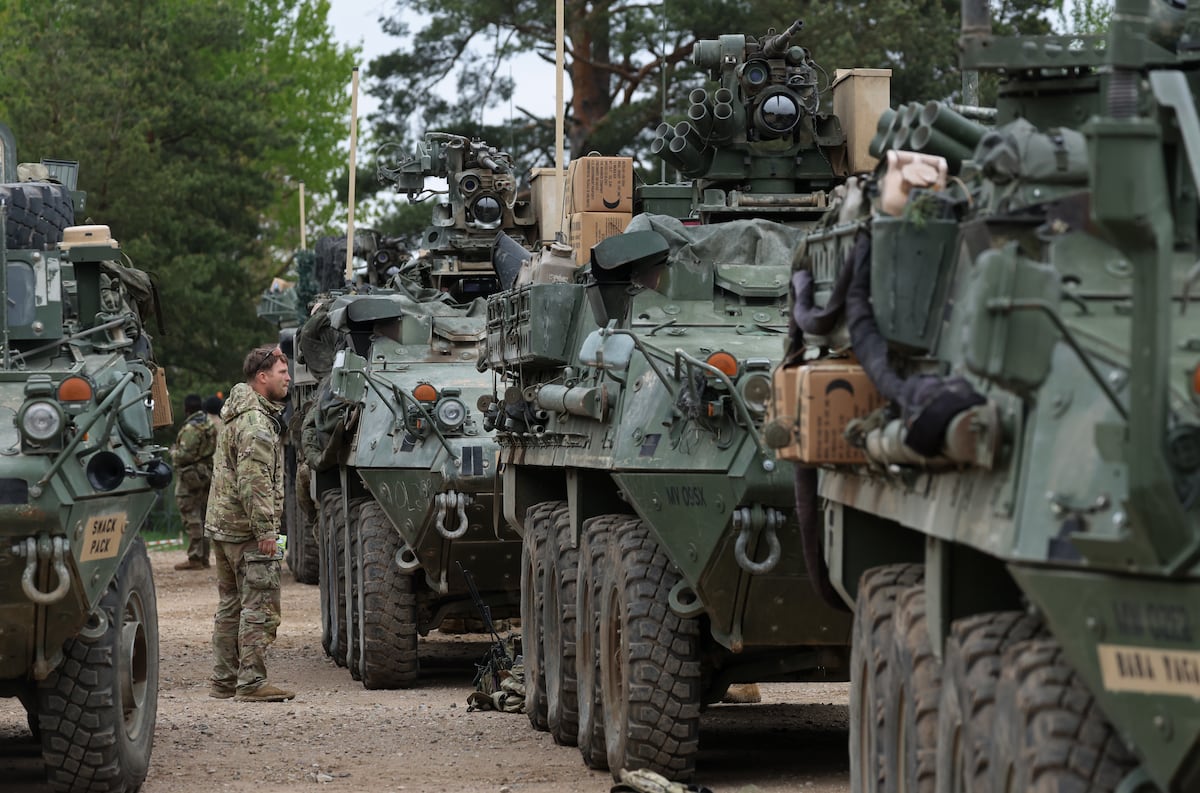
Poland is pushing to preserve U.S. troop levels after Washington abruptly canceled a planned nine-month Army rotation of more than 4,000 soldiers to NATO’s eastern flank. Polish leaders emphasized more than $50 billion in U.S. weapons purchases and around $15,000 per year per deployed soldier as leverage to keep the American presence intact. The issue underscores security concerns for Poland, though the immediate market impact is likely limited.
This is less about the near-term troop count and more about whether Europe’s forward-defense architecture is moving from deterrence by presence to deterrence by procurement. If Washington trims rotations while Poland keeps scaling U.S.-origin platforms, the main economic beneficiary is the American defense OEM ecosystem, but the marginal beneficiary may actually be European prime contractors that are structurally locked out of those large-ticket buys and forced into lower-margin sustainment, MRO, and local industrial offsets. In other words, the market should think of this as a redistribution of future spending from sovereign troop support to high-visibility kit and life-cycle services, which tends to be stickier and better for cash conversion.
The second-order risk is political contagion inside NATO: if Poland feels singled out despite being one of the most committed spenders, other frontline states may accelerate their own procurement cycles to buy influence, not just capability. That can support defense order books over a multi-quarter horizon, but it also raises execution risk because accelerated demand usually exposes bottlenecks in munitions, maintenance, and training throughput before revenue is fully recognized. The sharpest swing factor is whether the U.S. reversal is a one-off planning correction or the first step in a broader European force rationalization; the latter would put a structural premium on indigenous European air-defense, ISR, and ammunition capacity within 3-12 months.
The contrarian take is that the immediate market reaction may overestimate the downside for European security assets. Reduced U.S. rotational presence can be offset by faster procurement, larger local maintenance spend, and more domestic defense industrialization in Poland and neighboring states, which is bullish for subcontractors, logistics, and training providers even if headline troop numbers fall. The bigger negative is for firms whose thesis depends on U.S.-led reassurance suppressing continental rearmament urgency; that narrative weakens if allies conclude they need to self-insure. The real tell will be whether Warsaw responds with additional purchase announcements within the next 1-2 quarters.
AI-powered research, real-time alerts, and portfolio analytics for institutional investors.
Request DemoOverall Sentiment
mildly negative
Sentiment Score
-0.15
