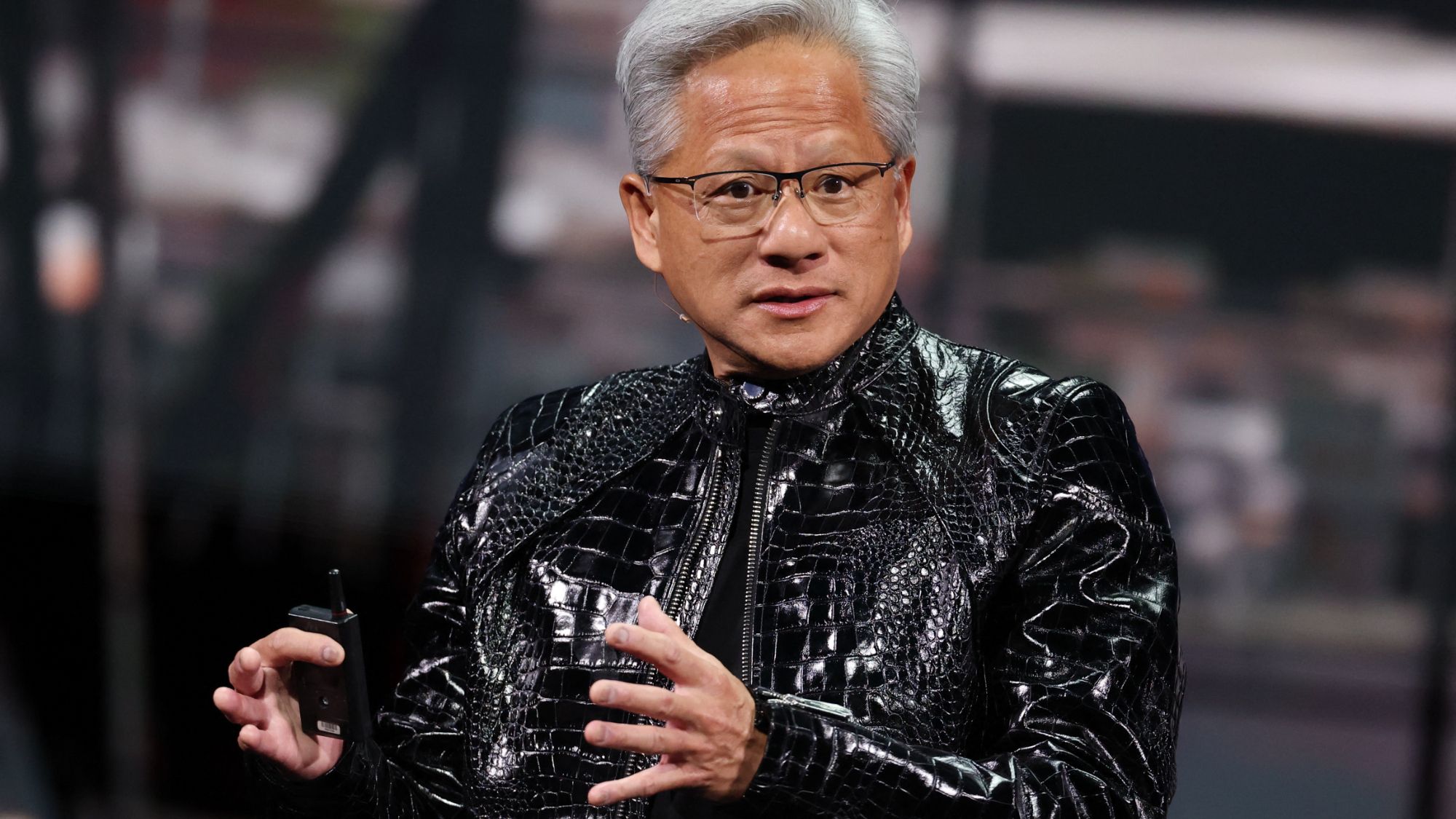
At CES 2026 Nvidia highlighted AI-first gaming advances — debuting DLSS 4.5 and MFG 6X and showcasing the next-gen Vera Rubin AI supercomputer — while CEO Jensen Huang described “the future is neural rendering,” suggesting AI-driven upscaling, frame generation and AI-native NPCs will reshape real-time graphics. Huang implied the RTX 5090 may represent the high-water mark for traditional raster performance as NVIDIA pivots resources toward tensor/matrix acceleration and neural techniques, a strategic shift that could influence GPU architecture, margins and competitive positioning in both PC and console ecosystems.
Market structure: Nvidia (NVDA) is the primary beneficiary — neural rendering increases demand for tensor/core-heavy GPUs and cloud inference capacity, supporting a potential 10–30% revenue mix shift from pure raster/gaming to AI-assisted features over 12–24 months. AMD and Sony gain as partners (console Neural Arrays, PS6), but incumbent memory vendors (e.g., MU) and mid-tier raster-focused GPU makers face downside if neural compression reduces effective VRAM demand by 10–25% per device cycle. Cross-asset: stronger NVDA fundamentals compress credit spreads for tech names, lift tech equity risk premia (options vol up 10–30% around catalyst windows), and could modestly strengthen USD via tech FCF flows; HBM/GDDR commodity demand becomes more idiosyncratic.
Risk assessment: Tail risks include US export controls/China decoupling of AI GPUs, antitrust scrutiny from developer lock-in to NVDA stacks, or slower developer adoption (DLSS integration lag of 12–36 months). Immediate (days): stock reactions to CES demos/earnings guidance; short-term (weeks–months): cadence of developer SDK adoption and DLSS 4.5 benchmarks; long-term (2–5 years): architectural shift in console/PC SoCs. Hidden dependencies: dataset licensing, cloud inference economics, and middleware standards — a single major studio or Sony/AMD technical pivot could swing adoption.
Trade implications: Direct long bias to NVDA for secular AI-in-gaming + datacenter demand; AMD deserves a tactical long for console/SoC upside but with lower conviction. Options should express directional view with defined risk: buy-call spreads on NVDA (9–12 months) to capture adoption while limiting theta. Sector rotate into semis and cloud infra (MSFT) and reduce pure-memory cyclicals until neural texture compression adoption metrics are observable.
Contrarian angles: Consensus underestimates multi-year hardware inertia — RTX 5090 remains relevant for 3–5 years so raster revenue won’t vanish overnight; adoption likely follows the RTX/ray-tracing path (3+ years). Overdone trades: aggressive shorting of AMD or MU risks reversal if neural features expand total market (more cloud rendering, subscription models). Watch thresholds: if <15% of AAA titles support DLSS/frame-gen in 12 months, market reprices expectations downward.
AI-powered research, real-time alerts, and portfolio analytics for institutional investors.
Request DemoOverall Sentiment
mildly positive
Sentiment Score
0.30
Ticker Sentiment
