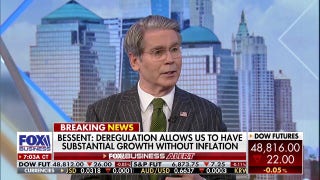
U.S. Treasury Secretary Scott Bessent said two consequential decisions are expected in January: the Supreme Court ruling on President Trump’s tariffs—which are challenged in Learning Resources Inc. v. Trump and Trump v. V.O.S. Selections over whether the IEEPA authorized the measures—and the administration’s selection of a new Federal Reserve chair. Bessent argued a ruling against the administration would harm economic (and thus national) security, highlighted that tariffs generated $215.2 billion in duty revenue in fiscal 2025 and $71 billion since Oct. 1 in the new fiscal year, and confirmed Trump is vetting Kevin Hassett and Kevin Warsh as leading candidates to replace Jerome Powell (term ends May 2026). The court’s decision and the Fed appointment could materially influence federal receipts, trade policy authority and the future path of U.S. monetary policy.
Treasury Secretary Scott Bessent said two consequential decisions are expected in January: a Supreme Court ruling on President Trump’s tariffs and the administration’s selection of a new Federal Reserve chair. The tariff cases, Learning Resources Inc. v. Trump and Trump v. V.O.S. Selections Inc., hinge on whether the International Emergency Economic Powers Act (IEEPA) authorized the tariff actions; Bessent framed a ruling against the administration as a national-security risk.
Tariff collections are already material to federal receipts: total duty revenue reached $215.2 billion in fiscal 2025 (ended Sept. 30) and $71 billion has been collected since Oct. 1 in the new fiscal year, and the administration says it has “plenty of revenue alternatives” but prefers the court to uphold the policy. Tariffs are statutory border taxes typically passed through to consumers, so a reversal could reduce government revenue and alter prices for import‑dependent sectors.
The Fed chair contest features Kevin Hassett and Kevin Warsh, both vetted closely by the administration; Jerome Powell’s term ends in May 2026 and the next chair will shape the post‑Powell rate path. Together the legal outcome on tariff authority and the Fed appointment create bifurcated macro risks: potential fiscal revenue shifts and legal precedent on executive trade powers, plus uncertainty about future monetary policy that could increase volatility in trade‑sensitive and rate‑sensitive assets.
AI-powered research, real-time alerts, and portfolio analytics for institutional investors.
Request DemoOverall Sentiment
mixed
Sentiment Score
0.00
Ticker Sentiment
