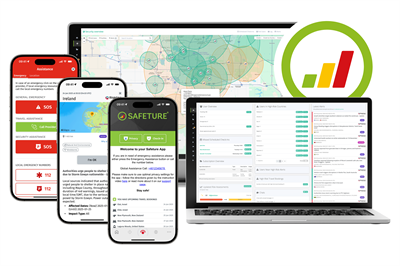
Safeture reported modest full-year growth and returned to profitability in 2025 with operating revenue of SEK 56.95m (+1% YoY) and Q4 revenue of SEK 14.29m (-2% YoY). Annual Recurring Revenue reached SEK 58.26m (+0.4% YoY), quarterly churn improved to 2.1% and yearly NRR was 101%; EBIT was SEK +0.218m for both the quarter and full year and operating cash flow was positive SEK +1.6m. Management emphasizes improving churn trends (noting FX headwinds and Germany momentum), a focus on partner expansion, continued use of AI, and a target of sustainable profitability at 65m SEK ARR.
Market structure: Safeture (SFTR) benefits directly — recurring revenue (99% RR) and ARR of 58.3 MSEK signal a high-quality SaaS cash flow base; partners (Riskline, German channel partners) and buyers of travel-risk tech (insurers, medical assistance) also win as onboarding accelerates. Pricing power remains limited until scale: management’s 65 MSEK ARR target implies ~11.5% ARR growth needed; until then margins improve but competition keeps net-new pricing constrained.
Risk assessment: Key tail risks are a GDPR/data-breach fine, partner-concentration failure in Germany (>material to churn), or a sharp EUR/SEK move that knocks reported growth (FX already offset YoY). Near-term (days–weeks) watch quarterly cadence and press-driven lead conversion; short-term (3–6 months) watch churn trending below 5% QoQ; long-term (12–24 months) the biggest binary is hitting 65 MSEK ARR to sustain profitably and avoid capital raises.
Trade implications: Small-cap nature means event-driven, liquidity-sensitive trades work best. A tactical long in SFTR is justified if German momentum and NRR>101% persist; conversely, rotate out of cyclical travel/leisure names into security SaaS (Everbridge EVBG) where public liquidity and options exist to hedge. Options: use EVBG call spreads to express sector re-rating, and use protective stops on SFTR sized to liquidity risk.
Contrarian angles: Consensus underweights M&A upside — a strategic buyer could pay a substantial premium if SFTR proves partner-driven migration (4x–8x ARR multiples in buyouts of niche SaaS). Conversely, the market may be underreacting to partner-concentration and conversion risk: 240 leads from the Risk Map is a top-line signal but conversion rate must exceed ~10% ARR contribution to move the needle; failure here would quickly reverse the mild positivity.
AI-powered research, real-time alerts, and portfolio analytics for institutional investors.
Request DemoOverall Sentiment
mildly positive
Sentiment Score
0.35
